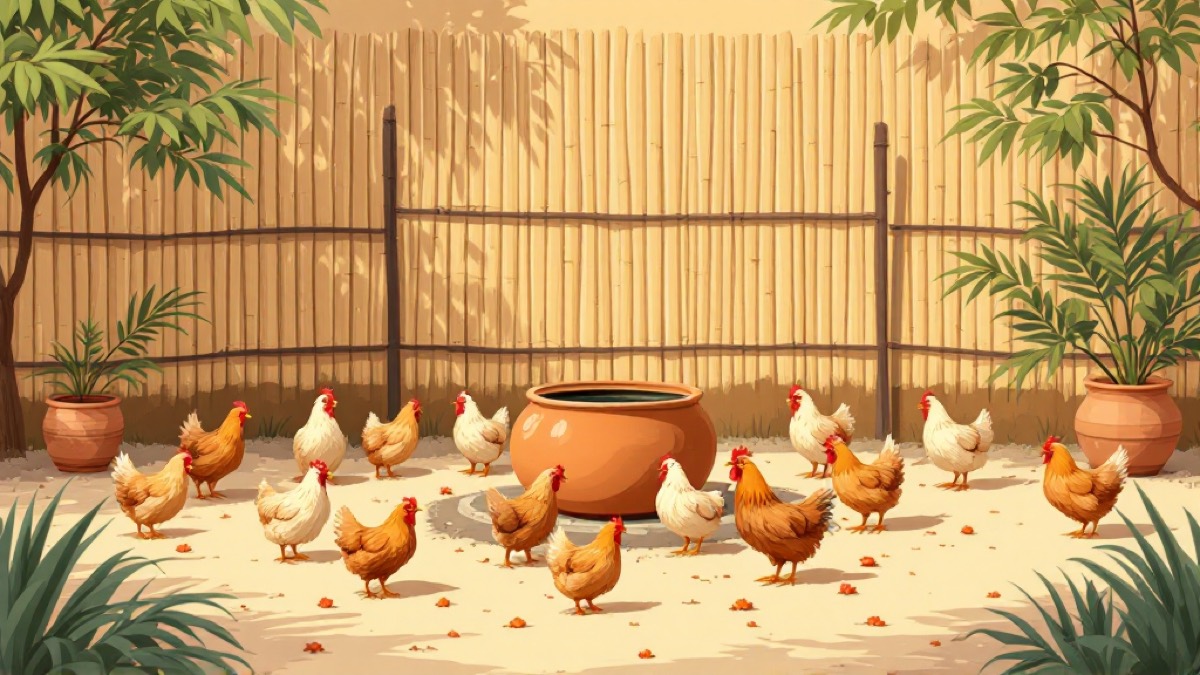
The Chicken Life Cycle
TL;DR: Four stages: egg, chick, pullet or cockerel, adult. The cycle repeats only if there is a rooster — hens lay fine without one, but those eggs will not hatch. The stage that actually matters to a keeper is brooding, where most losses happen. Everything else is comparatively forgiving. This guide gives no ages in days, because breed, strain, season and management move every one of them.
The simple version everyone knows, with the parts that decide whether your birds make it.
Stage 1: The Egg
A fertile egg contains everything needed to become a chick, given the right conditions. Two routes:
Under a broody hen. She turns them, holds the temperature, controls humidity by sitting, and broods the chicks afterwards. No electricity, no brownout risk. See broody hen and hatching under a broody hen.
In an incubator. More control, more that can go wrong. See how to incubate chicken eggs, egg incubator temperature, incubator humidity and egg turning.
What happens inside is visible partway through by candling. The last stretch is lockdown — turning stops, humidity rises, the chick positions itself and hatches.
No fertility without a rooster. A hen lays regardless; the eggs simply will not develop. See can hens lay eggs without a rooster.
If they do not hatch, the reasons are usually mundane and diagnosable — see why eggs did not hatch and hatch rate. Storage before setting matters more than people expect: how to store hatching eggs.
Stage 2: The Chick
This is where the losses are. If you take one thing from this guide, take that.
A newly hatched chick cannot regulate its own temperature and depends entirely on the brooder or the hen. The vulnerabilities:
| Risk | Guide |
|---|---|
| Chilling | How to keep chicks warm, brooding temperature |
| Damp | Aspergillosis, brooder box design |
| Disease | Sick chick symptoms, chick vaccination schedule |
| Predators | Rats, snakes — chicks are the target |
| Feed and water | Chick starter feed, chick feeding schedule |
Full method in how to brood chicks, and the honest account of what goes wrong in chick mortality causes.
Chicks are also hard to sex early, which shapes what you can plan — see how to sex chicks.
Stage 3: Pullet and Cockerel
The adolescent stage, and the one with the most confusing vocabulary.
- Pullet — a young female, before or around the start of lay.
- Cockerel — a young male.
- In Tagalog, the adult terms are inahin for the hen and tandang for the rooster.
What happens here:
- Growth, on a grower ration rather than starter — see growing pullets and types of chicken feed.
- Sex becomes obvious. Comb development is usually the first sign, then feather shape — see rooster vs hen and rooster comb types.
- The pecking order forms, and it is not gentle.
- Decisions get made. Which birds to keep, which to sell, which cockerels to keep — see how many chickens to start with.
It ends at point of lay, when the comb reddens and enlarges and the first eggs arrive — small at first, which is normal. See pullet eggs.
Stage 4: The Adult
Hens lay, with output highest in the first laying year and declining after — see how many eggs per day and how many eggs does a hen lay in a lifetime. They pause for molt, for heat, and if they go broody.
Roosters fertilise, guard, and keep order. Whether you want one is a real decision — see can hens lay eggs without a rooster and, for the neighbours, why do roosters crow.
Then it continues, or it does not. A traditional-breed flock renews itself. A commercial hybrid flock cannot — hybrids do not breed true and broodiness has been selected out, so replacement means purchase. That single fact determines whether your flock is a cycle or a supply chain.
Beyond the productive years, birds live on — see how long do chickens live and what to do with old hens.
Why No Numbers Here
You will find days and weeks quoted for every stage. This guide gives none, deliberately.
Breed, strain, season and management move all of them. A native chicken and a commercial hybrid are on different timelines. A hot April shifts everything. Published figures usually describe controlled commercial conditions, and a keeper who treats them as a schedule concludes something is wrong when nothing is.
Watch the bird, not the calendar. The comb reddening tells you more about point of lay than any published age. See paano malaman kung may sakit ang manok for the same principle applied to health.
The exception is incubation, which is genuinely fixed under correct conditions — and where deviation is itself the diagnostic sign. See ilang araw bago mapisa ang itlog ng manok.
The Honest Limits Here
That the chicken life cycle runs egg, chick, pullet or cockerel, adult, that chicks depend on external heat and that mortality concentrates in the brooding period, and that fertile eggs require a rooster, is basic and uncontroversial poultry biology. This guide gives no ages, no durations and no weights for any stage, because breed, strain, season and management shift all of them and published figures describe controlled conditions. Incubation length under correct temperature and humidity is the one genuinely fixed interval; where it runs early or late, the conditions are the thing to examine.
Related: how to brood chicks, growing pullets, point of lay, how long do chickens live.
Frequently Asked Questions
What are the stages of a chicken life cycle?
Egg, chick, pullet or cockerel, and adult hen or rooster. Fertilised eggs from the adults begin the cycle again.
How long does a chicken egg take to hatch?
Chicken eggs hatch after a set incubation period under correct conditions of temperature and humidity. Hatching that runs early or late usually indicates a problem with those conditions.
What is the difference between a pullet and a hen?
A pullet is a young female before or around the start of laying. A hen is a mature laying female. The equivalent male terms are cockerel and rooster.
At what stage do most losses happen?
The brooding period. Young chicks are vulnerable to chilling, damp, disease and predators, and mortality is concentrated in the first weeks.
How long do chickens live?
Chickens can live for years, well beyond their peak laying period. Productive life and natural life are different spans, and commercial replacement is decided on economics.
When does a hen start laying?
At point of lay, which varies by breed, strain, season and management rather than falling on a fixed date.
Do you need a rooster for the cycle to continue?
For fertile eggs, yes. Hens lay perfectly well without one, but those eggs will not hatch.