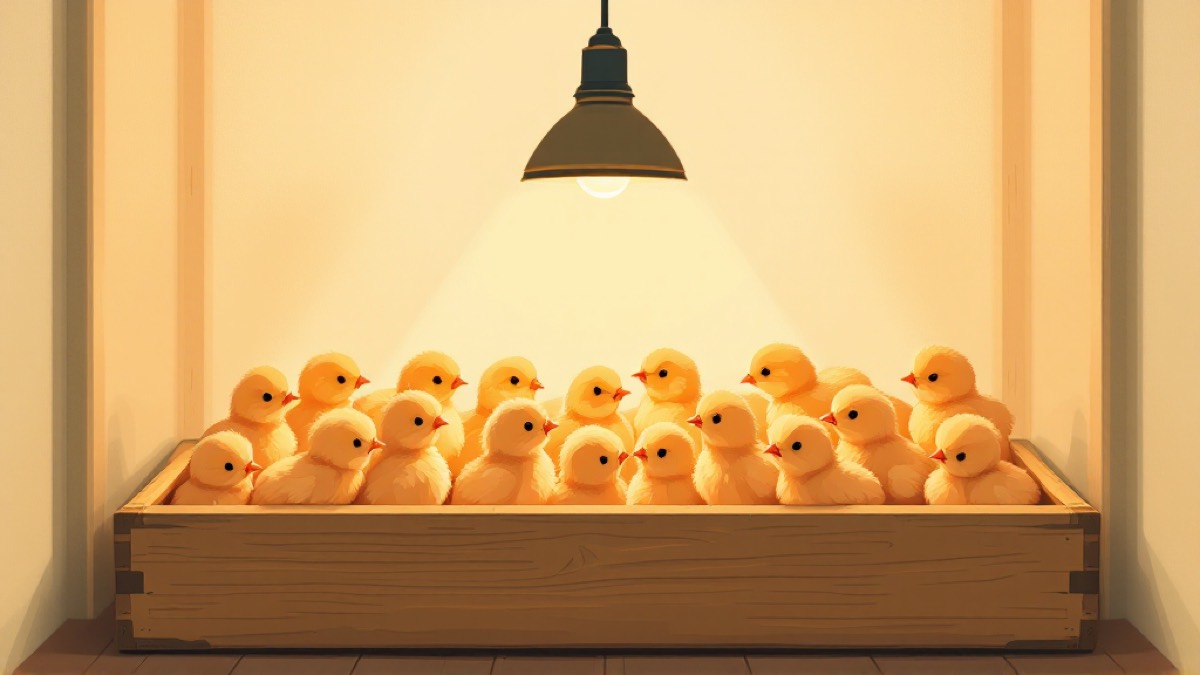
How to Brood Chicks: Day 1 to Week 6
TL;DR: Brooding is the 5-6 week period after hatch where chicks need supplemental heat, protection, and close feeding management before they can handle normal conditions on their own. Start at roughly 95°F (35°C) in week 1, step the temperature down by about 5°F (2-3°C) each week, and watch chick behavior — not just the thermometer — to know if you’ve got it right.
What Is Brooding, and Why Does It Matter?
Brooding is the period between hatch and full feathering — usually 5 to 6 weeks — when a chick cannot yet regulate its own body temperature and needs a keeper (or a broody hen) to supply warmth, protection, and easy access to feed and water. Skip or rush this period and you’re managing the fallout for weeks afterward: stunted growth, weak chicks, and a mortality rate that’s almost always highest in the first two weeks.
This applies whether the chicks came out of an incubator, arrived from a hatchery, or hatched under a broody hen you’re supplementing. A hen who’s actually sitting on and raising her own chicks does most of this job herself. This guide is for everyone else — anyone with a batch of chicks and no hen doing the work, which describes most gamefowl breeders hatching stags, most backyard keepers raising layer replacements, and most people starting a native flock from purchased or hatched chicks.
What Do You Need Before the Chicks Arrive?
Before a single chick goes in, you need four things ready: a draft-free container sized for the batch, a heat source with a way to control distance or wattage, chick feeder and waterer, and starter feed. Set all of this up and let it run for a few hours before the chicks arrive, so the temperature has stabilized and you’re not troubleshooting a cold or overheating brooder with live chicks already inside it.
See our brooder box design guide for what you can actually build from materials available in a typical Philippine backyard — a container, a heat source, bedding, and predator-proofing, without needing anything imported or expensive. Whatever you use, the setup has to be free of drafts at chick level, since a draft can undercut even a correctly set heat source.
What Happens in the First 48 Hours?
The first two days are about getting chicks warm, hydrated, and eating — in that order. A chick that hatched in the last 24-48 hours can survive a day or two without food because it’s still absorbing the yolk sac, but it cannot survive being chilled for long, so warmth comes first every time.
- Move chicks into the pre-warmed brooder immediately. Don’t let them sit in a box or carrier at room temperature while you finish setup.
- Dip each chick’s beak in the water as you place it, so it learns where water is right away. This matters more for shipped or hatchery chicks than for ones you hatched yourself and moved straight over.
- Watch for chicks that don’t find the water or feed on their own within a few hours — a chick standing apart, eyes closed, not moving toward the group, needs individual attention.
- Keep the brooder quiet and low-traffic for the first day. New chicks are stressed enough from hatching or shipping without added handling.
How Much Space Does Each Chick Need?
Standard husbandry guidance calls for roughly 0.5 square foot per chick for the first couple of weeks, increasing to around 1 square foot per chick by week 4-6 as they grow. That’s a floor space figure, not a rule etched in stone — the real test is whether chicks can spread out or pile away from each other, because both overcrowding and too much open space (which spreads heat too thin) cause problems.
Undersized space causes pecking, piling in corners, and disease spreading faster through crowded, damp bedding. Oversized space for a small batch means the heat source can’t warm the whole area evenly, so chicks end up chilled at the edges. Size the brooder — or partition a larger one down — to match the batch, and expand the usable floor area as the chicks grow rather than starting them in their final, full-size space.
What’s the Week-by-Week Brooding Plan?
| Week | Temperature at chick level | What to watch for |
|---|---|---|
| Week 1 | ~95°F (35°C) | Chicks should move freely, not pile directly under the heat source |
| Week 2 | ~90°F (32°C) | Feathers starting to come in on wings |
| Week 3 | ~85°F (29°C) | More active, exploring the full brooder floor |
| Week 4 | ~80°F (27°C) | Body feathering filling in |
| Week 5 | ~75°F (24°C) | Mostly feathered, tolerating brief drafts without huddling |
| Week 6 | ~70°F (21°C) or ambient | Fully feathered, ready to move off supplemental heat if outdoor conditions are mild |
This step-down schedule — start around 95°F and drop roughly 5°F (2-3°C) each week — is standard, well-documented brooding practice and the backbone of this guide. For the full explanation of how to read chick behavior against these numbers instead of trusting the thermometer alone, see our dedicated brooding temperature guide.
How Do You Know If the Temperature Is Right?
Chick behavior is a more reliable gauge than a thermometer reading alone, because a thermometer measures air temperature at one point while chicks respond to the actual conditions where they’re standing, including drafts and floor-level cold that a hanging thermometer can miss.
- Too cold: chicks pile together, often directly under or on top of each other, and give off a loud, distressed chirping.
- Too hot: chicks spread as far from the heat source as the brooder allows, pant, and may press flat against the walls.
- Just right: chicks move around freely, spread out evenly, eat and drink normally, and settle into a loose scattered group rather than a tight pile when resting.
A brooder that reads the textbook number on a thermometer but shows piling or panting chicks is wrong for that batch — trust what the chicks are doing over what the dial says.
What Should Chicks Eat and Drink During Brooding?
Chicks need constant access to clean water and a chick starter feed from day one through the end of brooding, with the feed formulation staying consistent rather than switched around during this period. Use a chick-sized waterer — a standard adult waterer is deep enough to drown a small chick — and check it multiple times a day, since chicks are messy drinkers and will foul or knock over water repeatedly.
Starter feed should stay in front of chicks at all times during brooding; this is not a stage to ration feed. What starter feed to choose and how the formulation should change as chicks grow is its own topic — see our feeding guides for the feed side of this in full.
What Goes Wrong Most Often in the First Two Weeks?
Chilling, dehydration, and failure to find feed or water account for most early losses, and all three are management problems rather than disease. A chick that can’t find water within its first day, or that gets chilled by a draft the keeper didn’t notice, is at serious risk regardless of how good the feed and genetics are.
This is a big enough topic that it gets its own guide — see why chicks die in the first two weeks for the full list of causes, including the disease-related ones like coccidiosis and pullorum, and what’s actually preventable versus what isn’t.
When Do Chicks Leave the Brooder?
Chicks typically leave the brooder around week 5-6, once they’re fully feathered and the brooder’s supplemental heat has been stepped down to match outdoor conditions — but only if actual outdoor temperatures at the time are mild. A chick that’s technically old enough but faces a cold snap or heavy rain the week it’s due to move out should stay under heat a little longer.
Once chicks are off supplemental heat, they still need grow-out space before joining an adult flock or, for gamefowl, before individual housing begins. If you’re building or upgrading that next stage of housing, see our guides on chicken coop design for Philippine backyards and how much space a chicken needs. Around this age is also when sexing chicks becomes reliable for breeds where it wasn’t obvious earlier.
The Honest Limits Here
This guide describes standard brooding practice — temperature step-downs, space guidance, feed and water basics — that holds regardless of what the chicks grow into. What it can’t do is predict your specific setup: your climate, your brooder’s insulation, your batch size, and your chicks’ breed all shift the exact numbers a little. Treat the temperature table and space figures as a starting point to check against chick behavior, not a guarantee, and don’t assume a schedule that worked for one batch will translate perfectly to the next one in a different season.
Building your brooder from scratch? Start with our brooder box design guide for what’s actually available in a Philippine backyard, then come back here for the week-by-week plan. Questions about a specific batch of chicks? Browse the rest of our brooding and chick-care guides.
Frequently Asked Questions
How long do chicks need to be brooded?
Most chicks need supplemental heat for 5-6 weeks, tapering the temperature down each week until it matches the surrounding air. By week 6 a healthy chick is fully feathered and can handle normal outdoor temperatures in most of the Philippines.
What do day-old chicks need most?
Warmth first, then clean water and starter feed. A chick that came out of the incubator or shipping box chilled or dehydrated will not eat well no matter how good the feed is, so get it warm and drinking before worrying about anything else.
Can chicks from an incubator and chicks from a broody hen be brooded the same way?
The principles are the same — heat, space, feed, water, protection — but a broody hen supplies her own heat and predator defense. This guide covers artificial brooding, which is what you need any time there is no hen doing the job.
Do gamefowl chicks, layer chicks, and native chicks need different brooding?
No. The brooding needs — temperature, space, clean water, starter feed, draft-free housing — are the same for any chick regardless of what it grows into. What differs later is feeding program and housing once they leave the brooder.
When can chicks go outside?
Once they are fully feathered and the brooder temperature has come down to match outdoor conditions, usually around week 5-6, and only if daytime and nighttime temperatures outside are mild. Sudden exposure to cold or rain before full feathering is a common cause of loss.
How many chicks can you brood at once in a small setup?
That depends entirely on your brooder size and the space-per-chick guidance in this article — start with the space math rather than a fixed number, since a container that works for 10 chicks in week 1 is overcrowded by week 3.
What is the single biggest mistake first-time brooders make?
Judging temperature by the thermometer alone instead of watching the chicks. A brooder can read the "right" number and still be wrong for that batch — the chicks themselves are the more reliable gauge.