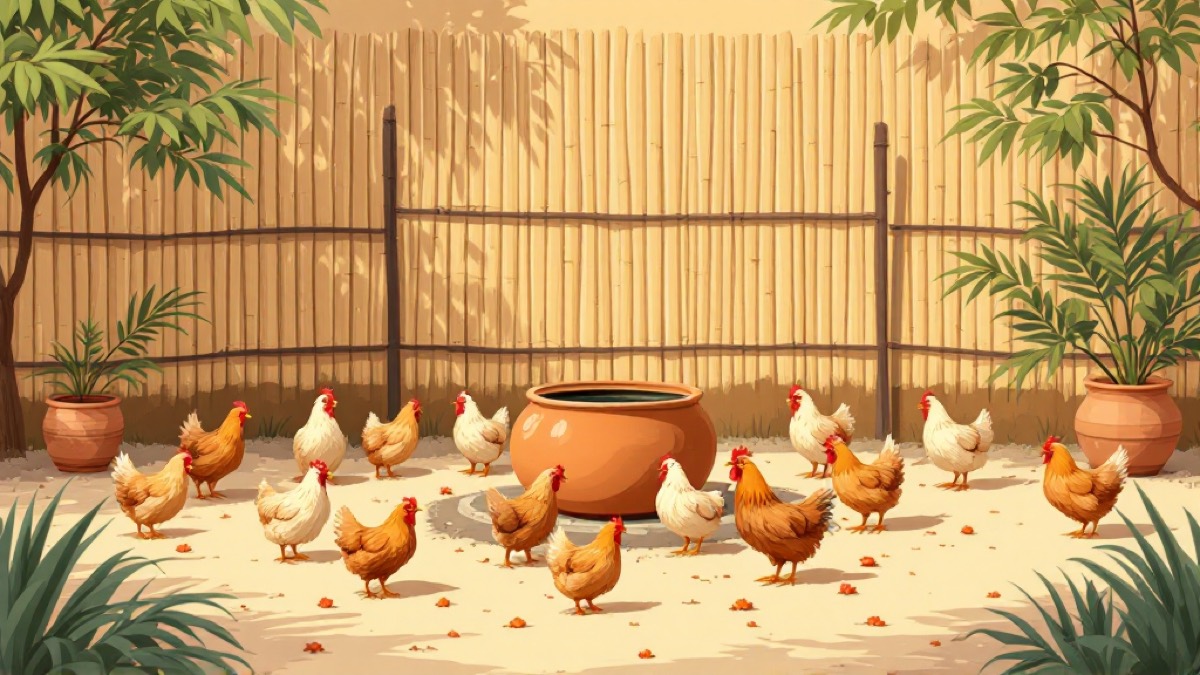
What Is a Cockerel? And What to Do With Them
TL;DR: A cockerel is a young male chicken; a mature one is a cock or rooster — tandang in Filipino. If you bought straight-run chicks, roughly half are cockerels, which is the surprise most new keepers get. They become a problem at maturity: crowing, fighting each other, harassing pullets. Decide what happens to them before that point — meat, sale, keeping one, or rehoming. Postponing is the option that does not work.
The word is simple. The planning it implies is where keepers get caught out.
The Vocabulary
| Term | Meaning | Filipino |
|---|---|---|
| Chick | Newly hatched, either sex | Sisiw |
| Cockerel | Young male | — |
| Pullet | Young female, not yet laying | — |
| Cock / rooster | Mature male | Tandang |
| Hen | Mature female, laying | Inahin |
| Stag | Young male, in gamefowl usage | — |
| Capon | Castrated male | — |
In gamefowl keeping the vocabulary differs — a young male is a stag, and the site’s glossary covers the rest.
Telling Him From a Pullet
The markers arrive in sequence, not all at once:
- Comb and wattle development — usually first, larger and redder in males.
- Feather shape — the dependable one. A male’s hackle and saddle feathers are long, narrow, pointed and glossy, and he grows long curved sickle tail feathers. A female’s are rounder and shorter.
- Behaviour — posturing, sparring, standing tall.
- Spurs, with age.
- Crowing, later.
Full detail in rooster vs hen, and the documented exception is the hennie — a genetically hen-feathered male, where plumage will not sex him.
For sexing at day old, see how to sex chicks: reliable methods are trained vent sexing, feather sexing in suitable strains, and deliberate sex-link crosses. Everything else circulating is folklore.
Why You Have So Many
Straight-run chicks are unsexed — roughly half male.
That is why our day-old chick prices guide argues for comparing price per pullet rather than price per chick. Sexed pullet chicks cost more per head precisely because the separation has already been done.
If you bought straight-run and wanted layers, the cockerels are not a surprise so much as an unbudgeted line item: they eat like growing birds for months and produce nothing directly.
When They Become a Problem
At maturity, and fairly suddenly:
- Crowing. In a residential area this is the constraint that decides whether you can keep poultry at all — see why do roosters crow. Check local rules before assuming.
- Fighting each other. Young cockerels often coexist; mature males frequently do not, and in gamefowl they cannot be housed together at all — see gamefowl farm design and layout.
- Harassing pullets. Too many males for the number of females shows as broken feathers, bare backs and stressed hens.
- Eating like adults while producing nothing.
The Options
Decide before maturity, because after it the decision is being forced by circumstances.
| Option | Notes |
|---|---|
| Meat | The usual answer, and the reason straight-run works for keepers who want both — see how to dress a chicken and dressing percentage |
| Sell live | Simplest; live-weight price, buyer does the processing — see broiler prices |
| Keep one as flock rooster | For fertile eggs and flock guarding — see can hens lay eggs without a rooster |
| Rehome | Works occasionally; do not assume someone wants a crowing bird |
| Grow out separately | A bachelor group away from hens, until you decide |
Growing them on separately is the practical middle path: it removes the harassment problem and buys time, at the cost of feed and a second pen.
Whatever you choose, record it — knowing how many cockerels a straight-run batch produced, and what they cost to grow out, is exactly the information that makes the next purchase decision better.
If You Keep One
- One rooster for a reasonable number of hens. Too few hens per male shows on the hens.
- Temperament varies by individual and by line. Where children are around the flock, that matters — ask the breeder, and be willing to change your mind.
- He does a job: watching for threats, keeping order, calling hens to food. Flocks with a rooster often show less hen-on-hen conflict — see the pecking order.
- He is only required if you want fertile eggs.
The Honest Limits Here
The terminology and the sequence of sexual maturity markers described are standard poultry knowledge. This guide gives no ages in weeks for when a cockerel matures or when problems begin, because that varies substantially by breed, strain and individual. Local rules on keeping roosters vary — check with your barangay or subdivision before acquiring one.
Related: rooster vs hen, how to sex chicks, pullet chicken, tandang.
Frequently Asked Questions
What is a cockerel?
A young male chicken that has not yet reached maturity. Once mature he is a cock or rooster, called tandang in Filipino.
What is the difference between a cockerel and a rooster?
Age and maturity. A cockerel is the young bird; a cock or rooster is the mature one. The bird is the same, at different stages.
How do I tell a cockerel from a pullet?
Comb and wattle development usually shows first, then feather shape — a males hackle and saddle feathers are long, narrow and pointed, and he grows long curved sickle tail feathers. Crowing and spurs come later.
Why do I have so many cockerels?
If you bought straight-run chicks, roughly half are male. Sexed pullet chicks cost more per head precisely because someone has already separated them.
Can cockerels be kept together?
Young ones often can, in a group away from hens. As they mature, fighting increases, and mature males of some types cannot be housed together at all.
When do cockerels start causing problems?
As they mature — crowing, fighting each other, and harassing pullets. Deciding what happens to them before that point is much easier than after.
What are the options for surplus cockerels?
Meat, sale, keeping one as a flock rooster, or rehoming. The one thing that does not work is postponing the decision.