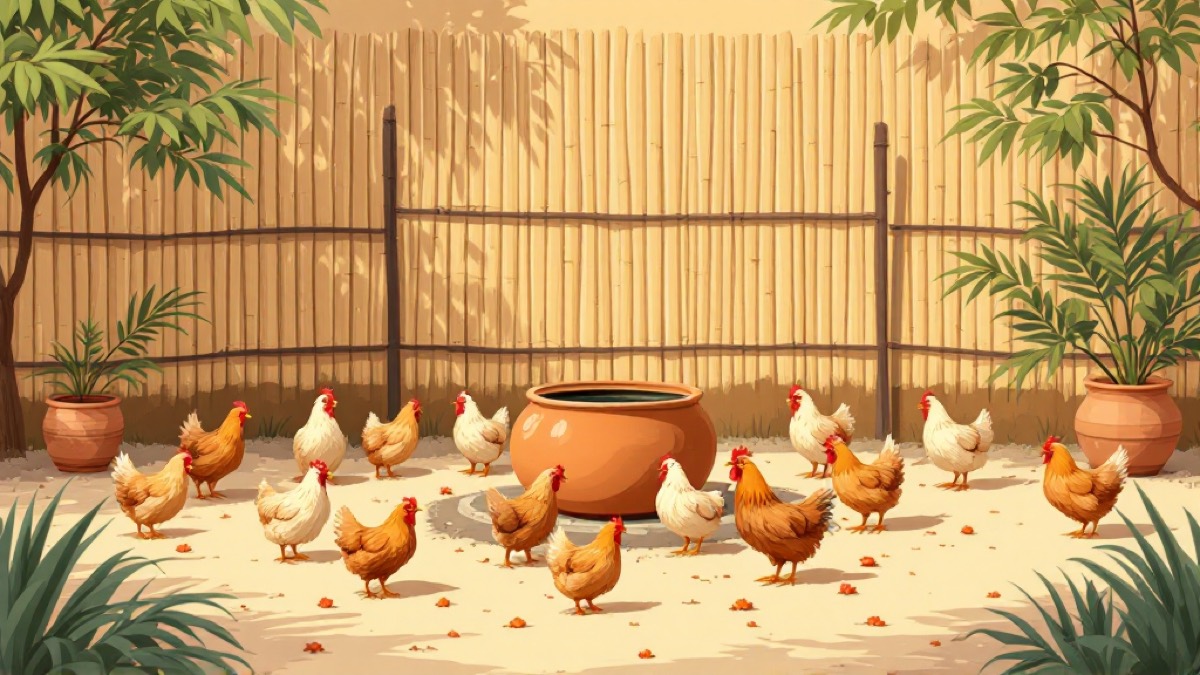
The Pecking Order: Normal, and When It Turns Into Bullying
TL;DR: A hierarchy is normal — a settled one reduces conflict rather than causing it. The problems are when a bird cannot reach feed or water, when feathers are being pulled, or when blood is drawn. Blood is an emergency: chickens are strongly drawn to it and will attack a wound within minutes, so remove the bird immediately. Most feather pecking is an environment problem — crowding, boredom, too few feeding points, bright light, heat — not a character problem.
Flocks sort themselves out. What they do not sort out is a badly designed pen.
The Hierarchy Is Not the Problem
Every flock establishes an order: who eats first, who takes the best perch, who gives way. It is established through display, pecking and posturing, and once settled it reduces conflict, because the questions have been answered.
Normal signs of a working hierarchy:
- Brief pecks and displacements at the feeder.
- A clear order at roosting time.
- Lower-ranked birds waiting rather than fighting.
- Squabbles that resolve in seconds.
You will see the same principle audibly in roosters: research has found crowing order follows rank, with the top bird going first — see why do roosters crow.
Where It Stops Being Normal
Three lines, and they are the ones to watch for:
1. A bird cannot eat or drink. If a bird is being blocked from feed or water, the hierarchy has become a welfare problem regardless of how little actual fighting you see. Watch who eats last, and whether they get enough.
2. Feathers are being pulled out. Not incidental pecking — deliberate pulling, leaving bare patches, usually on the back, vent or tail. This is a learned habit that spreads through a flock.
3. Blood is drawn. This is an emergency. Chickens are strongly attracted to red tissue and will attack a wound, and the escalation is fast — the same mechanism that makes vent prolapse so urgent.
If there is blood: remove the bird immediately, before you assess anything else. Clean the wound, keep it isolated until fully healed, and only then reintroduce — see chicken first-aid kit.
What Actually Causes Feather Pecking
Almost always the environment rather than the bird:
| Cause | Fix |
|---|---|
| Crowding | Space — see coop space per bird |
| Too few feeders and drinkers | More feeding points, spread apart — see DIY chicken feeder |
| Boredom | Something to scratch through, greens, room to forage |
| Very bright light | Reduce intensity; dim nest boxes |
| Nutritional shortfall | Correct ration — see what to feed chickens at every life stage |
| Heat stress | Shade, ventilation, cool water — see heat stress in chickens |
| Parasites | Irritated birds peck more — see mites and lice |
| A sick or injured bird | Flocks single out the weak; isolate and treat |
| Nothing to do all day | Confinement without enrichment is the underlying issue in most cases |
Note the pattern: change the pen, not the bird. Removing one “bully” from a crowded pen usually just promotes the next one.
Introducing New Birds
The point at which most serious conflict happens.
- Quarantine first, always — this is a health step, before it is a social one.
- Introduce at night, onto the perch, so they wake up together.
- Introduce more than one bird at a time if you can, so attention is divided.
- Extra feeders and drinkers, spread well apart.
- Visual breaks — a partition, a box, something to get out of sight behind.
- Watch the first days closely. Expect sorting; intervene at injury.
- Separate anything that draws blood immediately.
Birds Most at Risk
- Small breeds among large ones — bantams, Seramas.
- Crested breeds, which cannot see well and whose crests are a visible target — see Polish.
- Silkies, flightless and gentle.
- Sick or injured birds, which is why isolating an unwell bird protects it as well as the flock.
- New arrivals, obviously.
- A hen with any exposed red tissue, which is why prolapse is an emergency.
Housing gentle and assertive breeds separately is often simpler than managing the consequences of mixing them.
Does a Rooster Help?
Often, yes. Flocks with a rooster commonly show less hen-on-hen conflict, since he intervenes and enforces order.
That is one argument for keeping one — set against crowing, space, and the fact that hens lay perfectly well without him. See rooster vs hen and can hens lay eggs without a rooster.
The Honest Limits Here
That chickens form a social hierarchy, that a settled hierarchy reduces conflict, and that feather pecking is associated with crowding, boredom, inadequate feeding space, light intensity, nutrition and stress, are established poultry behaviour and welfare findings. That chickens are attracted to blood and will attack exposed wounds is well documented and is the reason for the immediate-removal advice. This guide recommends no anti-pecking devices or physical interventions, and does not describe beak treatment, which is a regulated husbandry procedure rather than a backyard one. Where pecking persists after the environmental causes are addressed, consult a veterinarian or agrivet.
Related: coop space per bird, quarantining new birds, heat stress in chickens, chicken first-aid kit.
Frequently Asked Questions
What is the pecking order?
The social hierarchy in a flock, which determines who eats first, who roosts where, and who gives way to whom. It is normal, and a settled hierarchy actually reduces conflict rather than causing it.
When does normal pecking become a problem?
When a bird is prevented from eating or drinking, when feathers are being pulled out, or when any blood is drawn. Blood is an emergency, because chickens are strongly attracted to it and will attack the wound.
What causes feather pecking?
Crowding, boredom, too few feeding and drinking points, very bright light, nutritional shortfalls and heat stress are the common contributors. It is usually an environment problem rather than a character problem.
What do I do if a bird is bleeding?
Remove it from the flock immediately. Chickens will attack an exposed wound and the damage escalates fast. Clean the wound, keep the bird separated until it is fully healed.
How should I introduce new birds?
After quarantine, introduce at night onto the perch, provide extra feeders and drinkers spread apart, and give space and visual breaks so a bullied bird can get out of sight.
Does a rooster reduce fighting?
Flocks with a rooster often show less hen-on-hen conflict, since he intervenes and keeps order. That is a reason some keepers keep one, alongside the noise and space costs.
Will a bullied bird be accepted eventually?
Often, once the hierarchy settles. Persistent targeting of one bird usually means something structural — crowding, too few feeders, or a bird that is unwell and being singled out.