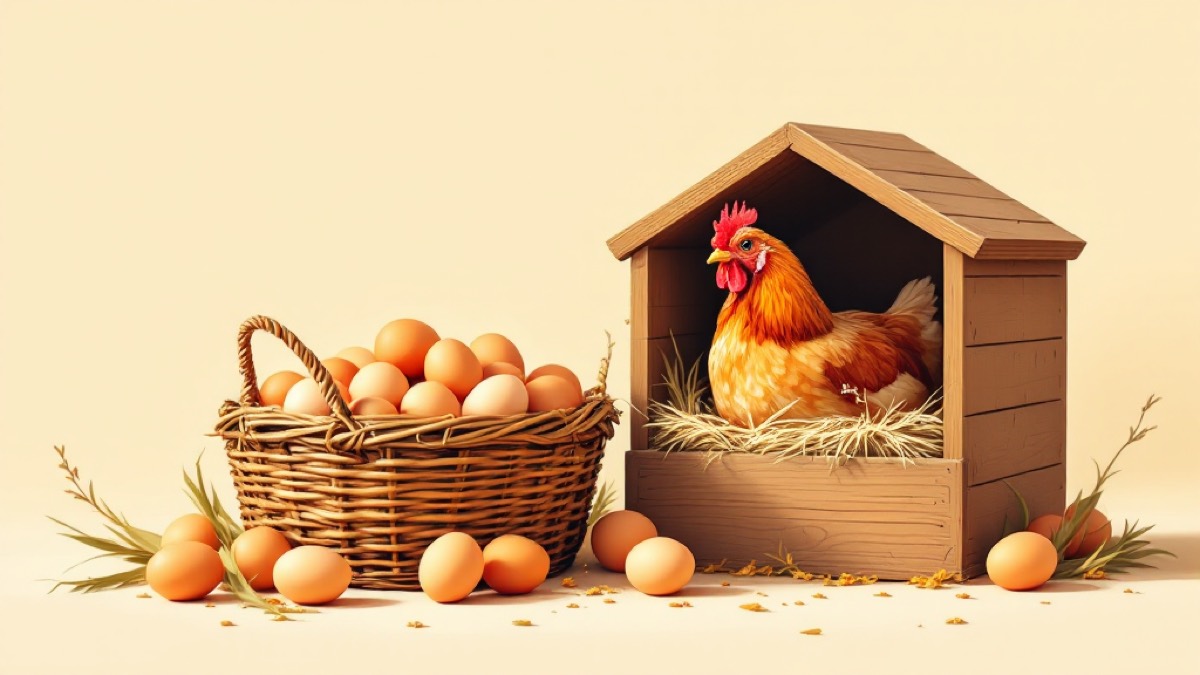
Can Hens Lay Eggs Without a Rooster?
TL;DR: Yes, hens lay without a rooster. Egg production is the hen’s own cycle. The rooster only decides whether those eggs are fertile — that is, whether they could hatch. Unfertilised eggs are perfectly good to eat, and the blood spot people point at is a ruptured blood vessel, not an embryo. Keep a rooster if you want to hatch chicks or want his flock-guarding role; skip him if you just want eggs.
This is the most common misunderstanding in backyard chicken keeping, and it costs people money on roosters they did not need or eggs they thought they could hatch.
The Straight Answer
A hen ovulates on her own cycle. An egg forms and is laid regardless of whether a male is anywhere near her. That process is hers alone.
What the rooster adds is fertilisation. Mate the hen and the egg she lays is fertile and can develop into a chick if incubated. No rooster, no fertilisation, and the egg is simply an egg.
| Rooster present | No rooster | |
|---|---|---|
| Hen lays eggs | Yes | Yes |
| Number of eggs | Unchanged | Unchanged |
| Eggs are fertile | Yes | No |
| Eggs can hatch | Yes, if incubated | No |
| Eggs safe and good to eat | Yes | Yes |
Two Things People Mistake for Fertility
1. The blood spot. A small red spot in the yolk or white is a ruptured blood vessel from the ovary during the egg’s formation. It is harmless, has nothing to do with a rooster, and can be lifted out if you would rather not see it. Hens with no rooster within a kilometre produce blood spots.
2. The small white spot on the yolk. Every yolk has one — the germinal disc. In an infertile egg it is a small solid dot; in a fertile egg it develops into a slightly larger ring shape. Telling them apart takes practice and a fresh cracked egg, and it is not something to judge through the shell.
You cannot tell fertility from the outside of an egg. Candling around day 7 of incubation is the practical method — see candling eggs.
So Should You Keep a Rooster?
Reasons to keep one:
- You want to hatch chicks. This is the only requirement that cannot be met another way — see hatching under a broody hen and how to incubate chicken eggs.
- Flock protection. A rooster watches, warns and puts himself between the flock and a threat.
- Social order. Flocks with a rooster often have less hen-on-hen conflict.
- He calls hens to food and generally organises the flock’s day.
- You are breeding, whether for gamefowl or to renew a purebred flock.
Reasons not to:
- Crowing, which in a residential area is a genuine constraint on keeping poultry at all.
- Space — mature males of many types cannot be kept together, which drives your whole layout.
- Aggression, towards people and towards hens. Some individuals and some lines are worse.
- Wear on hens. Too few hens per rooster shows up as broken feathers and bare backs.
- Local rules. Some subdivisions and barangays restrict roosters. Check before buying.
Our rooster vs hen guide covers telling them apart and what changes when a cockerel matures.
If You Do Want Fertile Eggs
- One rooster covers a number of hens — how many depends on breed, age and the individual bird. An older or unfit rooster covers fewer than people assume.
- Verify rather than assume. Set a batch and candle at day 7. A high proportion of clear eggs is a rooster problem, not an incubator problem — see hatch rate, which explains why fertility and hatchability are separate numbers.
- Fertility takes a few days to establish after a rooster is introduced, and it persists for a period after he is removed.
- Condition matters. A rooster in poor condition, carrying parasites, or overheated is a less effective breeder. For gamefowl breeding preparation see priming broodcocks and broodhens.
- Collect and store hatching eggs properly — see how to store hatching eggs.
Eating Fertile Eggs
Perfectly normal. A fertile egg collected promptly and kept cool is not developing — development needs sustained incubation temperature.
The practical rule for a flock with a rooster is simply to collect eggs frequently, which you should be doing anyway. An egg left in a nest under a broody hen for days is a different matter, and that is not the same as a fertile egg collected the same day.
For keeping eggs after collection, see how to store chicken eggs.
The Honest Limits Here
That hens lay independently of the presence of a male, that the rooster’s role is fertilisation, and that blood spots are ruptured vessels unrelated to fertility, are basic and well-established poultry biology. This guide gives no hen-to-rooster ratio, because the workable number varies by breed, by the individual bird’s age and condition, and by how the flock is managed — candling a set batch at day 7 tells you what your own rooster is actually achieving, which no published ratio can.
Related: rooster vs hen, why do roosters crow, candling eggs, how many eggs does a hen lay in a lifetime.
Frequently Asked Questions
Can hens lay eggs without a rooster?
Yes. A hen lays on her own cycle whether or not a rooster is present. The rooster only determines whether those eggs are fertile and could hatch.
What does a rooster actually do then?
He fertilises eggs so they can hatch. He also watches for danger, keeps order in the flock and calls hens to food. None of those functions affect whether eggs are produced.
Are unfertilised eggs safe to eat?
Yes. Almost all commercial table eggs are unfertilised, and there is no nutritional or safety difference between a fertile and an infertile egg for eating.
Is a blood spot in the yolk a sign of fertilisation?
No. A blood spot is a small ruptured blood vessel and is unrelated to fertility. It is harmless, and it can be removed if it bothers you.
How can I tell if an egg is fertile?
Not from the outside. Candling around day 7 of incubation shows development, or an egg can be opened to examine the germinal disc — which of course means it will not hatch.
Should I keep a rooster in a backyard flock?
Only if you want fertile eggs, or want the flock protection and social structure he brings. Against that, weigh the crowing, the space, the risk of aggression, and any local rules on keeping roosters.
How many hens does one rooster cover?
It varies with the breed and the individual bird, and an ageing or unfit rooster covers fewer than people assume. If fertility matters, candling at day 7 is how you find out what he is actually achieving.