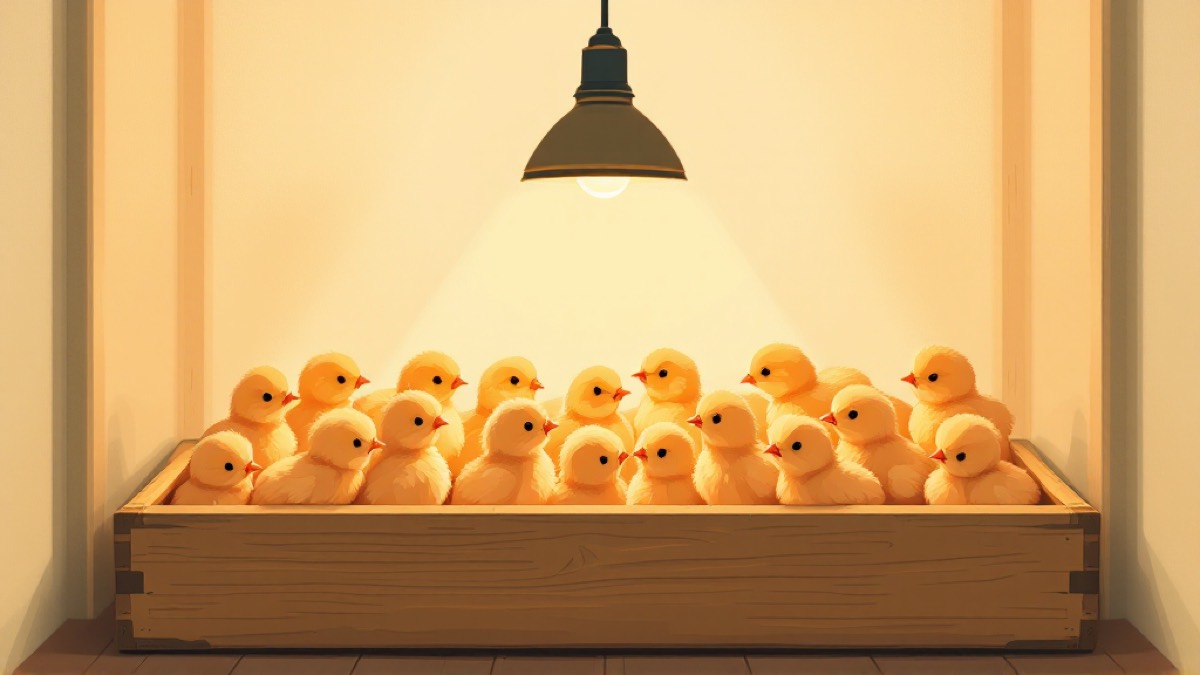
How to Keep Chicks Warm Without a Heat Lamp
TL;DR: A broody hen is the best no-electricity brooder there is — heat on demand, protection, and teaching, with no brownout risk. Otherwise: heat plates are safer than lamps, an insulated brooder in a warm interior room does much of the work in Philippine conditions, and covered warm-water containers are a real stopgap during an outage. Whatever you use, watch for piling — cold chicks smother each other in a corner within minutes.
Philippine ambient temperatures mean chicks here need less supplementary heat than a temperate poultry book assumes. That does not mean none, and nights are the test.
Option 1: A Broody Hen
The oldest system, and still the best one on a property with unreliable power.
She supplies warmth exactly when the chicks want it, shelters them under her body, protects them from other birds, and teaches them to eat and drink — the entire job of a brooder, done without a wire.
What she needs from you: a safe, dry, separate space; chick-appropriate feed she can also eat; shallow water; ground-level access so day-old chicks can follow her. Full method in hatching under a broody hen.
The limitation: you cannot schedule her. If you need chicks at a particular time, or in numbers beyond what one hen covers, you need equipment. Note also that modern layer hybrids rarely go broody, while Silkies and many bantams reliably do.
Option 2: A Heat Plate
Not a no-electricity option, but the lowest-risk one and worth naming here.
A radiant plate that chicks huddle under runs at a far lower surface temperature than a suspended bulb, cannot ignite bedding the same way, and gives the chicks a dark space underneath that suits their instincts better than a bright lamp. See brooder heat: lamps, plates and fire safety.
Option 3: Make the Environment Do the Work
In much of the Philippines, ambient temperature covers a large share of a chick’s needs during the day. The job becomes retaining heat rather than generating it.
- Small brooder, not large. A big box with a few chicks in it is a big volume to keep warm. Size the space to the number of chicks and expand as they grow.
- Insulate. A cardboard box inside a larger box, with crumpled paper between, is genuinely effective. So is a styrofoam container with ventilation cut in.
- Solid sides, not wire. Wire-sided brooders lose heat in every direction and let draughts through.
- A lid or partial cover, leaving ventilation. Warm air rises out of an open box.
- Deep dry bedding. It insulates from below, which is where a chick loses heat standing.
- Warmest interior room, away from windows, doors and the path of any fan.
- Block draughts completely. A draught is worse than a cool room — cool still air is survivable, moving air strips heat off a chick.
Option 4: Stored Heat
For outages, or for topping up a well-insulated brooder.
- Sealed containers of warm water, wrapped in cloth so no chick touches a hot surface and nothing gets wet. Chicks huddle against them like a hen. Replace as they cool.
- Warmed bricks or stones, wrapped, using the same principle. Warm, never hot.
- A huddle box — a small covered box within the brooder that the chicks can enter, holding their own body heat. Simple, free, and surprisingly effective with a decent number of chicks.
These are bridges, not systems. They need attention and replacement, and they will not carry a batch of newly hatched chicks through a cold night on their own.
Reading the Chicks
The chicks tell you what they need better than any thermometer:
| Behaviour | Meaning |
|---|---|
| Huddled tight, loud persistent cheeping | Too cold |
| Spread to the walls, panting, away from heat | Too hot |
| Piled in one corner | Draught, or too cold — act immediately |
| Scattered, moving, eating, sleeping in loose groups | Right |
Piling is the emergency. Chicks pile when cold or frightened and the ones underneath smother, sometimes within minutes. Prevent it by rounding off the corners of a square brooder — a strip of cardboard curved into each corner is enough — and by fixing the cold or the draught that caused it.
Check at night. Philippine days and nights differ enough that a brooder that is comfortable at noon can be dangerous at three in the morning, and night is when losses happen.
The Brownout Routine
- Close it down — lid on, open area reduced, insulation added around the outside.
- Move it to the warmest interior room, out of any draught.
- Add stored heat — wrapped warm water containers, replaced as they cool.
- Add bedding depth.
- Reduce the space if the chicks are few, so their own body heat matters more.
- Watch them. Do not leave chicks unattended in a brooder losing heat.
If outages are routine where you live, plan the brooding season around a broody hen where you can, and treat the lamp as the backup rather than the system.
Coming Off Heat
Gradually, and generally sooner here than temperate guides suggest.
Reduce heat step by step across days, watching night-time behaviour after each reduction. The chicks are ready when they ignore the heat source, are properly feathered, and sleep scattered rather than huddled at night. See brooding temperature for chicks for the staged picture.
The Honest Limits Here
The behavioural signs described here — huddling, spreading, piling — are standard brooding practice and are the reliable guide. This guide gives no temperatures and no time periods, because the supplementary heat a chick needs depends on ambient conditions, brooder design, bedding depth and the number of chicks, and Philippine conditions vary widely between a lowland afternoon and a highland night. Watch the chicks. The warm-water and warm-stone methods described are stopgaps for outages, not a substitute for a proper brooding setup.
Related: how to brood chicks, brooder heat and fire safety, brooding temperature for chicks, hatching under a broody hen.
Frequently Asked Questions
Can chicks be raised without a heat lamp?
Yes. A broody hen does the job better than any lamp, and heat plates, insulated huddle boxes and warm ambient conditions all work. What chicks cannot survive is being cold and unable to get warm.
What is the best no-electricity option?
A broody hen. She provides heat on demand, protection, and teaches the chicks to eat and drink, and she is unaffected by power cuts.
How do I keep chicks warm during a brownout?
Close the brooder down to conserve heat, insulate around it, block draughts, move it to the warmest interior room, and use covered warm water containers as a temporary radiant source. Watch for piling.
Are hot water bottles safe for chicks?
A sealed container of warm water, wrapped in cloth so chicks cannot touch a hot surface or get wet, is a workable stopgap. It must be replaced as it cools, and it is a bridge rather than a system.
How warm does a brooder need to be in the Philippines?
Less supplementary heat than temperate guides assume, because ambient temperature does much of the work — but chicks still need a warm spot they can return to, especially at night when temperatures drop.
How do I know if chicks are cold?
They huddle tightly together and cheep loudly and persistently. Chicks at the right temperature scatter, move around, eat and sleep in loose groups.
What is piling and why is it dangerous?
Cold or frightened chicks pile on top of each other in a corner, and the ones underneath smother. It is one of the fastest ways to lose a batch and it happens in minutes.