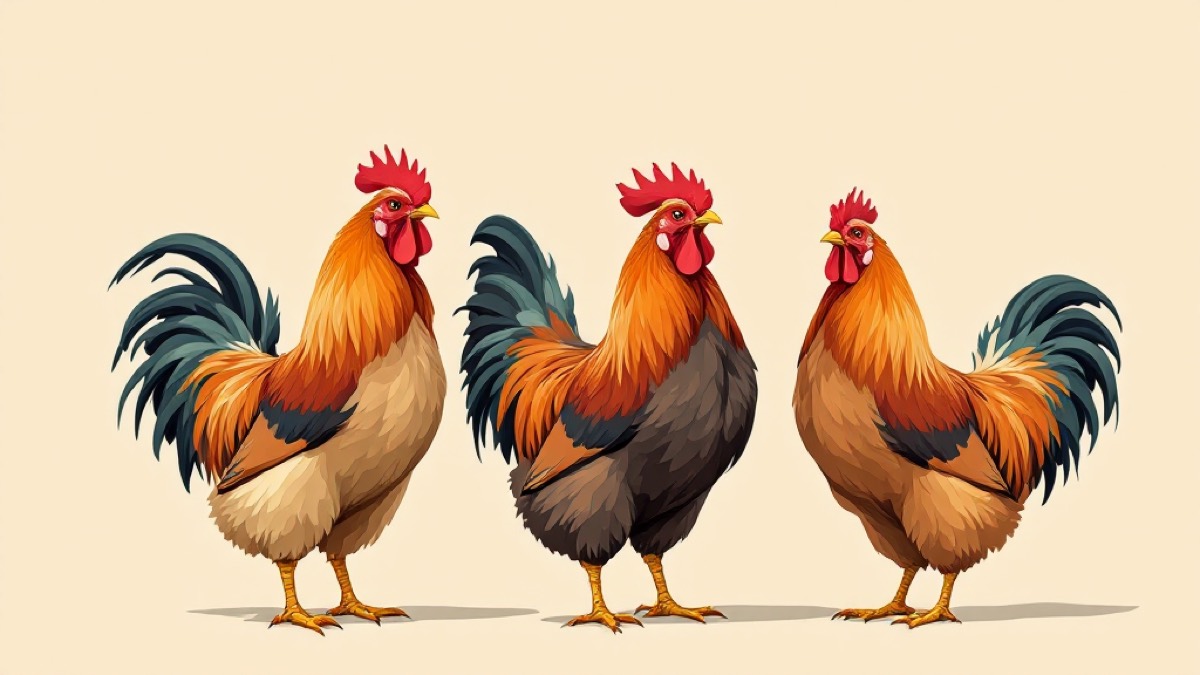
Aseel (Asil): The Oldest Game Breed
TL;DR: The Aseel (also spelled Asil) is an ancient South Asian game breed — hard-feathered, densely muscled, upright, pea-combed, with sparse plumage over a heavy body. Unlike Kelso or Sweater, it is a recognised breed with a written standard, not a bloodline. It lays few eggs and matures slowly. Its historical importance is enormous: its muscling fed into the Cornish, and the Cornish sits under modern commercial broiler genetics. Males cannot be housed together, which shapes any facility that keeps them.
Almost every conversation about game stock in the Philippines is about American bloodline names. This is the breed underneath a lot of that history.
What Is an Aseel?
An ancient game breed of the Indian subcontinent, kept for centuries and documented in poultry literature as one of the oldest game types. The name derives from a word meaning pure or of noble descent, which tells you how the breed was regarded by the people who kept it.
Physically it is unlike a production chicken in every dimension:
| Feature | Aseel |
|---|---|
| Feathering | Hard, close, sparse — skin often visible through the plumage |
| Body | Dense, heavy muscling on a compact frame |
| Carriage | Upright, forward-leaning, powerful |
| Comb | Pea comb, small and low |
| Head | Broad skull, strong beak, prominent brow |
| Legs | Thick, well spaced, strong bone |
| Maturity | Slow |
| Egg output | Low |
The pea comb and hard feather are shared with the other ancient Asiatic game types — Malay and Shamo — and mark the whole group.
Breed, Not Bloodline
This distinction is the reason the guide exists, and our fighting rooster breeds guide sets it out in full.
- A breed is defined by a published standard. You can compare a bird against a written description and say whether it conforms. Aseel, Malay and Shamo are breeds.
- A bloodline is a family of birds maintained by breeders, defined by ancestry and records. Kelso, Sweater, Hatch, Roundhead and the rest are bloodlines.
For a buyer this matters practically. With an Aseel you can ask whether the bird matches the breed standard. With a bloodline you are relying on the breeder’s pedigree records — see gamefowl breeding chart and pedigree tracking for what those should look like.
Its Place in Poultry History
The Aseel’s influence reaches far beyond game stock.
Its heavy muscling was used in developing the Cornish, an English breed built on game blood and selected for exceptional breast and thigh development. The Cornish, crossed onto the White Plymouth Rock and selected for decades, sits at the foundation of modern commercial broiler genetics — see Cornish Cross and broiler chicken breeds.
So the line runs: ancient Asiatic game breed → Cornish → modern broiler. It is indirect and it took a long time, but the muscling that makes a commercial broiler what it is traces back through this family.
What Does Keeping Them Require?
Space, separation and patience.
- Males must be housed separately. Mature game males cannot be run together, which is the single biggest constraint on any facility keeping them. Our gamefowl farm design and layout guide covers how that shapes a site.
- They mature slowly. Nothing about this bird is fast. Budget feed and time accordingly.
- They are not production stock. Few eggs, slow growth, no meat-market role. If production is your goal, see best layer chicken breeds or broiler chicken breeds.
- Health management is standard. Vaccination, parasite control and biosecurity are the same as for any flock — gamefowl vaccination program, internal parasites, backyard flock biosecurity.
- Hens go broody. Which makes them useful for hatching, as covered in hatching under a broody hen.
Sparse feathering over a dense body means these birds carry less insulation than a soft-feathered breed. That is generally an advantage in Philippine heat, but it also means less protection from sun on exposed skin and less padding against knocks — shade and sensible housing still matter.
Buying Aseel Stock Here
Through breeders, not through commercial channels.
Ask the same questions you would ask about any game stock: where the birds came from, what has been crossed in and when, whether you can see the parents and the records, and what the health history is. Our gamefowl for sale buying guide and gamefowl breeders in the Philippines cover the process.
Because Aseel is a standardised breed, you have one extra tool a bloodline buyer does not have: you can compare the bird to the published breed description. Use it.
The Honest Limits Here
The Aseel’s South Asian origin, its status as one of the oldest documented game breeds, its physical standard, and its contribution to the development of the Cornish are documented in poultry breed literature and breed histories. This guide makes no performance claims, quotes no prices, and does not compare the breed to any bloodline on ability — such comparisons in this niche are reputation rather than measurement. What a buyer can verify is conformation, pedigree, parent stock and health history.
Related: fighting rooster breeds for breeds versus bloodlines, best gamefowl bloodlines, and chicken breeds in the Philippines.
Frequently Asked Questions
What is an Aseel chicken?
An ancient South Asian game breed, hard-feathered, heavily muscled and upright, with a pea comb and sparse plumage over a dense body. It is one of the oldest documented game breeds and a recognised breed with a written standard, unlike the American bloodlines.
Is Aseel spelled Asil or Aseel?
Both spellings are used for the same breed, along with Asli. The word derives from a term meaning pure or of noble descent.
Is the Aseel a bloodline or a breed?
A breed. It has a written standard describing type and appearance. Kelso, Sweater, Hatch and the other American names are bloodlines — strains maintained by breeders and traced by pedigree rather than defined by a standard.
Do Aseels lay well?
No. They lay few eggs, mature slowly, and hens are often broody. They were never selected for production and it shows.
Why is the Aseel important to modern poultry?
Its heavy muscling fed into the development of the Cornish, and the Cornish sits at the foundation of modern commercial broiler genetics. The line from ancient game breed to supermarket chicken is real, if indirect.
Can Aseel males be kept together?
No. Mature game males are intolerant of each other and must be housed separately, which shapes the whole layout of any farm keeping them.
Are Aseels kept in the Philippines?
Yes, mainly as breeding input and by keepers interested in the pure Asiatic game breeds. They are sourced through breeders rather than commercial channels.