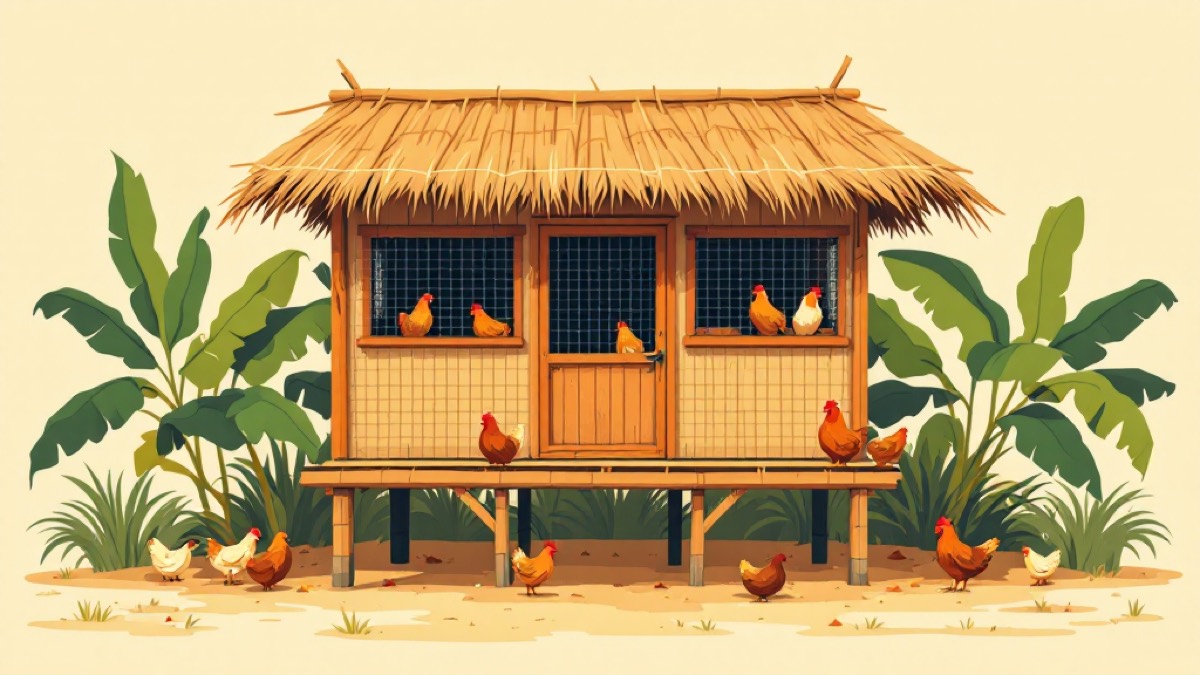
Gamefowl Farm Design and Layout Guide: Philippines
TL;DR: A well-planned gamefowl farm separates clean, production, service, and quarantine zones, uses elevated flooring and drainage for the rainy season, and orients housing to maximize airflow in Philippine heat. Small-scale setups (10-20 birds) need roughly 50-100 sq.m. of usable space and about ₱7,500-₱16,000 in DIY materials, while semi-permanent medium-scale setups (20-50 birds) run ₱40,000-₱83,000. Tie cord stakes should sit at least 3 meters apart, and quarantine areas need at least 10 meters of separation from other zones.
The farm layout is the invisible backbone of a successful gamefowl operation. Good design saves time, reduces labor, minimizes disease risk, and maximizes space utilization. Bad design causes daily frustrations, health problems, and wasted resources.
In this article, we’ll walk you through planning an efficient gamefowl farm layout — from space requirements and housing types to practical tips specific to the Philippine tropical climate. If you’re just getting started, pair this with our guide to starting a gamefowl farm for the full beginner roadmap. The zoning, airflow, and drainage principles below hold for any chicken housing; the space-per-bird figures further down are sized for gamefowl tie-cord and pen setups specifically.
Principles of Chicken Farm Design
Principle 1: Separation and Biosecurity
A farm needs clear zones separated from each other:
Clean zone — breeding area, chick brooding area. This is the most protected area of the farm.
Production zone — grow-out area, conditioning area. Moderate traffic.
Service zone — storage, feed preparation, equipment. High traffic.
Quarantine zone — isolated area for new arrivals and sick birds. Separate from all other zones.
The flow of movement should be from clean to dirty, never the reverse. If you visit the quarantine area, don’t go back to the breeding area without proper sanitation.
Principle 2: Airflow and Ventilation
In the Philippine tropical climate, natural ventilation is critical. The farm layout should take advantage of prevailing wind direction:
Orient housing structures to maximize cross-ventilation. Avoid enclosed spaces that trap heat and ammonia. Open-sided structures are generally better than fully enclosed ones in the Philippine climate.
Principle 3: Drainage
The Philippines gets heavy rainfall. Farm design must prioritize water drainage:
Locate the farm on elevated ground, not in a low-lying area prone to flooding. Design drainage channels that direct rainwater away from housing areas. Housing floors should be elevated or have proper slope for drainage.
Principle 4: Efficiency of Movement
Daily farm routine involves feeding, watering, health checking, and cleaning — repeated for every bird. The layout should minimize walking distance and effort for these daily tasks.
How Much Space Does Each Gamefowl Need?
Per Gamefowl (Minimum)
Tie cord system: 2-3 square meters per gamefowl (including cord radius).
Individual pen/cage: 1.5 x 1.5 meters minimum floor space per gamefowl.
Breeding pen: 2 x 2 meters minimum for single mating; 2 x 3 meters for duo/trio setup.
Chick brooding area: 0.5 square meter per 10 chicks (first 4 weeks).
Grow-out area: 1 square meter per 3-4 growing birds (4-16 weeks).
Total Farm Size Examples
Small-scale (10-20 gamefowl): 50-100 square meters usable area.
Medium-scale (20-50 gamefowl): 150-300 square meters usable area.
Large-scale (50+ gamefowl): 300+ square meters usable area.
Note: “Usable area” excludes pathways, storage, and buffer zones. Total land needed is typically 1.5-2x the usable area.
What Housing Types Work Best for Philippine Farms?
1. Tie Cord System (Tying Post)
The most common and most affordable system in the Philippines.
Setup: Metal or wooden stakes hammered into the ground, with gamefowl attached via cord or rope. Each gamefowl has its own stake with a defined radius.
Layout tip: Arrange the stakes in a grid pattern with minimum 3-meter center-to-center spacing. This ensures no two gamefowl can reach each other’s territory.
Shelter: Each stake should have individual shade — a simple tee-pee shelter, umbrella, or small roofed structure.
Pros: Cheapest to set up, easy to expand, gamefowl have natural ground contact for foraging.
Cons: Exposed to weather, cords can tangle, and daily management is more labor-intensive.
2. Individual Pens (Nutri-Cage or Corral)
Enclosed individual pens provide more protection and control:
Setup: Small enclosures (1.5 x 1.5 m) with walls (bamboo, wire mesh, or wood) and roof.
Layout tip: Arrange in rows with a central pathway for easy access. The “double-row” layout (pens on both sides of the pathway) is the most space-efficient.
Pros: Better weather protection, easier disease control, cleaner environment.
Cons: More expensive to build, less natural ground contact, and can cause boredom without enrichment.
3. Breeding Pens
Dedicated enclosed areas for breeding pairs or trios:
Setup: 2 x 2 m (single) or 2 x 3 m (duo/trio) enclosed pens with nesting box, feeder, waterer, and shade.
Layout tip: Group breeding pens in a separate area — away from the noise and activity of the stag/cock area. A quieter environment is better for breeding.
Design details: Each pen should have solid walls (not wire mesh) between adjacent pens — so breeding pairs aren’t disturbed by neighbors. The front can be wire mesh for ventilation and visibility.
4. Brooder House
For day-old chicks up to 4-5 weeks:
Setup: Enclosed, warm area with controlled temperature. Can be a simple wooden box with a heat lamp up to a purpose-built brooder room.
Layout tip: Locate near the breeding area for easy transfer of newly hatched chicks, but separate enough to maintain cleanliness.
5. Grow-Out Area
For growing birds (4 weeks to 4-5 months):
Setup: Several options — group housing (with wire dividers), small colony pens, or range system.
Layout tip: The grow-out area should have maximum space for exercise and development. An overcrowded growing area results in stunted growth and aggressive behavior.
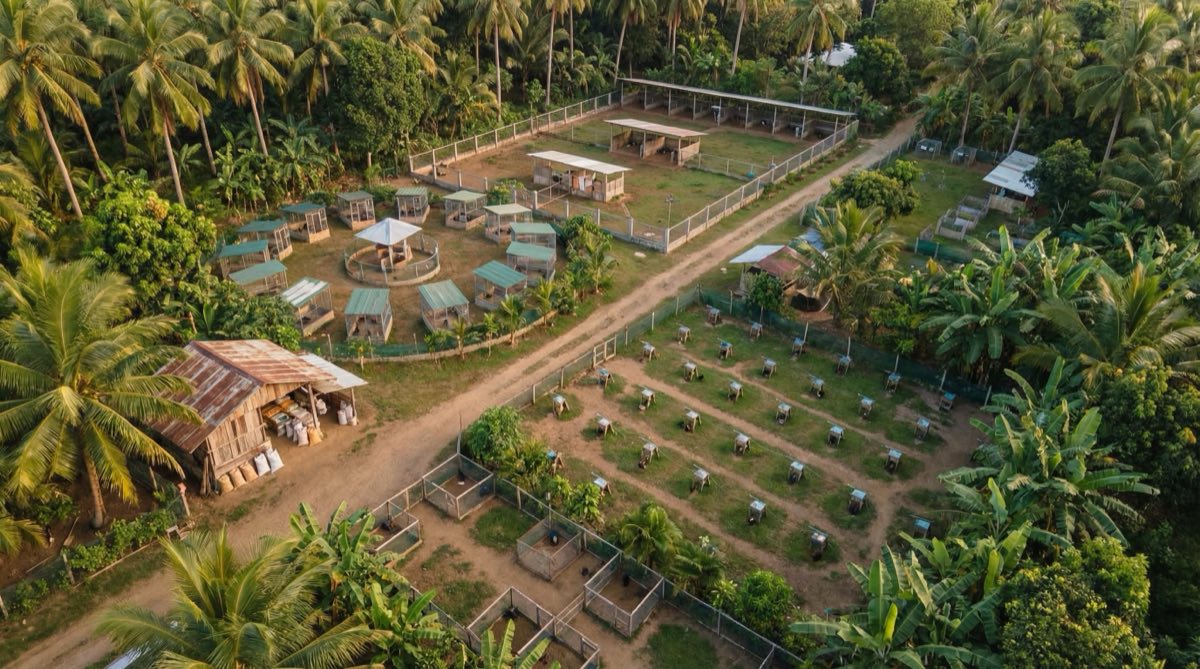
Sample Farm Layouts
Small-Scale Layout (10-20 gamefowl, ~80 sq.m.)
Picture the space divided into sections:
Section A — Breeding Area (25 sq.m.): 2-3 breeding pens (2x2m each), positioned in the quietest corner of the farm. With nesting boxes and dedicated feeders/waterers.
Section B — Stag/Cock Area (35 sq.m.): 8-12 tie cord stakes or individual pens, arranged in a grid. Central pathway for easy access. Individual shade per gamefowl.
Section C — Service Area (10 sq.m.): Feed storage, equipment storage, water source.
Section D — Brooder/Grow-Out (10 sq.m.): Small brooder setup and grow-out pen. Seasonal use — active during breeding season.
Medium-Scale Layout (30-50 gamefowl, ~250 sq.m.)
A medium-scale farm has more defined zones:
Zone 1 — Breeding (60 sq.m.): 5-8 breeding pens, brooder house, and grow-out area. Enclosed and protected. Entry point has a foot bath for biosecurity.
Zone 2 — Production/Stag Area (120 sq.m.): 20-30 individual pens or tie cords, arranged in double rows with a central pathway. Conditioning area included — see our 21-Day Gamefowl Conditioning Program for what that space needs to support.
Zone 3 — Service (40 sq.m.): Feed storage room, mixing area, equipment shed, water tank system.
Zone 4 — Quarantine (30 sq.m.): Isolated area at the far end of the farm for new arrivals and sick birds. Minimum 10 meters away from other zones.
Climate-Specific Design Tips for the Philippines
Heat Management
The Philippines is hot — heat stress is a real threat:
Orientation. Orient housing so the long axis runs East-West to minimize direct sun exposure on the sides.
Roof material. If budget allows, use insulated roofing or a double-layer roof (cogon over yero) to reduce heat transmission.
Shade trees. Plant shade trees around the farm — but maintain distance so they don’t obstruct airflow.
Misting system (optional). For medium to large scale, a simple misting system significantly reduces temperature during extreme heat.
Rain Management
Heavy rains are a regular occurrence:
Extended roof overhangs. Minimum 1-meter overhang to protect birds from wind-driven rain.
Raised flooring. Elevate housing at least 6 inches from ground level to prevent flooding.
Drainage channels. Dig shallow channels around housing areas to direct rainwater away.
Typhoon Preparation
In typhoon-prone areas:
Solid construction. Housing should be sturdy enough to withstand strong winds. Temporary structures should have reinforcement options.
Emergency shelter. Have a contingency plan for emergency transfer of birds to a more protected structure during severe weather.
How Much Does It Cost to Set Up a Gamefowl Farm?
DIY Small-Scale (Using Local Materials)
Tie cord stakes (10 pcs): ₱500 – ₱1,000 Tee-pee shelters (10 pcs): ₱2,000 – ₱5,000 (bamboo + trapal) Feeders and waterers (10 sets): ₱1,000 – ₱2,000 Breeding pen (2 pcs): ₱3,000 – ₱6,000 Basic brooder: ₱1,000 – ₱2,000 Total: ₱7,500 – ₱16,000
Semi-Permanent Medium-Scale
Individual pens (20 pcs, concrete block + wire mesh): ₱20,000 – ₱40,000 Breeding pens (5 pcs): ₱10,000 – ₱20,000 Brooder house: ₱5,000 – ₱10,000 Feed storage: ₱3,000 – ₱8,000 Water system: ₱2,000 – ₱5,000 Total: ₱40,000 – ₱83,000
Conclusion
Good farm design is a one-time investment that pays off every single day through saved time, reduced disease risk, and better gamefowl management — see our gamefowl farm business and ROI guide for how facility costs factor into overall profitability. Don’t rush the setup — plan properly, think long term, and build gradually.
Even if your operation is small-scale, a well-thought-out layout gives you a significant advantage over a haphazard setup.
For inspiration, our top game farms guide profiles established Philippine operations and how they’re set up — a useful reference point even at a much smaller scale.
Frequently Asked Questions
How much space does each gamefowl need in a tie cord system?
2-3 square meters per gamefowl, including cord radius, with stakes spaced at least 3 meters apart in a grid pattern.
What's the minimum floor space for an individual pen?
1.5 x 1.5 meters minimum per gamefowl for an enclosed individual pen.
How much does a DIY small-scale farm setup cost?
Around ₱7,500-₱16,000, covering tie cord stakes, tee-pee shelters, feeders and waterers, a small breeding pen, and a basic brooder.
How far should the quarantine area be from other zones?
At least 10 meters, positioned at the far end of the farm and isolated from clean and production zones.
Which direction should gamefowl housing face in the Philippines?
Orient the long axis East-West to minimize direct sun exposure on the sides and reduce heat stress.
How much roof overhang do gamefowl shelters need?
A minimum 1-meter overhang to protect gamefowl from wind-driven rain.
How high should housing floors be raised off the ground?
At least 6 inches, to prevent flooding during heavy rains.
Tie cord or individual pens — which is better?
Tie cords are cheaper and easier to expand but more labor-intensive and weather-exposed; individual pens cost more to build but offer better weather protection and disease control.