
5 Places to Buy Legit Gamefowl in the Philippines
TL;DR: Gamefowl in the Philippines are sold through established game farms, backyard breeders, Facebook groups, cockpit/derby events, and word of mouth — each with different tradeoffs on price, verification, and scam risk. Typical prices run ₱300–₱3,000 for day-old chicks up to ₱10,000–₱60,000+ for broodcocks. The biggest scam red flags are prices that are too low, no physical farm address, and stolen photos. This guide suits both first-time buyers and experienced breeders sourcing new bloodlines.
“Gamefowl for sale Philippines” is one of the most searched gamefowl terms on Google — and that’s not surprising. Many Filipino breeders and enthusiasts are looking for quality gamefowl online, but the challenge is simple: how do you find a legit seller in a market full of scams and questionable claims?
In this article, we’ll walk you through the entire buying process — from where to look, what the red flags are, to how to negotiate and ensure a quality purchase.
The Reality of the Gamefowl Market in the Philippines
Before we get into the buying guide, it’s important to understand the current landscape:
The market is primarily Facebook-based. Most gamefowl buying and selling in the Philippines happens on Facebook groups, Facebook Marketplace, and direct messaging. There’s no centralized platform — so information is scattered and sellers are hard to verify.
Scams are common. Since there’s no verification system on Facebook, many people take advantage. The most common scam: posting great photos (sometimes stolen from other breeders), then disappearing once the buyer sends money.
Quality varies wildly. A “Kelso” for ₱2,000 from a random Facebook seller is very different from a documented Kelso from an established game farm at ₱15,000. Both are called “Kelso,” but the quality gap is massive.
Location matters. Gamefowl prices and availability vary significantly by region. Cebu, Pampanga, Bulacan, and Batangas are known gamefowl hubs with more options.
Where Can You Find Gamefowl for Sale in the Philippines?
Gamefowl in the Philippines are sold through five main channels: established game farms, backyard breeders, Facebook groups, cockpit/derby events, and word of mouth. Each channel trades off price, verification, and scam risk differently — game farms offer the most accountability, while Facebook groups and other online-only sellers offer the widest selection with the least verification.
1. Established Game Farms
The most reliable source of quality gamefowl is established game farms — farms with years (sometimes decades) of track record in breeding.
Advantages: Documented bloodlines, consistent quality, a physical location you can visit, and a reputation to protect.
Disadvantages: Higher prices, some farms are by-appointment only, and not all sell retail — some cater only to bulk buyers or fellow breeders.
2. Backyard Breeders
Backyard breeders raise anywhere from a handful to a few dozen birds, often alongside other work, and make up a much larger — and mostly invisible — slice of the market than the big-name farms. Plenty of respected bloodlines started small before growing into farm-scale operations.
Advantages: Often more affordable than a game farm, and a direct relationship with the person who actually raised the bird.
Disadvantages: Less of a public track record to check — legitimacy depends more on local reputation and referrals than on anything searchable. See our guide to finding and vetting gamefowl breeders for how to check a backyard breeder’s claims before you buy.
3. Facebook Groups
Sabong and gamefowl Facebook groups are still the biggest marketplace for gamefowl in the Philippines. Some groups are regional (Cebu Gamefowl Breeders, Pampanga Sabong Community, etc.) and there are national groups too.
Advantages: Large selection, easy access, free to join, and fast responses.
Disadvantages: No verification, rampant scams, no quality control, and hard to filter legit sellers from frauds.
4. Cockpit and Derby Events
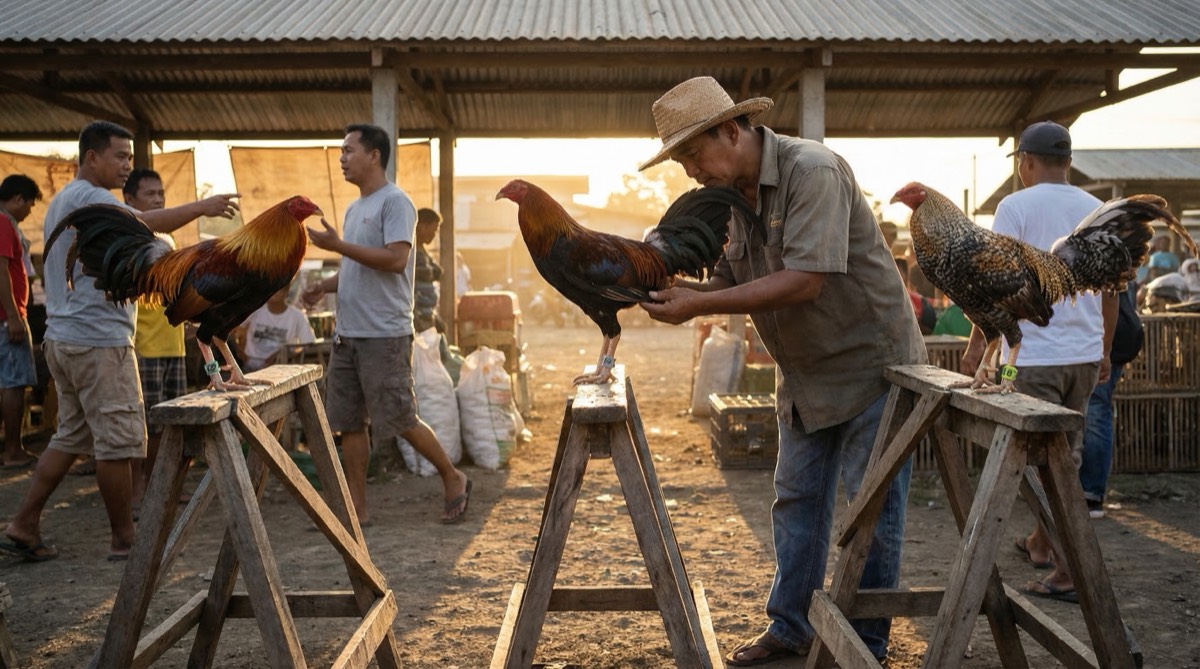
Cockpit events and derbies are excellent places to network and find sellers. You can see actual gamefowl in action and talk to breeders in person.
Advantages: Personal interaction, you see the actual quality of the gamefowl, and instant trust-building through face-to-face conversation.
Disadvantages: Limited to event schedules, not all breeders are open to selling at the cockpit, and sometimes decisions get emotional when you see a beautiful rooster in person.
5. Word of Mouth
Not all buying happens online. Personal referrals from friends, fellow breeders, or cockpit contacts are one of the most reliable sources.
Advantages: Built-in trust, firsthand experience from the referrer, and usually accountability since there’s a mutual connection.
Red Flags: How to Avoid Scams
Here are the warning signs you need to watch out for:
Obvious Red Flags
Price is too low. If a “pure Kelso battle cock” is only ₱1,500, something’s wrong. Legit documented bloodline gamefowl has a fair market value. If the price is too low, either the bloodline isn’t pure, there’s a health issue, or it’s an outright scam.
No physical address or farm location. Legit breeders have a farm you can visit. If the seller won’t share the location or allow a farm visit, be cautious.
Stolen photos. Reverse image search the gamefowl photos. If they show up on other accounts or websites, the photos are likely stolen.
“Ship first before viewing.” Even with cash-on-delivery options, sellers who won’t allow personal inspection before payment are suspicious.
New account. If the seller’s Facebook account is only a few weeks or months old and all the posts are about selling gamefowl, that’s a red flag.
Subtle Red Flags
Vague bloodline claims. “Kelso-type” and “has Kelso blood” are very different from “pure Kelso with documented pedigree.” Vague language is sometimes deliberate to avoid accountability.
Won’t show parents or breeding stock. Legit breeders are proud of their breeding stock. If they won’t show the sire and dam of the gamefowl being sold, ask why.
Pressure tactics. “A lot of people are asking about this” or “this is the last stock” — classic pressure tactics to rush your decision without proper verification.
No return/refund policy. A full refund isn’t expected in gamefowl, but reputable sellers usually have a policy for dead-on-arrival or misrepresented stock.
What Should You Check Before Buying Gamefowl?
Before committing to a purchase, do the following:
Verify the seller. Check their reputation — ask other breeders, look for reviews, and verify identity if possible.
Request the pedigree. Ask for breeding records, band numbers, and lineage documentation. Not all sellers have a formal pedigree, but credible sellers should at least have a verbal history that’s consistent and detailed.
Inspect personally if possible. Nothing beats a personal inspection. See the gamefowl in person — check the health, body condition, and physical traits.
Agree on terms before paying. What’s the warranty period (if any)? What’s the policy if there’s a health issue upon arrival? Who covers shipping fees? Clear all of this before paying.
Document the transaction. Take photos, save screenshots of conversations, and keep records of payment. If a problem comes up, you’ll have evidence.
How Much Does Gamefowl Cost in the Philippines?
Gamefowl prices in the Philippines range from ₱300 for a day-old chick to ₱60,000+ for a proven broodcock, depending on bloodline purity, breeder reputation, documentation, and market demand. For a deeper breakdown by bloodline and type, see the full gamefowl price guide.
| Type | Price Range (₱) |
|---|---|
| Day-old chicks | ₱300 – ₱3,000 |
| Pullets | ₱1,000 – ₱5,000 |
| Stags | ₱2,000 – ₱15,000 |
| Battle cocks | ₱5,000 – ₱30,000+ |
| Broodcocks | ₱10,000 – ₱60,000+ |
| Breeding trios | ₱10,000 – ₱50,000+ |
Note: Prices depend on bloodline purity, breeder reputation, documentation, and current market demand. The prices above are general ranges — not absolute values.
What Tips Help First-Time Gamefowl Buyers?
If this is your first time buying gamefowl, here are some practical tips:
Start small. Don’t jump straight to an expensive broodcock when you don’t have experience yet. Start with affordable stags or day-old chicks to learn the basics of care and management.
Build relationships. The gamefowl community is relationship-driven. You’ll get better deals when there’s trust between you and the seller. Attend cockpit events, join local breeder groups, and invest time in networking.
Learn before you buy. Study the basics first — bloodline identification, health assessment, and basic gamefowl care — before spending big money. There are plenty of resources online, including guides on ManokHub.
Don’t chase trends blindly. If there’s a trending bloodline (like the Lacy Roundhead right now), be careful not to overpay just because of the hype. The fundamentals — health, documentation, breeder reputation — matter more than trending status.
Where to Go From Here
See our guide on finding and vetting gamefowl breeders in the Philippines for a deeper walkthrough of how the breeder landscape is organized and how to check a specific seller’s claims before you pay.
Conclusion
Buying gamefowl in the Philippines doesn’t have to be difficult or risky. The key is to research, verify, and don’t rush. Buy from reputable sources, ask for documentation, and always prioritize quality over price.
If you want a deeper walkthrough of vetting a specific seller, see our guide to finding gamefowl breeders.
Ready to buy? Start with our guide to finding and vetting gamefowl breeders to find trusted sellers in your area.
Frequently Asked Questions
Where is the best place to buy gamefowl in the Philippines?
Established game farms offer the most accountability and documentation since they have a physical, checkable track record, while Facebook groups and online-only sellers offer the widest selection but the least verification.
How do I know if a gamefowl seller is legit?
Check for a verifiable physical farm location, willingness to show breeding stock, consistent and detailed lineage history, and a reasonable price relative to the bloodline. Be wary of sellers pushing "ship first before viewing."
Why is a "pure Kelso" being sold cheap a red flag?
Legit documented bloodline gamefowl has a fair market value. A price far below market for a claimed pure bloodline usually means the bird isn't pure, has a health issue, or the listing is a scam.
How much does a gamefowl stag cost in the Philippines?
Stags typically run ₱2,000–₱15,000, depending on bloodline, documentation, and breeder reputation.
What should I check before buying gamefowl?
Verify the seller's reputation, request pedigree or breeding records, inspect the bird in person if possible, agree on terms before paying, and document the transaction.
Is it safe to buy gamefowl through Facebook groups?
It can work, but Facebook groups have no built-in verification, so scams are more common there than with an established game farm you can visit in person. Extra due diligence is needed.