Hatch Gamefowl Guide: History, Types & Fighting Style
TL;DR: The Hatch is a US-origin gamefowl bloodline founded by Sanford Hatch, documented for its green (willow) legs, compact low-to-medium station, and heavier bone structure than Kelso or Sweater. Popular types include McLean, Penny, and Blueface Hatch, each with its own separately maintained breeding records. In the Philippines, stags typically run ₱3,000–₱15,000 and proven broodcocks ₱15,000–₱60,000+. This guide makes no fighting-style claims for the Hatch or any bloodline; it suits breeders who want a well-documented, distinctively built bloodline or cross parent, verified through pedigree records rather than a reputation like the one attached to the Roundhead or any other name.
If the Kelso carries the nickname “the thinking man’s gamefowl,” the Hatch carries its own long-standing nickname as the “power fighter’s choice” in breeder folklore. What’s actually documented is that the Hatch is one of the oldest bloodlines in gamefowl breeding, with a distinctive compact build and green legs, and one of the favorite bloodlines among Filipino breeders.
In this article, we’ll give you a comprehensive look at the Hatch bloodline — from its origins and the different types, to why this guide doesn’t attach a fighting style to it, and a practical buying guide for the Philippine market.
What Is the History of the Hatch Bloodline?
The Founder: Sanford Hatch
The Hatch bloodline is named after Sanford Hatch, a legendary American gamefowl breeder known for developing one of the most historically documented bloodlines in sabong history.
Sanford Hatch focused on breeding gamefowl with a consistent, heavy-boned physical type, documented over generations. His approach was simple: breed deliberately, keep detailed records, cull inconsistent stock. The result was a bloodline recognized today by its compact build and green legs, rather than by any single founder’s individual claim about how it fights.
Evolution of Hatch Varieties
Over the decades, the original Hatch bloodline branched out into different sub-varieties, primarily through different breeders who maintained and developed their own lines based on the Hatch foundation. This is why you’ll find “McLean Hatch,” “Penny Hatch,” “Blueface Hatch,” and others.
What Are the Types of Hatch Gamefowl?
Not all Hatch are the same. Here are the most well-known varieties:
McLean Hatch
The McLean Hatch was developed by Johnnie Jumper using the original Hatch bloodline as its foundation. It’s one of the most popular Hatch varieties in the Philippines and worldwide.
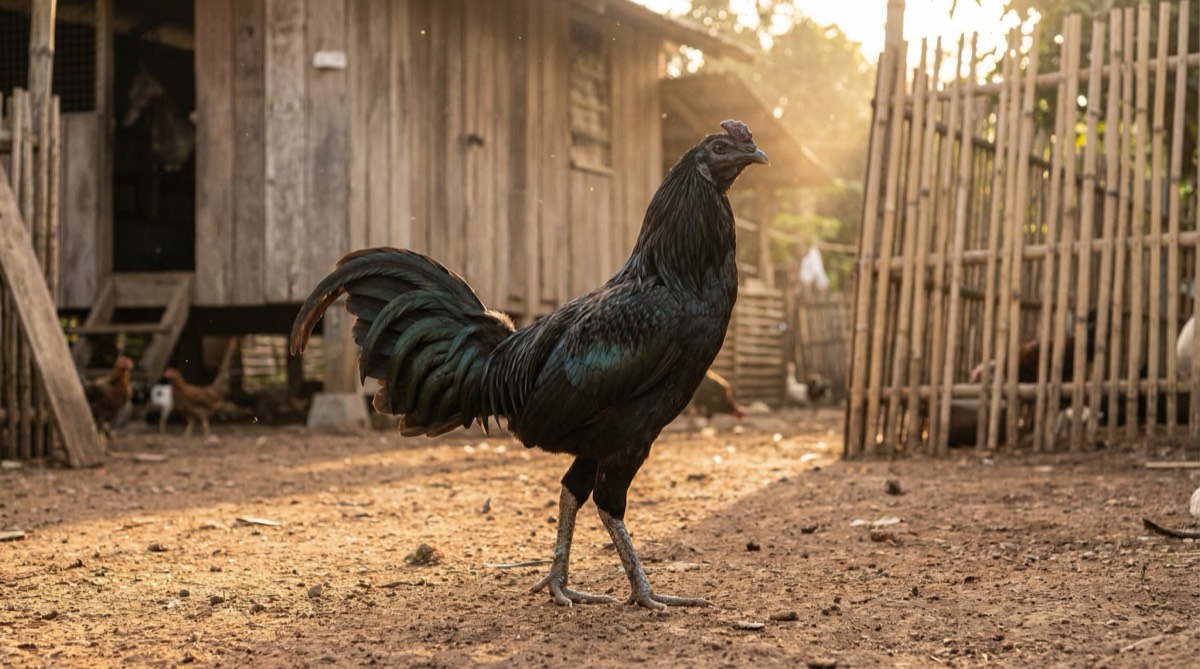
The McLean Hatch carries a long-standing nickname as an aggressive, hard-charging line in breeder folklore, but this guide doesn’t verify or repeat performance claims for it — see the dedicated McLean Hatch guide for the full breakdown of why. What’s documented: the typical McLean Hatch has dark red feathers, green legs, and a compact body.
Penny Hatch
The Penny Hatch is another popular variety with breakout trending interest in the Philippine market (based on Google Trends data). It is maintained as a separate line with its own breeding records, distinct from the McLean line.
This guide doesn’t compare the Penny Hatch to the McLean by fighting style, for the same reason it doesn’t rate any bloodline that way: no buyer can verify either claim against a live bird. What’s documented is that both are separately maintained Hatch lines with their own breeder history.
Blueface Hatch
The Blueface Hatch is named after the distinctive bluish-purple coloring on the face area of the gamefowl. It’s a sought-after variety because of its unique appearance, and it commands a premium in the market for that distinctiveness rather than for any verified fighting reputation.
Yellow-Legged Hatch
While most Hatch varieties have green legs, there are lines that have been developed with yellow legs — usually the result of crossbreeding with other bloodlines. The Yellow-Legged Hatch is popular among some Filipino breeders, but there’s debate in the community about its purity.
Sweater Hatch (Cross)
The Sweater x Hatch cross is technically not a pure Hatch, but it’s so popular in Philippine sabong that it’s often referred to as “Sweater Hatch” as if it were a separate variety. This cross combines the Hatch’s compact build and green legs with the Sweater’s height and pea comb.
Physical Characteristics of the Hatch
Feather Color
The classic Hatch is dark red — usually a deeper shade than Kelso. Some Hatch lines also have a black-breasted red pattern. The McLean Hatch in particular often has a very dark, almost mahogany-tinted red plumage.
Leg Color
Green legs (willow) are the hallmark trait of the Hatch. This is one of the most consistent identification markers. While other bloodlines also have green legs, the combination of green legs and a compact body is a strong Hatch indicator.
Comb Type
Most Hatch have a straight comb. Comb size varies — some lines have a medium straight comb, others have a smaller one.
Body Type and Station
The Hatch is known for its low to medium station — compact body, heavy bone structure, and a solid muscular build. Not tall like a Sweater — the Hatch’s build is compact and heavy-boned rather than tall and lean.
Weight
The Hatch is generally heavier than a Kelso or Sweater at the same height. Typical battle cock weight is 2.2 kg to 2.7 kg, with some larger lines going even heavier.
On “Fighting Style”
The Hatch’s nickname, “the power fighter’s choice,” is exactly the kind of claim this guide won’t repeat as fact, so it deserves a direct answer rather than a silent skip.
This site does not attach performance or style descriptions to bloodlines. Not for the Hatch and not for any of the others. The reasons:
- A buyer cannot verify them. There is no test you can run on a bird in a pen that confirms a style claim made about a family, including a reputation as long-standing as the Hatch’s.
- Variation within a family exceeds the differences between families. Individual Hatch birds from the same nest differ. A description that fits a family is loose enough to fit almost anything.
- The descriptions are commercially useful to sellers, which is a reason to be careful with them rather than a reason to trust them.
- Conditioning, feeding, health, and handling shape outcomes at least as much as ancestry does — see 21-day gamefowl conditioning and gamefowl feeding guide.
A breeder with years of their own records can tell you what their birds have done. That is a statement about their yard, and it is worth listening to. A style attributed to a bloodline name in general is folklore, and repeating it here would be inventing authority this site does not have. For the same reasoning applied to one specific Hatch line, see the McLean Hatch guide.
What Are the Strengths and Weaknesses of the Hatch as a Breeding Bloodline?
As with every bloodline on this site, these strengths and weaknesses are about breeding and buying, not combat performance — see “On Fighting Style” above for why this guide won’t score bloodlines that way.
Strengths
Long, well-documented history. Sanford Hatch’s original records, and the separate records kept by breeders of the McLean, Penny, and Blueface lines, give the Hatch group more historical paper trail than many newer bloodlines.
Distinctive, checkable build. The Hatch’s compact frame, heavy bone structure, and green legs make it one of the easier bloodlines to screen visually against a physical standard.
Broad cross documentation. The Hatch has recorded crosses with Kelso, Sweater, Roundhead, and Claret, giving breeders substantial reference material to work from.
Multiple maintained sub-lines. Because McLean, Penny, Blueface, and Yellow-Legged Hatch are each kept as separate lines, a buyer has more sub-line-specific records to ask for than with a bloodline maintained as a single undifferentiated line.
Weaknesses
Reputation outruns documentation for some sellers. The Hatch name is widely recognized and in demand, which makes it one of the more commonly misapplied labels in the market — a reason to ask harder for pedigree proof, not to trust the name alone.
Cross-line purity questions. Yellow-Legged Hatch in particular has community debate over its purity, since yellow legs typically indicate crossbreeding with another bloodline.
Conditioning and handling still decide more than the name. Health, feed, and handling shape what an individual bird turns out like far more than which Hatch sub-line is on its papers.
Who the Hatch is and isn’t for: if you want a bloodline with a long documented history, a distinctive and checkable build, and several separately maintained sub-lines to compare, the Hatch is a solid choice. If you’re looking for a guarantee about how a bird will behave anywhere outside the yard, no bloodline can honestly give you one.
What Are the Best Hatch Crosses in Philippine Sabong?
Hatch x Kelso
A cross documented across many Philippine breeding programs, pairing the Hatch’s compact build and green legs with the Kelso’s yellow legs and medium station. What the offspring actually turn out like depends on the specific parent birds, not on the pairing’s reputation.
Hatch x Sweater
Documented for combining the Hatch’s low station with the Sweater’s height, producing offspring with a mix of both bloodlines’ physical traits. Breeders keep records on this cross specifically because the parent bloodlines differ so much in build.
Hatch x Roundhead
This cross combines the Hatch’s compact frame with the Roundhead’s rounded head shape and medium station. As with any cross, the offspring’s qualities depend on the individual parent birds and their documented history.
Hatch x Claret
A cross between two bloodlines with long individual breeding histories. The Hatch x Claret is documented in Visayas and Mindanao breeding circles, chosen for traceable ancestry on both sides rather than any guaranteed result.
For a broader rundown of how Hatch stacks up against other documented pairings, see the top gamefowl crosses guide.
How Much Does a Hatch Gamefowl Cost in the Philippines?
A Hatch stag (6-12 months) typically runs ₱3,000–₱15,000 in the Philippine market, with proven broodcocks reaching ₱15,000–₱60,000+. The Hatch generally has comparable pricing to other premium bloodlines, with day-old chicks starting much lower. Penny Hatch stock commands a premium over other Hatch varieties right now due to trending demand.
| Type | Price Range (₱) |
|---|---|
| Day-old chicks | ₱500 – ₱2,500 |
| Stags (6-12 months) | ₱3,000 – ₱15,000 |
| Battle cocks | ₱5,000 – ₱25,000+ |
| Broodcocks (proven) | ₱15,000 – ₱60,000+ |
Note on Penny Hatch: Due to rising demand (breakout status on Google Trends), the Penny Hatch has slightly higher pricing than other Hatch varieties right now. Expect premiums of 20-30% above standard Hatch pricing for documented Penny Hatch stock.
Prices above are general market estimates and vary by breeder, documentation, and region — always verify with the seller directly.
How Do You Choose Quality Hatch?
Identify the specific variety. Don’t just buy “Hatch” — ask whether it’s McLean, Penny, Blueface, or another variety. Each one has its own characteristics and its own breeding records.
Check the green legs. The classic Hatch trait is green legs. If the legs are yellow, ask the breeder about the cross history — not necessarily bad, but transparency is important.
Observe the temperament. This is a husbandry observation, not a fighting assessment: alert, assertive posture, and quick reactions in the cage are consistent with the Hatch’s documented temperament, whatever the individual bird ends up doing anywhere else.
Look for a compact build. The Hatch should be stocky and muscular — solid bone structure and a compact frame. If it’s thin and tall, it’s probably not pure Hatch or has significant crossbreeding.
Where Do You Find Hatch Gamefowl?
Ready to add Hatch bloodline to your yard? See our guide on finding and vetting Hatch breeders for how to source stock and check a seller’s claims before you buy.
Conclusion
The Hatch remains one of the most historically documented bloodlines in the gamefowl world. In the Philippines, the Hatch and its crosses remain a fixture of local breeding programs.
If you want a gamefowl with a long documented history, a distinctive build, and several separately maintained sub-lines to research, the Hatch is worth a serious look. Just make sure you’re buying from a documented, reputable source — see our gamefowl buying guide for how to avoid scams.
Also read: Kelso Gamefowl Guide | Sweater Gamefowl Guide | Roundhead Gamefowl Guide
Frequently Asked Questions
What bloodline is the Hatch known for fighting like?
This guide doesn't attach a fighting style to the Hatch or any bloodline, since that isn't something a buyer can verify from a pedigree. What is documented about the Hatch is its green (willow) legs, compact build, and low-to-medium station — see "On Fighting Style" below for why the rest is folklore.
What color legs does a Hatch gamefowl have?
Green (willow) legs are the hallmark trait of the Hatch. Yellow-legged lines exist but are usually the result of crossbreeding, and their purity is debated in the community.
What is the difference between McLean and Penny Hatch?
The two differ in documented breeding history and physical presentation, not in verified fighting behavior. The McLean Hatch traces to Johnnie Jumper's line and typically shows dark red feathers, green legs, and a compact body; the Penny Hatch is a separately maintained line with its own breeding records. This guide doesn't compare bloodlines by fighting style.
How much does a Hatch stag cost in the Philippines?
A Hatch stag (6-12 months) typically costs ₱3,000–₱15,000, while a proven broodcock runs ₱15,000–₱60,000+, depending on variety, documentation, and breeder reputation.
What is the Hatch's biggest weakness?
This guide doesn't rate bloodlines on fighting weaknesses. What is documented about the Hatch is its low-to-medium station relative to taller bloodlines like the Sweater — a physical fact, not a combat prediction. How an individual bird behaves depends on conditioning, health, and handling more than on its bloodline.
What bloodlines cross well with Hatch?
Kelso, Sweater, Roundhead, and Claret are the most commonly documented Hatch crosses in Philippine breeding records, chosen for complementary physical traits like leg color, station, or build. Results depend on the specific birds paired, not the pairing's reputation.
Is the Hatch a good bloodline for beginners?
Not really for a first bloodline — Hatch lines are commonly described by breeders as high-energy and assertive in the yard, which takes more careful conditioning and handling experience to manage well. Over- or under-conditioning is a common mistake among less experienced breeders.