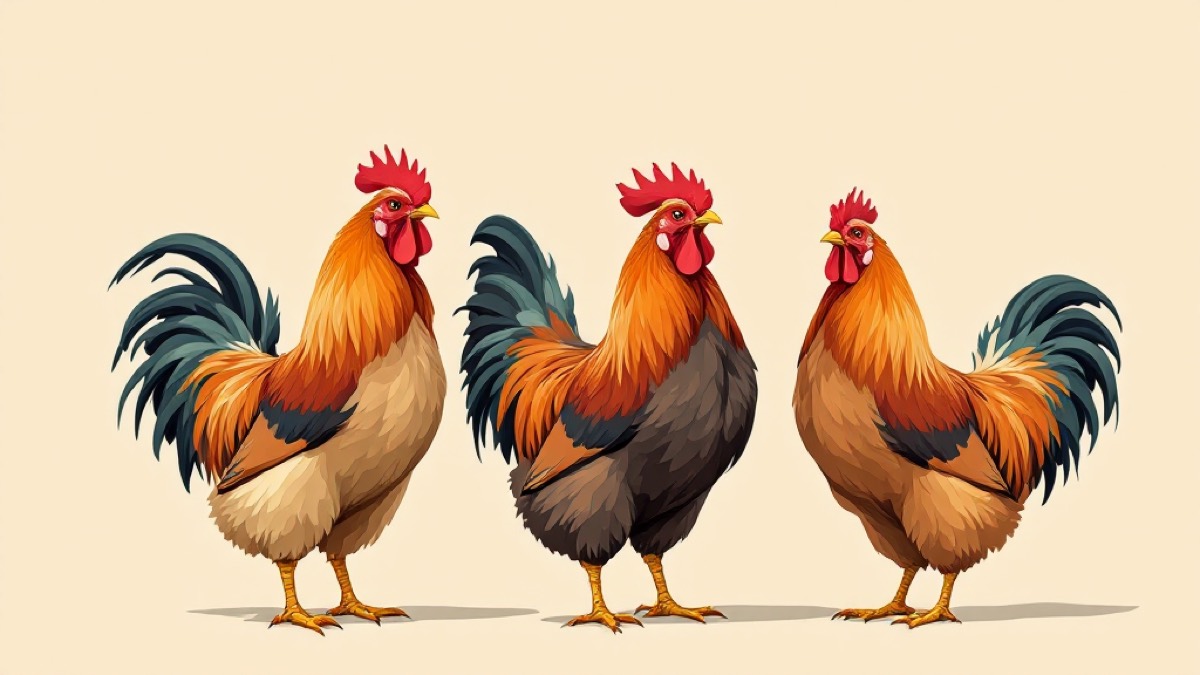
Best Gamefowl Bloodlines in the Philippines: Guide
TL;DR: The most raised gamefowl bloodlines in the Philippines are Sweater (a Kelso-Hatch cross line), Kelso (Walter Kelso’s original American line, since refined by many breeders), Hatch (the heaviest common bloodline, 2.2–2.8 kg), Roundhead (debated Oriental-American origin), Claret (named for its wine-red plumage), Grey (a name used for both a plumage description and a lineage), and Peruvian (2.5–3.5 kg, South American origin). This guide makes no fighting-style or performance claims for any of them, because a buyer cannot verify a style label and individual birds vary more than family names suggest. Pick based on documented ancestry, budget, husbandry demands, and whether you’re breeding pure or building crosses.
If you’re serious about gamefowl, the most important decision you’ll make is which bloodline to raise. Not all lines are the same — each carries its own breeding history, physical type, and husbandry demands that you need to match to your goals as a breeder. What none of them carry is a verifiable fighting style, and this guide treats that distinction as the starting point rather than an afterthought.
Whether you’re a seasoned breeder or just starting your first backyard farm, this guide covers the most popular and proven gamefowl bloodlines in the Philippines today.
Sweater Gamefowl
The Sweater is one of the most widely kept and highly priced bloodlines in the entire gamefowl world. Not just in the Philippines — breeders in Mexico, the US, and Latin America all seek out documented Sweater stock.
History
The Sweater bloodline traces back to the United States. The name comes from “Sweater” McGinnis, who gave Walter Kelso a yellow-legged Hatch cock. That cock was bred to Kelso hens, and the offspring became the foundation of what we now know as the Sweater. Key breeders who refined the line include Cecil Davis, Ira Parks, Johnnie Jumper, Carol Nesmith, and the Brown family of Mississippi.
The genetic formula is roughly 3/4 Kelso and 1/4 Yellow Leg Hatch — combining two of the most documented American bloodlines into one line.
Physical Characteristics
- Yellow legs (sometimes green-legged variants appear)
- Red-breasted with medium to dark plumage
- Pea comb or straight comb depending on the line
- Medium-sized, muscular build
- Square head shape
- Weighs typically 2.0–2.5 kg
On “Fighting Style”
The Sweater carries a fearsome reputation in gamefowl circles, and it’s usually the first thing a buyer asks about. This guide does not attach a performance or style description to the Sweater, or to any bloodline on this page, for the same reasons the McLean Hatch guide sets out in full:
- A buyer cannot verify a style claim. There is no test you can run on a bird in a pen that confirms how a family fights.
- Variation inside the line exceeds variation between lines. Two birds from the same Sweater nest can differ more from each other than a Sweater differs from a Kelso.
- The reputation is commercially useful to sellers, which argues for caution rather than trust.
- Conditioning, feed, health and handling shape outcomes at least as much as ancestry — see 21-day gamefowl conditioning and gamefowl feeding guide.
What is documented about the Sweater is its ancestry: bred down from a Kelso-Hatch cross, refined over decades by named breeders, and kept today because that pedigree is well recorded, not because a style label is.
Best Crosses
- Sweater x Kelso — the most commonly bred pairing in the country; see top gamefowl crosses for how it’s discussed there and why no cross guarantees an outcome.
- Sweater x Hatch — pairs two well-documented American lines; a breeder’s own multi-generation records are the only real evidence of what a specific pairing produces.
- Sweater x Roundhead — a less common pairing that still depends entirely on the individual parent birds rather than on the family names.
Who Should Breed Sweaters?
The Sweater suits breeders who want a well-documented American line with strong demand and resale value in the Philippines. Because reputation drives price here more than with almost any other line, verifying the seller’s pedigree paperwork before you pay matters more with Sweaters than with most bloodlines.
Kelso Gamefowl
The Kelso is one of the most historically documented American gamefowl lines, carrying the name of the breeder, Walter Kelso, who developed it.
History
Named after Walter Kelso, one of the most legendary American gamefowl breeders. The original Kelso line was developed in the mid-20th century and has since been refined by dozens of top breeders worldwide. In the Philippines, the Kelso is one of the most sought-after bloodlines, with White Kelso variants becoming increasingly popular.
Physical Characteristics
- Yellow or white legs
- Straight comb (most common) or pea comb
- Light to medium red plumage
- Upright stance, medium to tall station
- Weighs typically 2.0–2.4 kg
- Clean, athletic build
On “Fighting Style”
The Kelso’s “ring general” nickname is one of the most repeated pieces of gamefowl folklore in the Philippines, and it’s worth being direct about why this guide doesn’t repeat it as fact. A nickname describing how a family supposedly fights is not something a buyer standing in front of a bird can check, and it says nothing reliable about the specific chicks in front of you — variation between individual Kelsos routinely exceeds the difference between a Kelso and any other named line.
What the name reliably tells you is lineage: descent from Walter Kelso’s original American line, since worked by many breeders including those behind the White Kelso variant now common here. That’s a claim about paperwork and breeding history, and it’s the part worth asking a seller to document.
Best Crosses
- Kelso x Sweater — the most widely bred cross in the country; see top gamefowl crosses for the pairing logic breeders describe, and why it isn’t a performance guarantee.
- Kelso x Hatch — combines two long-documented American lines; what a specific pairing produces is a claim only that breeder’s own records can support.
- Kelso x Roundhead — pairs two lines with active branch guides of their own; check pedigree paperwork on both sides before treating either name as a specification.
Who Should Breed Kelsos?
The Kelso suits breeders who want one of the most historically documented American lines, with decades of refinement by named breeders behind it. That documentation is also what you’re paying for: a Kelso without pedigree paperwork is just a yellow- or white-legged bird with no way to confirm the name.
Hatch Gamefowl
The Hatch is the heaviest bloodline commonly kept in the Philippines, and one of the most widely branched — McLean, Yellow Leg, Blueface and Oakgrove all sit under the same family name.
History
The Hatch bloodline originated in the United States, developed by Sanford Hatch. Multiple variants exist today — the most popular in the Philippines being the Yellow Leg Hatch, McLean Hatch, Blueface Hatch, and the Oakgrove Hatch (from Eugene Brown’s Oakgrove Farm).
Physical Characteristics
- Yellow legs (Yellow Leg Hatch) or dark legs (Dark Leg Hatch)
- Pea comb most common
- Dark red to brownish plumage
- Heavy, muscular build
- Broad chest and shoulders
- Weighs typically 2.2–2.8 kg (heavier than most bloodlines)
Variants
- Yellow Leg Hatch — the most commonly kept variant in the Philippines, identified by its yellow legs.
- McLean Hatch — darker in color, carrying the name of the breeder who developed this branch; see its guide for what the name can and can’t tell a buyer.
- Blueface Hatch — recognized by its blue or slate face color.
- Oakgrove Hatch — a line from Eugene Brown’s Oakgrove Farm, valued for the documentation and consistency of that breeding program rather than for any claim about the birds’ performance.
On “Fighting Style”
“Power fighter” is the label attached to the Hatch more than any other bloodline on this page, largely because of its weight class. This guide doesn’t extend that label into a performance claim, for the same reason it doesn’t for any bloodline: there’s no way for a buyer to test a style description against an actual bird, and the description does real commercial work for sellers regardless of whether it’s accurate for the animal in front of you.
What is verifiable is the weight itself — 2.2 to 2.8 kg, heavier than most bloodlines kept in the Philippines — and the branch the bird comes from. McLean, Yellow Leg, Blueface and Oakgrove are separate documented branches under the Hatch name; see the McLean Hatch guide for how far a family name can honestly be stretched to describe an individual bird.
Best Crosses
- Hatch x Sweater — one of the most commonly bred pairings among Filipino breeders; see top gamefowl crosses for how the pairing is discussed there.
- Hatch x Kelso — pairs two of the best-documented American bloodlines; ask any seller for the generational records rather than a description of the cross.
- Hatch x Grey — Grey is commonly used as cross material precisely because breeders don’t keep it pure; see the Grey section below for what that means.
Who Should Breed Hatches?
The Hatch suits breeders who want the heaviest common bloodline and don’t mind the extra feed and space that comes with a 2.2 to 2.8 kg bird. Its many named branches — McLean, Gilmore, Leiper, Yellow Leg, Oakgrove among them — also make it one of the more complicated lines to buy into, since two Hatch birds from different branches share a family name and little else on paper.
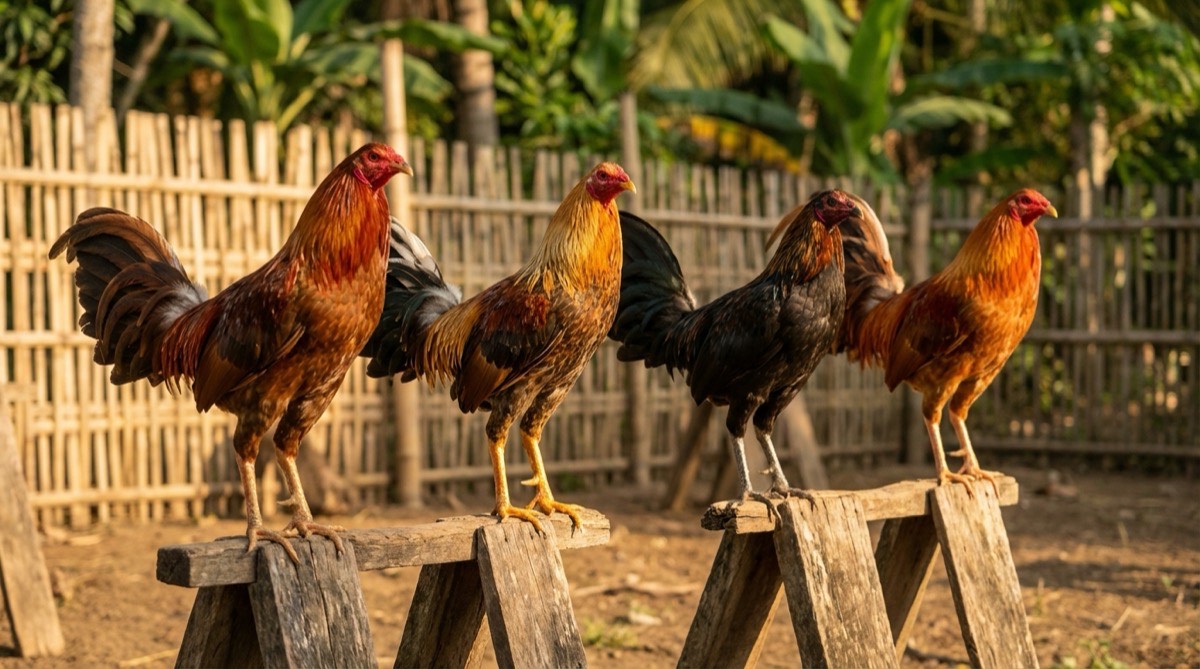
Roundhead Gamefowl
The Roundhead is one of the most talked-about bloodlines in Filipino breeding circles, with a debated origin story and several well-known named branches.
History
The origin of Roundheads is debated — some say they’re American, others believe they have Oriental-American cross origins. What’s clear is that breeders have refined the line over decades. Popular variants include the Lacy Roundhead (most famous), Boston Roundhead, Bruner Roundhead, and Shelton Roundhead.
Physical Characteristics
- Yellow or white legs
- Red or pale yellow hackle
- Pea comb
- Medium to high station
- Lighter build, athletic frame
- Weighs typically 2.0–2.4 kg
On “Fighting Style”
The Roundhead carries an “aerial fighter” reputation that’s repeated often enough to sound settled, but it isn’t something a buyer can confirm before purchase, and it isn’t something this guide will assert as fact. Even the origin of the line is debated among breeders — American, or an Oriental-American cross — which is itself a sign of how much of what circulates about this bloodline is tradition rather than record.
What’s checkable is conformation and maturation. Roundheads have a lighter-framed, athletic build than the Hatch, and they mature faster than most lines, which is a husbandry fact that affects conditioning schedules regardless of what the bird does or doesn’t do afterward. See Lacy Roundhead, Boston Roundhead and Bruner Roundhead for the documented branches under this name.
Best Crosses
- Roundhead x Sweater — a commonly bred pairing; see top gamefowl crosses for how breeders describe it and why the description isn’t a guarantee.
- Roundhead x Hatch — pairs a lighter-framed line with the heaviest common bloodline; weight and conformation in the offspring are the checkable part.
- Roundhead x Kelso — both names carry a “ring general” reputation in the community, which is folklore rather than a documented trait; pedigree paperwork on both parents is what actually travels with the bird.
Who Should Breed Roundheads?
The Roundhead suits breeders willing to give closer attention during conditioning, since the line matures quickly regardless of which branch you’re working with — Lacy, Boston, Bruner and others all carry the same husbandry demand. That’s a fact about raising the bird, not about how it performs.
Claret Gamefowl
The Claret is one of the most recognizable gamefowl bloodlines in the Philippines by plumage alone — a deep wine-red coloring that gives the line its name.
Physical Characteristics
- White legs
- Straight comb
- Black-breasted with deep red (wine/claret-colored) plumage
- White streaks on wings and tail
- Medium build
- Weighs typically 2.0–2.4 kg
On “Fighting Style”
The Claret’s reputation for a decisive single strike is one of the more specific style claims attached to any bloodline on this page, which makes it worth naming directly as something this guide will not repeat as fact. A claim that specific about how a bird fights cannot be verified by looking at it, and it varies far more between individual birds than the marketing around the name suggests.
What is documented is the plumage and build described above — the deep wine-red coloring that gives the line its name, the white wing and tail streaks, and the medium frame. A breeder’s own fight records, not the family name, are the only real evidence behind any performance claim made about a Claret.
Grey Gamefowl
Grey gamefowl are recognized by their distinctive grey plumage and by a reputation in breeding circles as a line more often crossed than kept pure.
Physical Characteristics
- Yellow or white legs
- Grey to silver plumage
- Straight or pea comb
- Medium build, athletic frame
On “Fighting Style”
Grey is described in gamefowl circles as a dependable cross partner more than as a line kept pure, and this guide will name that reputation without endorsing the performance claim behind it — that a Grey “improves” a cross is not something a buyer can confirm, and it says nothing about any specific pair of birds.
What’s worth knowing instead is the naming confusion covered below: grey plumage shows up in birds from unrelated lines, so a seller calling a bird “Grey” may mean the color or the lineage, and those are two different claims that need two different kinds of verification.
Worth knowing before you buy on the name: “Grey” is used both as a plumage description and as a line name, and grey plumage occurs in birds from unrelated lines. Our grey gamefowl guide covers how to tell which one a seller means.
Peruvian Gamefowl (Rising Trend)
The Peruvian gamefowl is one of the most trending bloodlines in the Philippines right now. Once exclusive to wealthy breeders, they’re now much more accessible.
History
Originally from Peru (as the name suggests), these birds trace their lineage to French, Belgian, Spanish, and Oriental fowl. They’ve gained massive popularity in the Philippines in recent years, with the Philippine Peruvian Breeders Organization (PPBO) now active nationwide.
Physical Characteristics
- Larger and heavier than most American gamefowl breeds
- Big head, sometimes with a hunchback appearance
- Big feet, unique feather patterns
- Weighs 2.5–3.5 kg (significantly heavier)
On “Fighting Style”
The Peruvian’s rise in the Philippines is often explained with the same aerial-ability claims used for other lines, and this guide treats them the same way it treats every style description on this page: unverifiable by a buyer, and not something it will assert. Long-knife derbies are common here, and sellers connect that fact to the Peruvian’s size, but a rule about equipment says nothing about what an individual bird does with it.
What’s documented is size and origin — 2.5 to 3.5 kg, a build distinct enough from American lines that it’s usually identifiable on sight, and a lineage tracing to French, Belgian, Spanish and Oriental fowl by way of Peru. Price and demand, covered below, are market facts rather than performance ones.
Who Should Breed Peruvians?
The Peruvian suits breeders with the budget for a pricier import lineage and the space for a notably larger bird — 2.5 to 3.5 kg is well above most American-derived lines kept here. Crossing with American lines for size is common practice, but what a specific cross produces is, again, a claim only the breeder doing it can support with their own records.
Other Notable Bloodlines
- Albany — yellow legs, red plumage, one of the older named American lines.
- Radio — a less widely held name; its own guide covers how to research an uncommon line.
- Whitehackle — one of the oldest American gamefowl breeds by breeding history.
- Lemon — often crossed with Hatch; see its guide and top gamefowl crosses for how that pairing is discussed.
- Butcher — commonly used as cross material by breeders working other lines.
- Dom (Dominican) — identified by distinctive barred plumage.
- Brown Red, Hennie, SBR — each has its own guide.
Named branches within these families
A widely kept family gets maintained by different breeders who each select in their own direction, and the branches acquire their own names. Two of the most commonly met here:
- Gilmore Hatch — a branch within the Hatch family.
- Boston Roundhead — a branch within the Roundhead family, alongside Lacy Roundhead.
Understanding branches matters when you cross: two birds from the same family are a far closer cross than the two names suggest.
The named families and branches with their own guides:
| Line | Sits within | Guide |
|---|---|---|
| McLean Hatch | Hatch | McLean Hatch |
| Yellow Legged Hatch | Hatch | Yellow Legged Hatch |
| Gilmore Hatch | Hatch | Gilmore Hatch |
| Leiper Hatch | Hatch | Leiper Hatch |
| Possum Sweater | Sweater | Possum Sweater |
| Boston Roundhead | Roundhead | Boston Roundhead |
| Lacy Roundhead | Roundhead | Lacy Roundhead |
| Bruner Roundhead | Roundhead | Bruner Roundhead |
| Sid Taylor | Breeder-named line | Sid Taylor |
| Hulsey | Breeder-named line | Hulsey |
| Radio | Breeder-named line | Radio |
Those guides hold to the same standard as this page: they describe ancestry and how to verify it, and they attach no performance or fighting-style claims to any name. Leiper Hatch sets out what bloodline names are genuinely good for, and McLean Hatch explains why the style descriptions repeated about family names are best treated as folklore rather than specification.
A note on what a name can tell you
Everything on this page describes each line’s documented breeding history and physical type, not what an individual bird will do in a fight. Bloodlines have no published standard and no registry, so what a buyer can actually verify is the pedigree, the parent stock and the health history — see fighting rooster breeds for the breed-versus-bloodline distinction, how to identify gamefowl bloodlines on the limits of judging by appearance, and pangalan at kulay ng manok panabong on why colour terms describe rather than classify.
How to Choose the Right Bloodline
There’s no “best bloodline” — the right one depends on your goals:
- What does the bloodline actually cost to keep? Weight class matters: a 2.2–2.8 kg Hatch or a 2.5–3.5 kg Peruvian eats and needs space differently than a 2.0–2.4 kg Kelso or Claret.
- Can the seller document the name? A pedigree with dates and breeder history is worth more than any style description attached to the same bird — see how to identify gamefowl bloodlines.
- What’s your budget? Peruvians and imported American lines are expensive. Local-bred Sweaters and Kelsos are more accessible — see our gamefowl price guide for realistic ranges.
- Are you breeding for pure or for crossing? Some bloodlines, Hatch and Sweater among them, are commonly used as foundation stock for crosses — check our top gamefowl crosses guide for how those pairings are discussed and why none of them are guaranteed.
- Your farm’s environment. Some bloodlines tolerate the Philippine tropical climate and confinement better than others — a husbandry question, not a fighting one.
Find Breeders for These Bloodlines
Once you’ve picked a bloodline, the harder part is finding a breeder who actually has it and can back the claim up. See our guide on finding and vetting gamefowl breeders in the Philippines for how the market is organized and how to check a seller’s claims before you pay, and our buying guide for the full purchase walkthrough.
Frequently Asked Questions
What is the most popular gamefowl bloodline in the Philippines?
The Sweater and Kelso are consistently among the most raised bloodlines, and the Sweater x Kelso cross is the most common pairing seen in Filipino breeding yards.
What's the difference between the Kelso and Sweater bloodlines?
They differ by breeding history and the stock each line descends from, not by any difference a buyer can verify. The Kelso traces to Walter Kelso's original American line, and the Sweater to a documented Kelso-Hatch cross. A family name tells you what to check in the pedigree, not what an individual bird will do.
Which gamefowl bloodline hits the hardest?
This guide does not rate bloodlines by hitting power. The Hatch is the heaviest bloodline commonly kept here, typically 2.2 to 2.8 kg, and weight is the one part of that reputation a buyer can actually verify on a scale.
Is the Roundhead a good bloodline for beginners?
This guide makes no claim about how a Roundhead performs. What is documented is that they mature quickly, which means closer attention during conditioning regardless of experience level — a husbandry fact, not a fighting-ability one.
Why are Peruvian gamefowl becoming popular in the Philippines?
Their size (2.5–3.5 kg) and the growth of organizations like the Philippine Peruvian Breeders Organization have driven demand, and they remain pricier to acquire than most American-derived lines. That is a market observation, not a claim about how they fight.
What is a "mixer" bloodline?
A mixer bloodline, like the Grey, is one breeders commonly pair with other lines rather than keep pure. That reputation comes from breeding tradition and a breeder's own results, not from a testable property of the bloodline itself.
How do I choose the right bloodline for my farm?
Match the bloodline to your budget, the space and feed you can provide, whether you're breeding pure stock or foundation birds for crosses, and how well a seller can document their pedigree claims — there's no single "best" bloodline, and no style label substitutes for that homework.