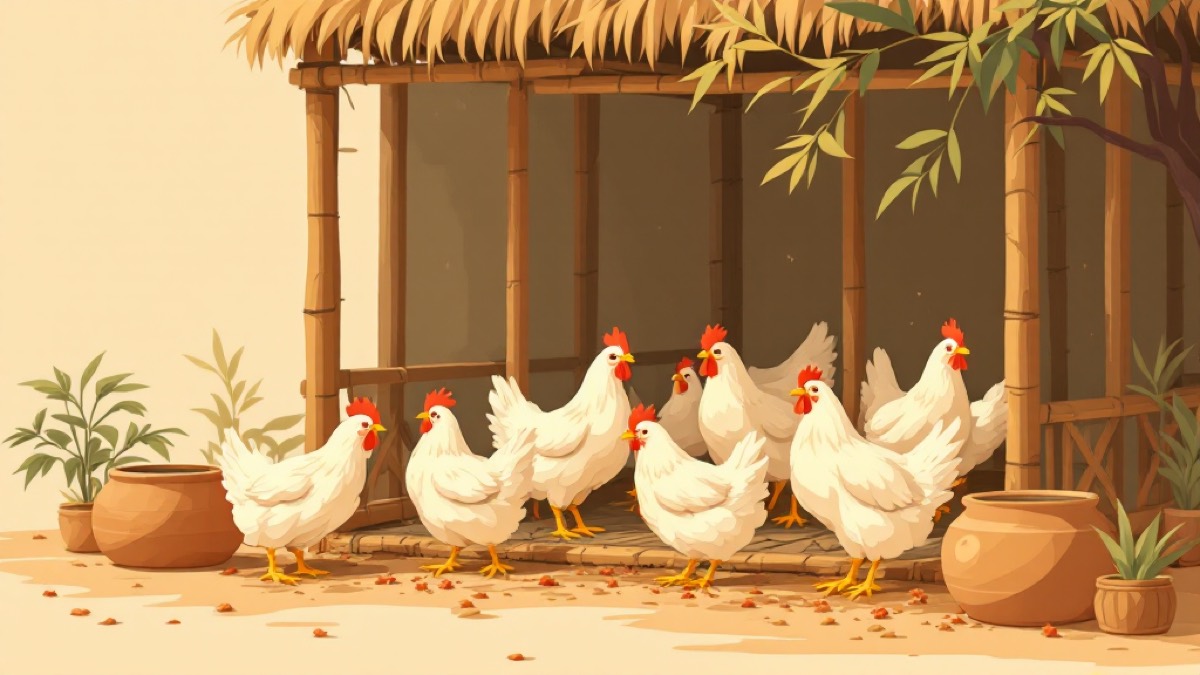
Sasso Chicken: The Free-Range Colored Broiler
TL;DR: Sasso is colored, slow-growing meat genetics from a specialist French breeding company, made for free-range and outdoor systems rather than confined intensive grow-out. It grows slower than a fast commercial broiler, forages properly, handles outdoor conditions, and produces the firmer meat a Philippine buyer associates with free-range birds. It also turns up as improver stock in DA and Bureau of Agricultural Research native-upgrading programmes. It is not a native chicken and it does not breed true.
Most of the meat-bird conversation here is a false choice between “commercial broiler” and “native.” Sasso-type stock is the middle option, and it exists precisely because that middle is where a lot of small producers actually operate.
What Is Sasso?
A brand of meat-chicken genetics from a French breeding company that specialises in colored, slower-growing birds for outdoor and free-range production — the kind of system that European label and free-range schemes require, where a fast white broiler is unsuitable.
The design brief is different from a commercial broiler’s in every respect that matters:
| Fast commercial broiler | Sasso-type colored line | |
|---|---|---|
| Bred for | Growth rate in a controlled house | Performance outdoors, on range |
| Time to market | Roughly six weeks | Substantially longer |
| Foraging | Poor | Active |
| Plumage | White | Colored (red, barred and other patterns) |
| Meat | Soft, neutral | Firmer, more character |
| Heat and outdoor tolerance | Low | Better |
| Feed dependence | Total | Partial |
Why the Colored Plumage Matters
It is not cosmetic — it is commercial.
Two practical reasons colored birds dominate free-range systems:
- Market recognition. A colored bird looks like what a buyer expects a free-range or native-type chicken to look like. A white bird reads as commercial broiler regardless of how it was raised, and the price follows the perception.
- Outdoors, colour is camouflage. A white bird on open range is conspicuous to predators. Colored plumage is less so.
For a Philippine producer selling into a local market that pays for native-type meat, that first point is most of the argument.
Sasso in Philippine Native Upgrading
Beyond straight meat production, Sasso appears in Philippine programme work as improver stock.
Native-upgrading programmes run through the Department of Agriculture and the Bureau of Agricultural Research have crossed native hens with improver roosters — Kabir and Sasso among them — to raise growth rate while retaining native hardiness and the local market appeal of the resulting bird. That is the documented origin of the “upgraded native” category described in our chicken breeds in the Philippines guide.
The important distinction for a buyer:
- Pure Sasso — commercial meat genetics, bought as chicks from a supplier.
- Upgraded native — the cross between a native hen and an improver rooster.
- Pure native — documented Philippine native types, covered in native chicken breeds in the Philippines.
These are three different products, and they should not be sold to you as the same thing.
Who Should Raise Them?
A producer running an outdoor or semi-scavenging system that sells into a market paying for free-range or native-type meat.
Good fit if:
- You have range or a large run rather than a closed house.
- You want birds that forage part of their intake — see free-range native chicken farming for how those systems work.
- Your buyers pay a premium for non-broiler meat.
- You cannot guarantee the tight environmental control a fast broiler assumes.
Poor fit if:
- You are contracted into a commercial broiler channel that wants a specific white bird at a specific age.
- You need the fastest possible cycle and lowest feed cost per kilo — that is a Cornish Cross-type bird, and our broiler feed conversion ratio guide explains why it wins on that measure.
Either way, read broiler vs native vs layer first — it compares the three systems on the terms that actually decide profitability.
Managing Them
Between broiler discipline and native tolerance.
- Brood them properly. Slow-growing or not, the first weeks are the same job — see how to brood chicks and brooding temperature for chicks.
- Feed a real grower ration even if they forage. Foraging supplements a ration; it does not replace one during growth. See what to feed chickens at every life stage.
- Give real range and real shade. The type is bred for outdoors, so use it.
- Predator-proof the range. Outdoors means exposed, and losses to dogs and other predators eat the margin faster than feed does.
- Keep vaccination and biosecurity standard. See backyard flock biosecurity and chick vaccination schedule.
The Honest Limits Here
Sasso as colored slow-growing meat genetics from a specialist breeding company, and the use of Sasso and Kabir improver stock in Philippine native-upgrading programmes, are documented — the latter through DA and Bureau of Agricultural Research programme material. This guide gives no growth figures, dressing weights, feed-conversion numbers or Philippine prices, because those depend on the strain version, the ration and your buyer. Ask your chick supplier which line they are selling and for the breeder’s own performance guide, and confirm the local price premium with a real buyer before you build a plan on it.
Related: Kabir chicken, broiler chicken breeds, native chicken raising.
Frequently Asked Questions
What is a Sasso chicken?
Sasso is a line of colored, slow-growing meat genetics from a specialist French breeding company, developed for free-range and outdoor production rather than for intensive confined grow-out.
How is Sasso different from a normal broiler?
A fast commercial broiler is bred for maximum growth in a controlled house and reaches market weight in roughly six weeks. Sasso-type birds grow more slowly, forage actively, tolerate outdoor conditions better and produce firmer meat closer to what the local market expects from a free-range bird.
Is Sasso used in the Philippines?
Yes. Besides free-range meat production, Sasso appears as improver stock in Department of Agriculture and Bureau of Agricultural Research native-upgrading work, where native hens are crossed with improver roosters to raise growth rate while keeping native hardiness.
Is a Sasso bird the same as a native chicken?
No. Sasso is commercial meat genetics from a breeding company. An upgraded native is a cross between a native hen and an improver rooster, which is a different thing from either pure native or pure Sasso stock.
Can I breed my own Sasso birds?
Not reliably. Like other commercial meat genetics, the birds sold for grow-out come from parent stock held by the breeding company and do not reproduce their own performance.
Does Sasso meat sell for more than broiler meat?
Free-range and native-type meat generally commands a premium over commercial broiler meat in the Philippine market. What that premium actually is depends on your buyer and your area, so confirm it locally before planning around it.
Does a Sasso need the same feed as a broiler?
It benefits from a proper grower ration, but it is less totally dependent on formulated feed than a fast broiler because it forages. That is the point of the type.