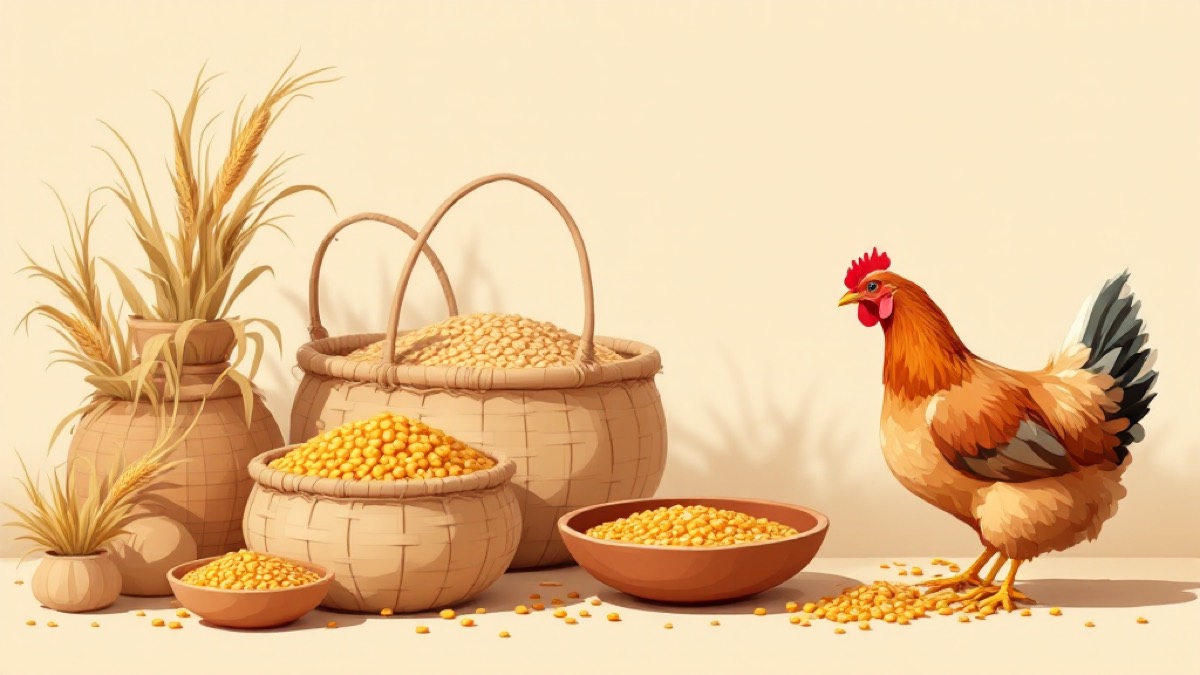
What to Feed Chickens at Every Life Stage
TL;DR: What a chicken eats depends almost entirely on its life stage, not its breed or purpose — day-old chicks need 21-24% protein starter feed, growers need 18-20%, and adults on maintenance need only 15-17%. Laying hens need extra calcium and slightly higher protein (18-20%) once they start producing eggs. Fresh water, grit, and a slow transition between feed types matter as much as the protein number on the bag.
Every chicken keeper asks the same first question: what do I actually put in the feeder? The honest answer is that it changes as the bird grows, and it changes again if the bird is laying eggs, being raised for meat, or being conditioned for competition. Get the stage wrong and you either waste money on protein a bird doesn’t need, or stunt a bird that needed more.
This guide covers the life-stage feeding pattern that applies to any chicken — a backyard layer, a Philippine native chicken, a meat bird, or a gamefowl. The protein targets below come from ManokHub’s gamefowl feeding guide, which states plainly that its nutrition basics apply to any chicken, not just fighting stock. If you’re specifically raising gamefowl, that guide and the feed brand comparison go deeper on conditioning-phase specifics this pillar doesn’t repeat.
What Should You Feed a Chicken by Age?
A chicken’s feed should shift roughly every 4-8 weeks as it grows, moving from a high-protein starter down to a lower-protein maintenance ration by the time it reaches adulthood. The pattern holds across bird types because the biology driving it — rapid early growth, then a slower maintenance phase — is the same in a layer, a native chicken, or a gamefowl.
| Stage | Approx. age | Crude protein | Feeding method |
|---|---|---|---|
| Starter (chick booster) | Day 1 to 4 weeks | 21-24% | Ad libitum (unlimited access) |
| Grower | 4-8 weeks | 18-20% | Ad libitum or controlled 2-3x/day |
| Developer | 8-16 weeks | 16-18% | Twice daily, measured |
| Maintenance (non-laying adult) | 16 weeks+ | 15-17% | Twice daily, measured |
| Actively laying hen | Point of lay onward | 18-20% + added calcium | Twice daily, measured |
These bands come from ManokHub’s 6-stage gamefowl feeding guide, which lays out the same age-protein progression for chick-to-adult feeding. For a full breakdown of feed forms (mash, crumble, pellet) and what each stage’s feed is built for, see types of chicken feed explained.
Day-Old to 4 Weeks: Starter Phase
A day-old chick needs a high-protein starter feed, typically 21-24% crude protein, to support the fastest growth period of its life. Feed it ad libitum — unlimited access — because restricting intake at this stage slows development in a way that’s hard to make up later.
Place feed in a shallow tray for the first week so chicks can reach it easily, then move to small tube feeders by week two. Add electrolytes and vitamins to the drinking water during the first week, especially if the chicks were stressed by shipping or a hatchery transfer.
4-8 Weeks: Grower Phase
Protein drops slightly to 18-20% as the fastest growth phase tapers off, but the bird still needs solid protein for continued muscle and feather development. Many keepers continue ad libitum feeding here, though controlled feeding 2-3 times a day is also common and helps prevent early obesity.
This is also the stage where chopped greens — kangkong, malunggay leaves — and the occasional boiled egg or insect start adding variety to the diet. These are supplements, not a feed replacement.
8-16 Weeks: Developer Phase
Feed protein settles to 16-18% as the bird shifts from rapid growth to steady development of bone and muscle structure. Feeding moves to twice daily, measured portions — overfeeding here produces a bird that’s harder to keep in good condition later, whatever its eventual purpose.
Grit (crushed shells or small stones) becomes important at this stage since chickens have no teeth and need grit in the gizzard to grind feed. Oyster shell or limestone grit also starts supplying calcium.
16 Weeks and Beyond: Maintenance or Production Phase
Once a bird reaches maturity, its feed needs branch depending on what it’s doing. A non-laying adult on maintenance needs only 15-17% protein — more than that just adds fat with no benefit. A hen that has started laying needs more protein (roughly 18-20%) and significantly more calcium, since eggshell production draws heavily on the bird’s mineral reserves.
Does Feeding Differ by What Kind of Chicken You Raise?
The stage-by-stage protein numbers above hold for any chicken, but what happens after maturity depends on why you’re keeping the bird. A layer’s adult diet is built around steady egg production; a gamefowl’s adult diet cycles through a maintenance phase and then a higher-protein conditioning phase before competition; a native chicken raised free-range often pulls a meaningful share of its diet from foraging rather than the feeder alone.
- Layer hens need the maintenance-to-laying protein jump (15-17% up to 18-20%) plus consistent calcium once they reach point of lay. Skipping the calcium step is one of the more common backyard mistakes — it shows up as thin or soft-shelled eggs.
- Gamefowl follow the same starter-to-maintenance progression, then add a distinct conditioning phase in the 14-21 days before a fight, where protein rises back to 20-22%. See the gamefowl feeding guide for the full conditioning-phase breakdown.
- Philippine native chickens (Darag, Banaba, Bolinao, and similar strains) are commonly raised free-range with lighter feed supplementation, since foraging supplies part of the diet. The stage-based protein targets still apply to whatever supplemental feed is given.
- Meat birds need the same starter-to-grower progression as any chicken, with feed typically continuing at grower-to-developer protein levels through to slaughter rather than dropping to a long-term maintenance ration, since the goal is steady weight gain rather than years of upkeep.
What Chickens Should Never Be Fed
A few feeding mistakes show up across every bird type regardless of purpose. Sudden feed changes are the most common — switching brands or feed types abruptly causes digestive upset. Transition over 5-7 days, mixing an increasing ratio of new feed into the old, a pattern both the gamefowl feeding guide and the feed brand comparison recommend for the same reason.
Overfeeding is the second-most common mistake. A fat bird isn’t a healthier bird — excess weight is harder on joints, harder to manage in heat, and in production birds it actively hurts laying rate or fighting condition. Dirty feeders and waterers are a direct disease pathway; clean them daily. And monotonous feeding — pellets or corn alone, with no variety — leaves gaps in the vitamin and mineral profile that a balanced commercial ration is built to cover.
The Honest Limits Here
The protein-by-stage numbers in this guide come from ManokHub’s own gamefowl feeding research, and they hold up as general chicken nutrition principles — the underlying biology doesn’t change by breed. But exact intake amounts, ideal feed brand, and the calcium or supplement schedule a specific flock needs will vary by climate, breed, and how much a bird forages on its own. Where a number isn’t documented — precise foraging contribution for native chickens, for instance — this guide doesn’t invent one. Treat the ranges here as a planning framework, and adjust based on how your own birds actually look and perform.
Ready to go deeper on a specific stage? See types of chicken feed explained for feed forms, and protein sources for chicken feed for the individual ingredients — madre de agua, ipil-ipil, copra meal, soybean meal and corn — each with the limit that caps how much you can use. Or browse the full feeding category.
Frequently Asked Questions
What is the best feed for chickens?
There is no single best feed — the right feed is whichever one matches the bird's current life stage. A day-old chick needs a 21-24% crude protein starter, while an adult in maintenance needs only 15-17%. Matching the feed type to the stage matters more than any single brand.
What can I feed chickens besides commercial feed?
Chopped greens like kangkong and malunggay, boiled eggs, and small insects are common supplements Filipino keepers add for variety — but they should stay a supplement, not the main feed, because they do not carry the full balance of vitamins and minerals a commercial ration does.
How much should I feed a chicken per day?
It depends on size and stage — a growing bird in grow-out typically eats 80-120 grams per feeding, twice daily, though intake varies with body size and activity level. Young chicks are usually fed ad libitum (unlimited access) instead of a measured amount.
Do layer hens need different feed than other chickens?
Yes. A hen actively laying eggs needs higher protein (roughly 18-20%) and added calcium for eggshell strength, compared to the 15-17% protein a non-laying adult needs on maintenance.
Can I feed the same feed to chicks and adult chickens?
No. Chicks need a much higher-protein starter feed (21-24%) to support rapid early growth, while adults on maintenance only need 15-17%. Feeding starter to an adult wastes money; feeding maintenance feed to a chick stunts growth.
How do I switch a chicken to a new feed without upsetting its stomach?
Transition gradually over 5-7 days, mixing an increasing ratio of new feed into the old. An abrupt switch is one of the most common causes of digestive upset in a backyard flock.
Is chicken feeding the same for gamefowl, native chickens, and layers?
The underlying protein-by-stage logic is the same for any chicken, but the goal differs — a layer's adult diet favors calcium and steady protein for eggs, a gamefowl's adult diet cycles into a higher-protein conditioning phase before a fight, and native chickens raised free-range often get more of their diet from foraging.