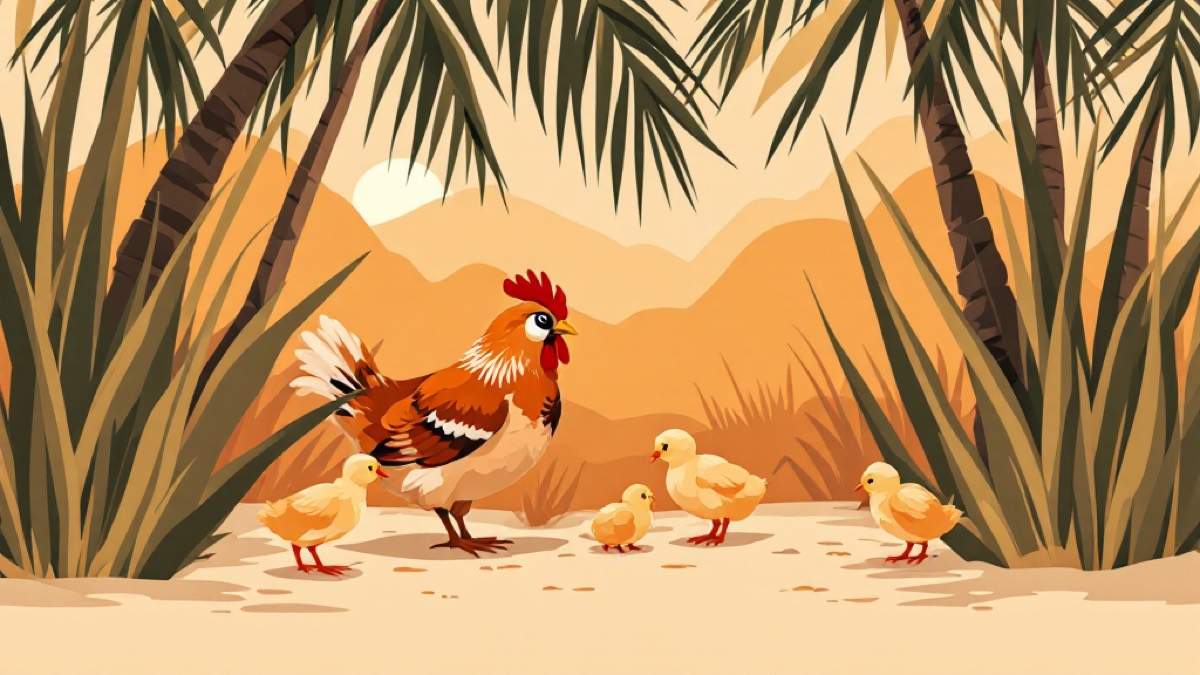
Free-Range Native Chicken Farming in the Philippines
TL;DR: Free-range native chicken farming lets birds forage during the day and shelter securely at night, cutting feed cost but trading away some control over growth and disease exposure. DOST-PCAARRD recommends at least 2 square meters of range per bird and supplemental feeding when forage alone can’t support the flock. It is not a lower-maintenance system — it shifts the work from feeding to management.
Free-range is the default way native chickens are raised in the Philippines, not a specialty choice — but “free-range” covers a range of actual setups, from a few birds wandering an unfenced backyard to a managed rotational pasture system. This guide covers what makes free-range work, and what it doesn’t solve for you.
What Counts as Free-Range for Native Chickens?
Free-range means the flock has daytime access to an open or fenced range area to forage, with secure enclosed housing to return to at night — it is not the same as birds having no housing at all.
DOST-PCAARRD’s pasture guidance for native chicken production describes the ideal range as fenced and grassy, giving birds room to graze, perch, and dustbathe, with a minimum recommendation of about 2 square meters per bird. That’s a starting reference, not a hard ceiling — more space generally means less crowding stress and more natural forage available per bird. See our chicken coop size guide for how this compares to space needs in penned or semi-confined systems.
Why Free-Range Instead of Penning?
The main reason is cost: free-ranging lets birds find a meaningful share of their own feed through foraging, which is the single biggest input cost in any poultry system.
That’s a real, documented trade-off, not just tradition — DOST-PCAARRD’s supplemental feeding guidance for native chicken specifically frames supplementation as a cost-reduction strategy relative to full commercial feeding, aiming to substitute part of the ration with farm-mixed feed and forage rather than replace scavenging entirely. The trade-off is control: a penned bird’s growth, feed intake, and exposure to hazards are all easier to monitor and manage than a free-ranging one’s.
How Do You Set Up a Free-Range Area?
Fencing, shade, water access, and a grassy or vegetated surface are the basics — the range doesn’t need to be elaborate, but it does need to actually support foraging rather than being bare dirt.
DOST-PCAARRD’s pasture enhancement guidance recommends planting edible vegetation on the range specifically to improve its value as a feed source for the flock, rather than treating the range purely as open space. A simple rotational approach — letting one section rest and regrow while the flock forages another — extends how long a given range area can meaningfully support birds without becoming stripped bare.
| Range element | What it does |
|---|---|
| Fencing | Keeps the flock contained and slows some predators; doesn’t stop climbers, diggers, or aerial predators alone |
| Grass/vegetation cover | Forage source; also supports insects the birds hunt |
| Shade | Reduces heat stress during the hottest parts of the day — see our guide to keeping chickens cool |
| Water source | Needed on the range itself, not just inside the coop, if birds spend the day out |
| Night housing | Non-negotiable — see our coop design guide |
How Much Supplemental Feed Do Free-Range Birds Actually Need?
It depends on how much the range can support, and DOST-PCAARRD’s guidance treats supplementation as a response to that gap rather than a fixed daily amount that applies everywhere.
Supplemental feeding is typically given morning and afternoon — timing that also builds the flock’s habit of returning to a fixed point, useful for keeping a free-range flock manageable and countable. Our full feeding guide for native chickens covers what that supplemental ration commonly looks like in practice.
What Predator and Disease Risks Come With Free-Ranging?
Free-ranging trades one set of risks for another rather than eliminating risk — it lowers feed cost but raises exposure to predators and disease sources that penned birds mostly avoid.
Dogs, cats, snakes, rats, and birds of prey are the realistic predator list for a Philippine backyard setup, and each exploits a different weakness — a fence keeps out a dog but not a snake following a rat’s path, and an open-top run stops ground predators but not a hawk. On the disease side, free-ranging birds have more contact with wild birds, rodent droppings, and neighboring flocks than penned birds — which is exactly why biosecurity and a routine covering Newcastle disease, fowl pox, and internal parasites matters more, not less, in a free-range system.
Does Free-Range Farming Change With the Seasons?
Yes, and this is one of the more under-discussed parts of free-range native chicken keeping — a range area that comfortably supports a flock in the wet season, when grass and insect activity are high, can fall short in the dry season when growth slows and forage thins out.
A raiser running a fixed-size range year-round without adjusting supplementation is effectively asking the flock to absorb that seasonal gap through slower growth or reduced egg output. Rotational use of range sections, planting more drought-tolerant forage where possible, and simply increasing supplemental feeding during the driest months are the practical responses — none of them eliminate the seasonal swing, but they reduce how hard it hits the flock. This is also the point in the year when heat stress compounds the forage problem, since birds under heat stress eat less at exactly the time forage is already scarcer.
Is Free-Range Actually Less Work Than Penning?
Not necessarily — it trades feeding labor for management labor. You spend less time preparing and delivering full rations, but more time on fencing maintenance, predator-proofing, locating scattered eggs, and monitoring a flock that’s harder to observe closely than a penned one.
For a beginner weighing the choice, our native chicken raising guide lays out the free-range versus penned decision in the context of the whole system, not just the range setup covered here.
Can You Scale Free-Range Farming Beyond a Backyard Flock?
Yes, but the range-per-bird math and predator-proofing challenge both scale up with flock size, and a system that works informally for a dozen birds usually needs real planning to work for a hundred.
Larger free-range operations typically move toward a rotational paddock system rather than one open range, both to protect forage quality over time and to make monitoring a bigger flock practical. Fencing, night housing capacity, and water points all need to scale proportionally too — doubling a flock without doubling range space and housing simply recreates the crowding and disease-risk problems free-ranging is meant to avoid. Anyone planning that scale-up is better served starting from our general native chicken raising guide and building out from there rather than assuming a backyard setup scales linearly.
What’s Not Well Established About Free-Range Native Chicken Farming?
Exact feed cost savings from free-ranging versus full supplementation are not standardized figures — they depend heavily on range quality, season, flock size, and local forage availability, and no reliable single percentage exists to cite. Mortality rates specific to free-range versus penned native chicken systems are similarly not tracked with enough rigor in the published record to state as a firm comparison here. Where DOST-PCAARRD guidance gives a concrete recommendation — like the 2 square meter per bird range figure — this guide states it and attributes it; where the honest answer is “this varies by local conditions,” it says that instead.
Running a free-range setup that handles predators or dry-season forage shortages well? That kind of local, tested detail is worth more to another raiser than anything a general guide can offer — share what’s worked for you.
Frequently Asked Questions
What does "free-range" actually mean for native chickens in the Philippines?
Birds roam a fenced or open range area during the day to forage for insects, seeds, and greens, and return to secure housing at night. It is not the same as having no housing at all — night shelter is still required for predator protection.
How much range space does a native chicken need?
DOST-PCAARRD pasture guidance for native chicken production recommends a range area of at least 2 square meters per bird, grassy enough for grazing, perching, and dustbathing.
Can native chickens survive on forage alone, with no supplemental feed?
They can survive, but growth and egg output are generally better with some supplementation, especially when the range area cannot fully support the flock — DOST-PCAARRD guidance recommends supplemental feeding in that situation rather than relying on scavenging alone.
What predators are the biggest threat to a free-range flock?
Dogs, cats, snakes, rats, and birds of prey are the realistic list for a Philippine backyard or small farm — each targets a different weak point (gaps in fencing, unguarded eggs, unsecured runs), so a single fix rarely covers all of them.
Is free-range farming more or less disease-risky than penned raising?
It shifts the risk rather than removing it. Free-ranging exposes birds to wild birds, rodents, and neighboring flocks' droppings, which penned birds avoid — but penned birds face higher stress and disease spread within a confined space if hygiene slips.
Do free-range native chickens need vaccination and deworming?
Yes. Free-ranging does not reduce the need for a basic health routine — if anything, the wider exposure to wild birds and other flocks makes routine parasite control and disease prevention more important, not less.