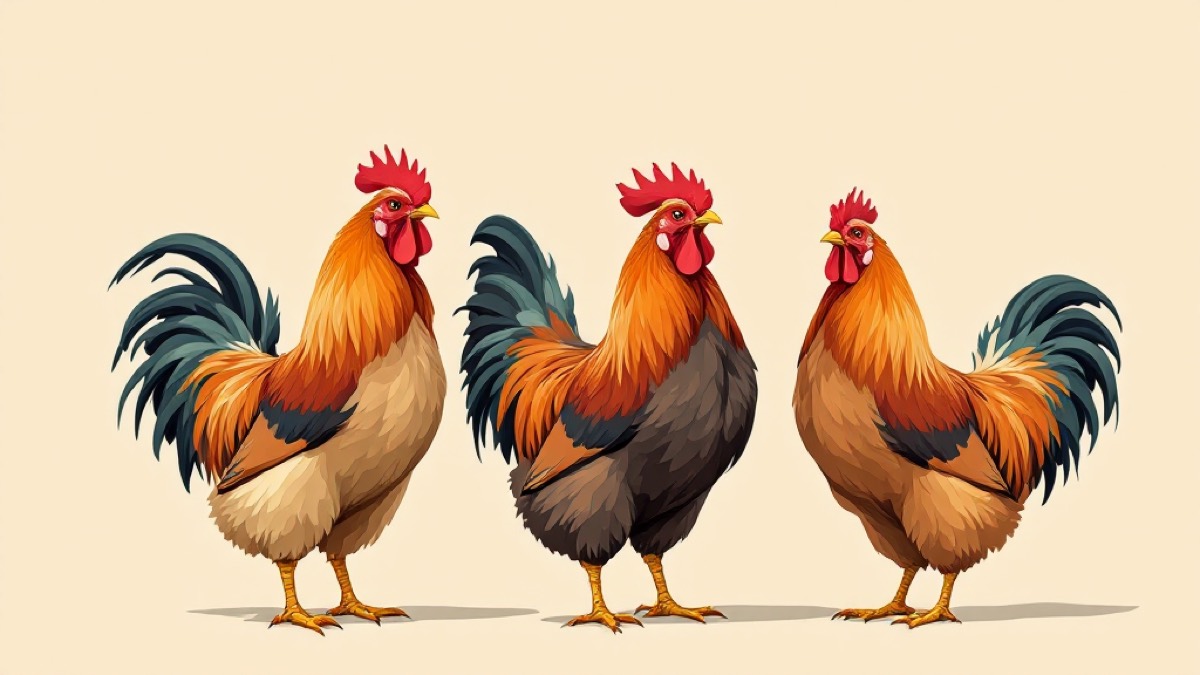
Hennie Gamefowl: The Hen-Feathered Cock
TL;DR: A hennie (or henny) cock is a male bird with hen-like plumage — no long pointed hackle feathers, no long curved sickle tail. Hen-feathering is a documented genetic trait, not a management or age effect, and it is one of the few gamefowl characteristics you can genuinely confirm by looking at the bird. It affects plumage, not sex: a hennie cock is a cock, with a cock’s comb, spurs, behaviour and crow. The word is used both for the trait and for lines carrying it, so ask the breeder which they mean.
Most of what gets claimed about gamefowl appearance is inference. This one is not, which makes it worth understanding properly.
What Hen-Feathering Actually Is
A normal cock carries distinctly male plumage: long, narrow, pointed and glossy hackle feathers on the neck, similar feathering on the saddle, and long curved sickle feathers in the tail.
A hen-feathered male has none of that. His feathers are shaped like a hen’s — rounder, shorter, without the long sickles.
It is an inherited trait, documented in poultry genetics. It is not:
- A young bird that has not developed yet.
- A bird in poor condition.
- A management or feeding effect.
- A sign of anything wrong with the bird.
He Is Still a Cock
Hen-feathering affects plumage only. A hennie cock has:
- A cock’s comb and wattles — larger and more developed than a hen’s.
- Spurs, developing with age.
- Male behaviour, including toward other males.
- Crowing.
- Normal male function.
So distinguishing a hennie cock from a hen takes a moment longer than usual, but the markers are clear: comb, wattles, spurs, crow and behaviour. Our rooster vs hen guide covers those markers generally, and they hold here.
Practical consequence: a hennie cock still cannot be housed with other mature males. Plumage does not change that, and any keeper who assumes otherwise will find out quickly — see gamefowl farm design and layout.
Trait or Bloodline?
The word gets used both ways, and that is the thing to clarify before buying.
- As a description: any hen-feathered male, regardless of ancestry.
- As a line name: families of birds maintained by breeders that carry the trait.
Ask the breeder which they mean. As always in this category, the name is the starting question and the pedigree is the answer — see fighting rooster breeds for the breed-versus-bloodline distinction and SBR gamefowl for how loosely these terms travel.
Breeding With the Trait
If you are breeding for hen-feathering, the practical guidance is the same as for any inherited characteristic:
- Ask the breeder what their line actually produces, not what the trait’s genetics permit in theory. Their records are the evidence.
- Keep your own records. What was mated to what, and what the offspring looked like — see gamefowl breeding chart and pedigree tracking.
- Note it in the pedigree as a characteristic, alongside colour and leg colour — see pangalan at kulay ng manok panabong.
- Do not treat plumage as proof of line. A hen-feathered bird from an unknown source is a hen-feathered bird from an unknown source.
This guide does not set out the inheritance pattern in detail, because getting genetics half-right in print is worse than pointing you at the breeder’s actual results. If you are planning a breeding programme around it, ask breeders who have run the trait for generations what they see.
The One Thing You Can Confirm by Eye
Worth stating because so little else in this category is.
Bloodline claims cannot be confirmed by looking at a bird — our how to identify gamefowl bloodlines guide is blunt about that. Hen-feathering is different: it is a visible, unambiguous physical characteristic. You can see whether a male is hen-feathered.
What that does not tell you is the bird’s ancestry, its health, or how it will perform. It tells you one true thing about the plumage. Everything else still needs the pedigree, the parent stock and the health history — see gamefowl for sale buying guide.
The Honest Limits Here
Hen-feathering in male chickens is a documented inherited plumage characteristic, and it does not alter the bird’s sex or male function — that much is established poultry genetics. This guide does not set out the inheritance pattern in detail, makes no performance claims, and gives no prices. Whether a particular line reliably produces hen-feathered offspring is a question for the breeder’s own records rather than for a general article, and bloodline verification always rests on pedigree rather than appearance.
Related: fighting rooster breeds, rooster vs hen, best gamefowl bloodlines, how to identify gamefowl bloodlines.
Frequently Asked Questions
What is a hennie gamefowl?
A male bird with hen-like plumage — lacking the long, pointed, glossy hackle and the long curved sickle tail feathers a normal cock carries. The trait is called hen-feathering and it is genetic.
Is hen-feathering a real genetic trait?
Yes. Hen-feathering in male chickens is a documented inherited characteristic and is not a matter of age, condition or management.
Is the bird still a functioning male?
Yes. Hen-feathering affects plumage, not sex. A hennie cock is a cock.
Can you tell a hennie apart from a hen at a glance?
It is harder than with a normal cock, since the plumage is similar. Comb, wattles, behaviour, spurs and crowing distinguish them.
Does hen-feathering affect fighting ability?
This site makes no performance claims for any bloodline or trait, and hen-feathering is a plumage characteristic rather than a performance one.
Is hennie a bloodline or a trait?
The word is used both ways — as a description of hen-feathered birds and as a name for lines that carry the trait. Ask the breeder which they mean.
Do hennie birds breed true?
Inheritance of hen-feathering follows the genetics of the trait rather than a guarantee, so ask the breeder what their line actually produces and check their records.