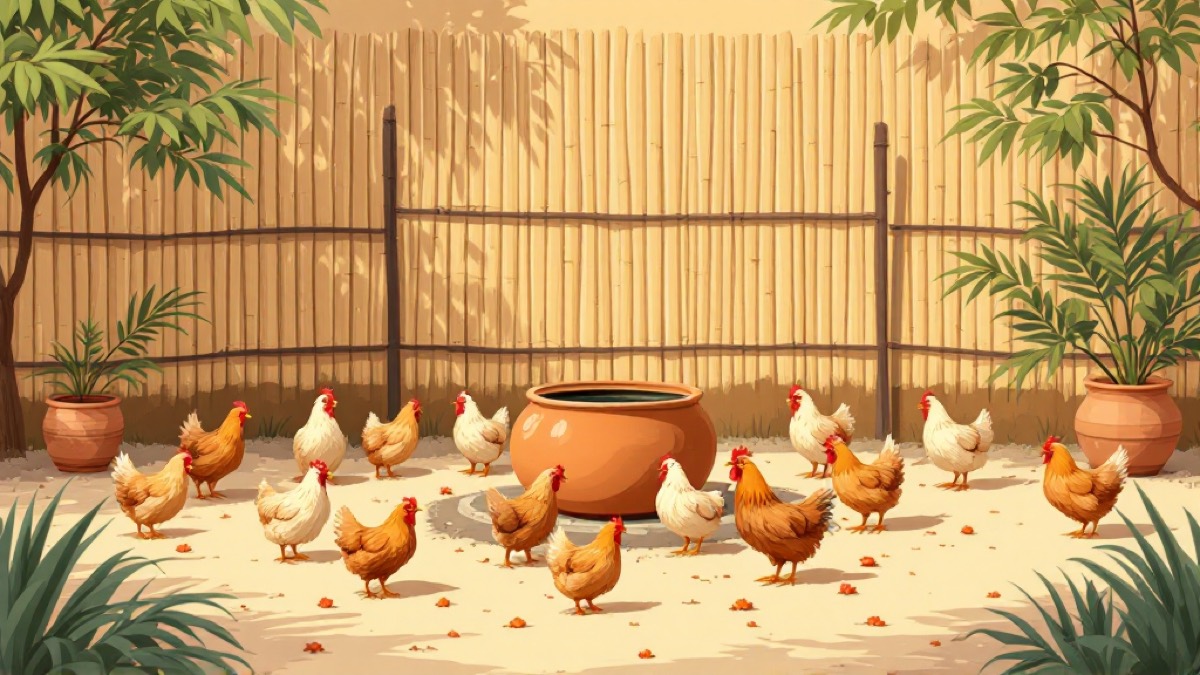
Buff Orpington: A Heavy Breed in a Hot Country
TL;DR: The Buff Orpington is a heavy, densely feathered, very docile English dual-purpose breed — moderate lay, worthwhile carcass, and a reliable broody. Everything that makes it excellent in a cool country works against it here: mass plus dense feathering equals poor heat shedding. Keepable in the Philippines with real shade, ventilation and generous space; a poor choice for a hot, crowded pen. If you want eggs, a hybrid out-lays it easily. If you want a calm bird that hatches her own replacements, it earns its place.
A genuinely lovely breed, and one worth choosing on purpose rather than on photographs.
What It Is
An English breed, developed as a dual-purpose bird — meat and eggs from the same animal rather than excellence at either. The buff variety is the familiar one: soft golden plumage, heavy build, broad body, loose dense feathering.
The characteristics that define it:
- Heavy. A substantial bird with real carcass on it.
- Densely feathered. Deep, soft plumage — the look people buy it for.
- Docile. Consistently described as calm and easy to handle, and it is the main reason it is a family favourite.
- Broody. Goes broody readily and mothers well.
The Philippine Problem
Read those four traits again with heat in mind.
Mass plus dense feathering is the worst combination for shedding heat. Chickens do not sweat — they lose heat through the comb, wattles and unfeathered skin, and by panting. See chicken anatomy and rooster comb types. A large body generates more heat and has proportionally less surface to lose it from, and deep insulating plumage is doing precisely the wrong job in April.
The Orpington’s single comb helps a little. It does not offset the rest.
This puts it in the same category as Brahma and Jersey Giant — heavy breeds from cool climates that are keepable here with deliberate management and are unfair to keep without it.
What that management means:
- Real shade at midday, not dappled.
- Air movement at bird level — see coop ventilation.
- Generous space. Every bird is a heat source, so stocking density is a cooling decision — see coop space per bird.
- Cool water, more drinking points, and evening checks. See raising chickens through a Philippine summer and heat stress.
They are also on the wrong side of the rainy season ledger: deep soft plumage takes a long time to dry.
What You Get For It
Lay: moderate, and nowhere near a commercial hybrid. If eggs are the point, Isa Brown, Dekalb, Lohmann or a Leghorn will out-lay an Orpington comfortably — see best layer chicken breeds.
Meat: a worthwhile carcass, unlike a spent commercial layer. That is the dual-purpose argument, and it is real — see dual-purpose chicken breeds and dressing percentage.
Broodiness: the underrated one. A hen that goes broody reliably and mothers well is the cheapest incubator there is — no electricity, no brownout risk, and she does the brooding afterwards. See hatching under a broody hen and broody hen. Commercial hybrids largely will not do this, which is why they need replacing by purchase every cycle.
Temperament: genuinely calm. Worth something if children are involved, and it makes routine handling — mite checks, foot checks, medication — much easier. See how to give a chicken medicine.
Honest Comparison
| Buff Orpington | Commercial hybrid layer | Native chicken | |
|---|---|---|---|
| Lay | Moderate | High | Low |
| Carcass | Good | Poor | Modest but valued |
| Heat tolerance | Poor | Moderate | Excellent |
| Broody | Yes, reliably | Largely not | Yes |
| Breeds true | Yes | No | Yes |
| Temperament | Very docile | Variable | Flighty |
The column that decides it is usually heat tolerance against breeds true. Orpingtons reproduce themselves; hybrids do not. Whether that trade is worth the heat management is a question about your site and your shade, not about the breed.
Native breeds win the climate argument outright — see native chicken breeds and manok na bisaya.
Buying
Orpingtons circulate here through hobby breeders, not commercial hatcheries. That means the usual private-purchase discipline applies:
- See the parent stock and the conditions they are kept in.
- Ask what it actually is. “Orpington” gets applied loosely to any large buff-coloured bird.
- Quarantine anything incoming, without exception.
See where to buy day-old chicks and chicken breeds in the Philippines.
The Honest Limits Here
That the Buff Orpington is a heavy, densely feathered English dual-purpose breed known for docility and broodiness, and that body mass and dense plumage impair heat dissipation, are breed-standard facts and established poultry physiology. This guide gives no weights, no egg counts and no prices — those depend on strain, management and a market this site does not track, and published breed figures describe temperate conditions rather than Philippine ones. Whether this breed suits you is a question about your shade, ventilation and space before it is a question about the bird.
Related: chicken breeds in the Philippines, dual-purpose chicken breeds, heat stress in chickens, broody hen.
Frequently Asked Questions
What is a Buff Orpington?
An English dual-purpose breed, heavy-bodied and densely feathered, with a soft golden-buff plumage. It is one of the most widely kept backyard breeds in temperate countries.
Are Buff Orpingtons good for the Philippines?
They can be kept here, but they were developed for a cool climate. Their body mass and dense feathering work against them in tropical heat, so shade, ventilation and stocking density matter more than with a lighter breed.
Are Buff Orpingtons good layers?
They are dual-purpose rather than specialist layers. A commercial hybrid will out-lay them substantially; an Orpington gives moderate lay plus a worthwhile carcass and a docile temperament.
Do Buff Orpingtons go broody?
Frequently, and they are known as reliable broodies and good mothers. That is a genuine advantage if you want a flock that renews itself, and an inconvenience if you only want eggs.
Are Buff Orpingtons friendly?
They are known for a calm, docile temperament, which is a large part of their popularity as a family backyard bird.
Do Buff Orpingtons handle heat well?
Less well than light breeds. A heavy, densely feathered bird sheds heat poorly, and their comb is not large enough to compensate.
Where can I buy Buff Orpingtons in the Philippines?
They circulate among hobby breeders rather than through commercial hatcheries. Ask for the source and see the parent stock, as you would with any breed bought privately.