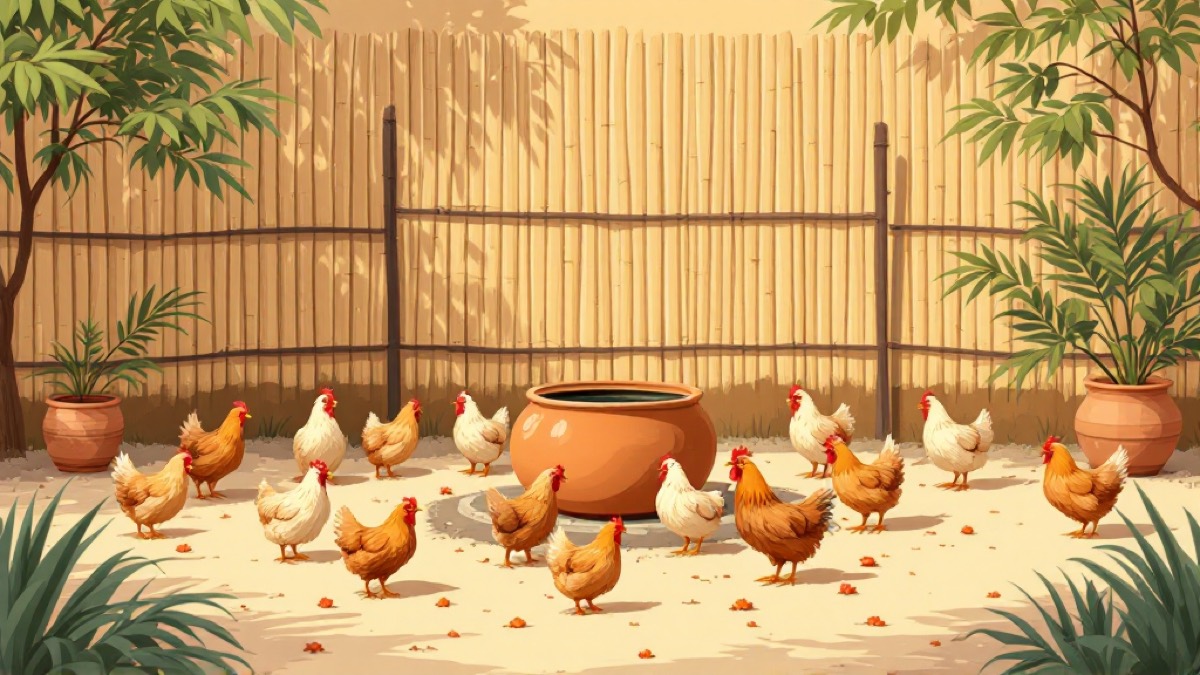
Chickens in the Rainy Season: Everything Follows the Wet
TL;DR: Wet litter is the root of the whole season. From it follow ammonia, respiratory disease, foot problems, and — with wet ground outside — more parasite pressure. Fix it with drainage graded away, generous roof overhang, ventilation, and managing the drinker area, which is the wettest spot in any coop. Then protect the feed, because humidity accelerates mould and mouldy feed must be discarded. Separately: prepare for typhoons before the season, not during it.
Everything in this guide traces back to one thing staying dry.
Why Wet Litter Is the Root
Damp bedding goes anaerobic and produces ammonia, which damages the birds’ airway lining directly. Our chicken anatomy guide explains why birds are unusually exposed: their air sacs run through the body with one-way airflow, so irritants reach further than they would in a mammal.
A damaged airway is an open door to CRD, coryza and infectious bronchitis — which is why respiratory problems and the wet season arrive together.
Birds also stand in it, which is where bumblefoot and scaly leg mite get their opportunity.
Your alarm is your nose. If you smell ammonia in the morning, the birds breathed it all night. Act that day.
Keeping Litter Dry
- Drainage graded away from the house — dug before you need it, not during a storm.
- Generous roof overhang, so driving rain does not reach the litter through open sides.
- Ventilation, which removes moisture as well as heat — see coop ventilation.
- Manage the drinker area. The wettest point in any coop: put it on slats, hard standing, or somewhere that drains — see chicken waterers.
- Remove wet patches immediately and replace with dry material. One wet patch spreads.
- Fix leaks the day you notice them.
If you run deep litter, the wet season is when the system is tested — that guide is explicit that Philippine humidity works against the method and the housing has to compensate.
Protect the Feed
Humidity accelerates spoilage, and mouldy feed must be discarded, never fed — see what not to feed chickens.
- Sealed metal or hard plastic containers, off the floor.
- Buy smaller quantities, more often. A month-old opened sack in a humid backyard is not the feed you bought.
- Darak especially — its oil content makes it prone to going rancid, and it fails faster than formulated feed.
- Smell it before feeding. Musty, sour or caked means discard.
- Cover feeders or bring them in, which also helps against rats — more active around shelter and feed in wet weather.
Outside: Mud and Parasites
Wet ground favours the conditions and intermediate hosts several parasites depend on, so outdoor birds face more pressure in the wet months — see gapeworm, which is transmitted via earthworms, slugs and snails, and internal parasites.
Practical responses:
- Roof part of the run, which keeps some ground usable and is the highest-value change you can make — see chicken run design.
- Avoid permanently wet, heavily used areas.
- Rotate range where you can.
- Plan parasite management with your agrivet rather than dosing reactively — see deworming guide.
Breeds That Cope Badly
Some birds do much worse in rain than others:
- Silkies — their plumage lacks the structure to shed water, so they soak to the skin and stay wet. They also cannot fly, so they need dry ground and reachable shelter.
- Polish and crested breeds — a soaked crest stays soaked and is where parasite problems concentrate.
- Feather-legged breeds such as Brahma — shank feathering holds mud and moisture against the skin.
- Chicks, always. A wet chick chills fast — see how to keep chicks warm.
All of them need shelter they can reach without crossing open ground.
What Also Rises
- Mosquitoes, which spread fowl pox — clear standing water around the coop. See gamot sa bulutong ng manok.
- Flies, on wet litter and uneaten scraps.
- Rats, seeking shelter and food.
- Water contamination after flooding — use clean water and do not assume the usual source is fine.
Typhoons Are a Separate Job
Structural preparation — anchoring, roof fixings with screws and washers, bracing, closable windward openings, and a plan for where the birds go — belongs in the build rather than the season. See typhoon-proof chicken coop, and do it before the season starts.
The Honest Limits Here
The relationship between wet litter, ammonia and respiratory damage, the effect of humidity on feed spoilage, and the parasite implications of wet ground are established poultry husbandry. This guide gives no quantities, litter depths or timings, because they depend on your housing, flock size and how bad the season is where you are — the condition of the litter and the smell of the coop are the instructions. Mouldy feed should be discarded rather than fed, without exception.
Related: deep litter system, typhoon-proof chicken coop, raising chickens through a Philippine summer, coop ventilation.
Frequently Asked Questions
What is the main problem for chickens in the rainy season?
Wet litter. Almost every other wet-season problem — ammonia, respiratory disease, foot problems, parasites — follows from bedding that will not stay dry.
Why is wet litter so damaging?
It produces ammonia, which damages the birds airway lining directly and opens the way for respiratory disease. Birds also stand in it, which causes foot problems.
How do I keep litter dry when it rains constantly?
Drainage graded away from the house, a generous roof overhang, ventilation, and managing the drinker area, which is the wettest point in any coop.
Does feed spoil faster in the wet season?
Yes. Humidity accelerates mould, and mouldy feed must be discarded rather than fed. Buy smaller quantities more often and store sealed.
Do chickens need to be kept inside when it rains?
They need somewhere dry they can reach without crossing open ground. Some breeds, particularly Silkies and crested breeds, cope with rain much worse than others.
Are parasites worse in the rainy season?
Wet ground favours the intermediate hosts and conditions that several parasites depend on, so outdoor birds face more pressure.
What about typhoons?
Structural preparation is a separate job that belongs in the build rather than the season — anchoring, roof fixings, bracing, and a plan for where the birds go.