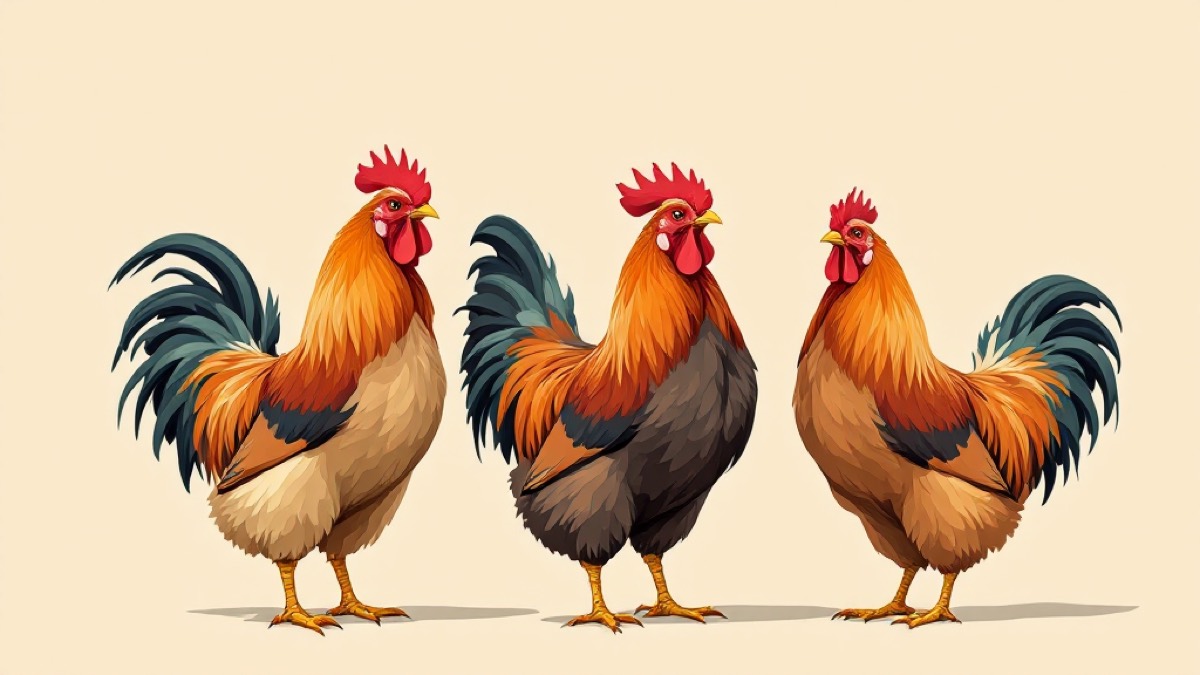
Whitehackle Gamefowl: One of the Foundation Lines
TL;DR: Whitehackle is one of the older American bloodline families, long established and frequently appearing in the ancestry of later lines. The name is descriptive in origin — white feathering in the hackle — and that is exactly why it is a trap: white hackle feathers do not establish ancestry. Like every bloodline it has no published standard, so what varies between yards is substantial and what verifies a bird is the pedigree, the breeder and the parent stock.
An old name is worth something when there is paperwork behind it and nothing at all when there is not.
What Is Generally Documented
It is one of the older American gamefowl families, long established in the breeding community, and it turns up widely in the ancestry of later lines. That reflects how gamefowl breeding works: older, widely distributed families end up in a lot of pedigrees because breeders crossed with what was available and respected.
The name refers to white feathering in the hackle — the neck feathers. It is descriptive in origin.
It is a bloodline, not a breed — see fighting rooster breeds for why that distinction governs everything else. There is no published standard, no registry, and no authority to settle disputes about what is and is not Whitehackle.
The Trap in a Descriptive Name
Because the name describes a feather colour, people reason backwards from the feathers. That does not work.
- White hackle feathering occurs in birds with no connection to the line.
- Birds within the line vary, since there is no standard fixing appearance.
- Colour is a description, not evidence of ancestry — the same point our pangalan at kulay ng manok panabong guide makes about Filipino colour terminology.
Our how to identify gamefowl bloodlines guide is direct about the limits here: appearance narrows possibilities; records establish facts.
What Varies Between Yards
Substantially, and legitimately.
A bloodline that has been maintained by many breeders across many decades has been selected in different directions by each of them, and crossed with different things along the way. Two birds sold as Whitehackle by two breeders can be quite different animals, and neither seller is necessarily wrong.
That is not a flaw in the system — it is the system. Bloodlines are family lines maintained by people, not standardised products. It does mean that “Whitehackle” tells you where to start asking questions, not what you are getting.
What to Verify
- The pedigree, in writing, going back generations — see gamefowl breeding chart and pedigree tracking.
- Who the breeder got it from, and when.
- Pure or crossed, with what, how many generations back — see how to cross breed gamefowl and how to line breed gamefowl.
- The parent stock, seen in person.
- Health and vaccination history — see gamefowl vaccination program.
Then quarantine whatever you bring home, before it meets anything you already own.
Why Foundation Lines Matter to a Breeder
If you keep records seriously, knowing which older families sit in your birds’ background is useful — not as a status claim but as breeding information.
- It tells you what you are likely to be doubling up on when you line breed — see how to line breed gamefowl without inbreeding risk.
- It tells you what a cross is actually combining, rather than what the names suggest.
- It makes your own records useful to the next breeder, which is how bloodlines stay meaningful at all.
That is the practical argument for caring about an old name: it is data, not prestige. Our best gamefowl bloodlines in the Philippines guide covers the main families and what each is known for in the community.
The Honest Limits Here
That Whitehackle is one of the older American gamefowl bloodline families, that the name refers to white hackle feathering, and that older families commonly appear in later pedigrees, are consistently reported within the breeding community. This guide gives no definitive physical description, no performance claims and no prices, because bloodlines have no published standard, ability claims in this niche are reputation rather than measurement, and pricing is set bird by bird. Verify with pedigree, breeder and parent stock; appearance is not verification.
Related: best gamefowl bloodlines, albany gamefowl, fighting rooster breeds, how to identify gamefowl bloodlines.
Frequently Asked Questions
What is Whitehackle gamefowl?
One of the older American gamefowl bloodline families, long established in the breeding community and appearing in the ancestry of many later lines. It is a bloodline rather than a standardised breed.
Where does the name come from?
It refers to white feathering in the hackle, the neck feathers. The name is descriptive in origin, which is why it is important to remember that appearance alone does not establish ancestry.
Is Whitehackle a breed?
No. Like all gamefowl bloodlines it is a breeder-maintained family traced by pedigree, with no published standard to measure a bird against.
Why does Whitehackle appear in so many pedigrees?
Older, widely distributed families tend to end up in the ancestry of later lines because breeders crossed with what was available and respected. That is normal in gamefowl breeding.
Does white in the hackle mean a bird is Whitehackle?
No. Feather colour is a description, not proof of ancestry, and white hackle feathering occurs in birds with no connection to the line.
How do I verify a Whitehackle bird?
Pedigree records, the breeder, and the parent stock. There is no other reliable method.
How does the line perform?
This site makes no performance claims for any bloodline, because such claims are reputation rather than measurement.