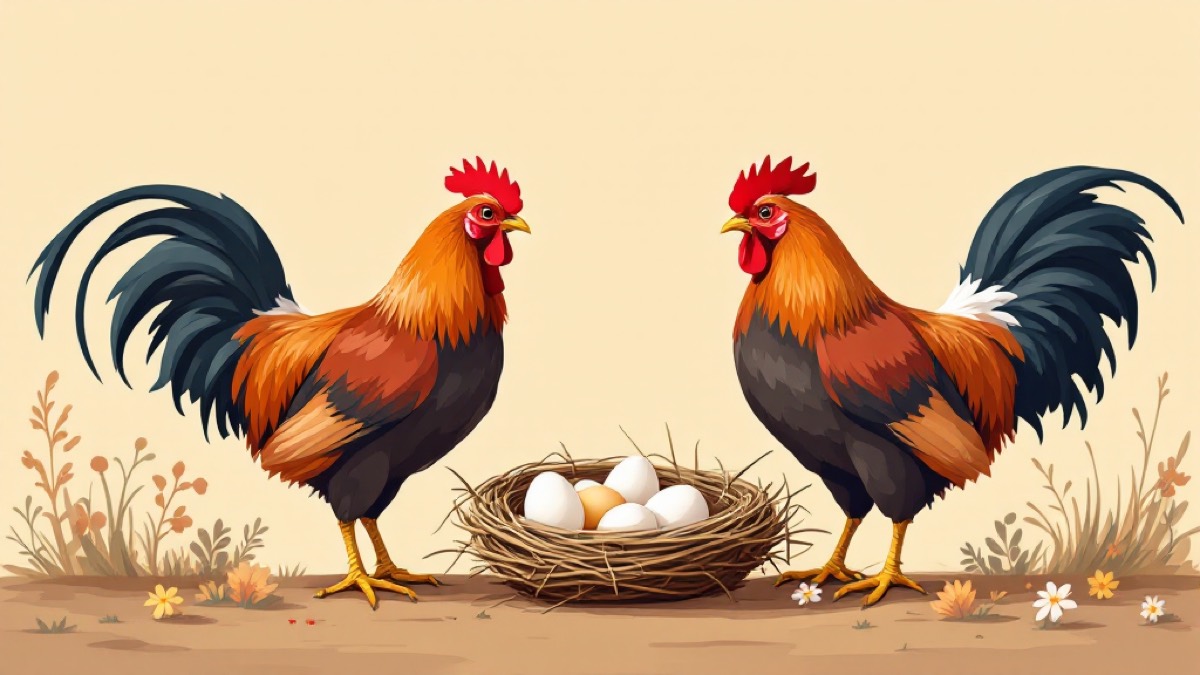
How to Cross Breed Gamefowl: Choosing the Right Cross
TL;DR: Crossbreeding two gamefowl bloodlines produces hybrid vigor (heterosis) — stronger, more resilient offspring than either pure parent — and lets breeders combine complementary traits like build, hardiness, and conformation. Common Philippine crosses include Kelso x Hatch, Sweater x Kelso, and Claret x Sweater, chosen for documented lineage and complementary build rather than any fighting-performance claim. The F1 generation shows the strongest hybrid vigor, while F2 (F1 x F1) crosses are more variable and unpredictable. Stick to two-way crosses, test on a small batch first, and never cross low-quality stock expecting the offspring to outperform the parents.
Crossbreeding — mating gamefowl from two different bloodlines — is one of the most popular breeding strategies in Philippine sabong. The appeal is hybrid vigor: better health, growth, and vigor than a highly inbred pure line.
And more importantly: how do you choose the right cross? You can’t just mix any two bloodlines together. Successful crossbreeding has logic, science, and strategy behind it.
Why Cross Breed?
Hybrid Vigor (Heterosis)
The primary reason for crossbreeding is the phenomenon called hybrid vigor or heterosis — the tendency of crossbred offspring to be stronger, healthier, and more vigorous than either parent.
In scientific terms, heterosis occurs when offspring inherit different versions of genes from different bloodlines — resulting in broader genetic diversity that translates to better immune function, better growth, and better overall constitution.
In practical terms: crossbred gamefowl are often more resilient, have stronger immune systems, and have better overall constitution compared to highly inbred pure stock.
Combining Complementary Traits
The second major reason is the ability to combine strengths from two bloodlines:
Have a bloodline that’s tall but prone to fertility issues? Cross it with a line known for consistent hatch rates.
Have a bloodline with striking plumage but inconsistent conformation? Cross it with a line known for breeding true.
Have a bloodline that’s flighty and hard to handle in a pen? Cross it with a calmer, more tractable line.
Crossbreeding gives you the opportunity to combine traits — build, hardiness, and temperament — that aren’t available in any single pure bloodline.
Correcting Weaknesses
Every bloodline has weaknesses in conformation, fertility, or hardiness. Crossbreeding is a way to address specific weaknesses of one bloodline by introducing strengths from another.
The Science: How Crossbreeding Works
Basic Genetics Refresher
Every gamefowl has two copies of each gene — one from the sire (father), one from the dam (mother). The combination of the two copies determines the expressed trait.
Dominant traits — expressed even with just one copy (example: certain feather colors).
Recessive traits — expressed only when both copies are the same (example: certain leg colors).
Polygenic traits — influenced by multiple genes (example: body size, temperament, endurance). Most important gamefowl traits are polygenic — meaning they’re influenced by many genes simultaneously.
What Happens in a Cross
When you cross breed, the offspring receives 50% of its genes from the sire bloodline and 50% from the dam bloodline. But exactly which 50% isn’t predictable — that’s why there’s variation among offspring from the same cross.
This is why siblings from the same cross aren’t all the same — some lean more toward the sire side, some toward the dam side, and others show a blend of both.
The F1 Generation
The F1 (first filial) generation — the direct offspring of two different pure bloodlines — typically shows the strongest expression of hybrid vigor. That’s why F1 crosses are highly valued by breeders looking for maximum vigor in health and growth.
The F2 generation (F1 x F1 cross) is more variable — traits segregate unpredictably. That’s why many breeders produce F1 crosses for general stock but maintain pure lines for continued breeding.
How to Choose the Right Cross
Step 1: Identify the Weaknesses of Your Base Bloodline
Start with the bloodline you’re most familiar with — the one that dominates your farm. What are its weaknesses?
If your base bloodline is Kelso — its build tends toward a moderate frame. A cross that contributes a heavier build or different station diversifies the conformation of your stock.
If your base is Sweater — its tall, high-station build can come with a leaner frame and less bulk. A cross that contributes a stockier build and documented hardiness diversifies the line.
If your base is Hatch — its compact, low-station build differs from taller lines. A cross that contributes height and a different comb type diversifies conformation.
If your base is Roundhead — its rounded head shape and medium station are its defining traits. A cross that contributes a different station or feather pattern diversifies the line.
Step 2: Select the Complementary Bloodline
Choose a second bloodline that has strengths where your base bloodline is weak — but it doesn’t need to be the opposite in every trait:
Kelso x Hatch is one of the most established Philippine crosses, combining Kelso’s consistent conformation with Hatch’s compact frame.
Sweater x Kelso combines the Sweater’s height with Kelso’s well-documented, consistent lineage.
Hatch x Roundhead combines the Hatch’s compact build with the Roundhead’s distinctive head shape.
Sweater x Hatch combines height with a more compact frame, though the resulting conformation across offspring is less predictable than a single-trait cross.
Step 3: On Choosing by Fight Format
Searches for “best cross for tari” or “best cross for short knife” are common, so this deserves a direct answer rather than a silent skip: this guide does not rank crosses by fighting performance in any format. A format-suitability claim attached to a bloodline combination isn’t something a buyer or breeder can verify without testing individual birds, and outcomes depend far more on conditioning and handling than on which two names went into the cross. Sweater, Kelso, and Claret crosses come up most often in long-knife conversations, and Hatch crosses come up most often in short-knife conversations, simply because those lines are common and well documented in those segments of the market — not because any cross can promise a result in the pit.
Step 4: Which Side for Which Bloodline?
There’s debate in the community about whether it matters which is the sire and which is the dam in a cross. The short answer: yes, it has an effect on conformation — but a subtle one, and this guide won’t extend that to fighting characteristics.
The general guideline followed by many Filipino breeders:
Sire side (cock): Use the bloodline whose build and comb type you want to dominate in the offspring. The sire has a stronger influence on overall physical build, based on breeders’ anecdotal experience.
Dam side (hen): Use the bloodline you want to contribute secondary traits — body structure, feather pattern, station.
Note: This is a rule of thumb about conformation, not absolute science. Actual inheritance is complex with significant individual variation.
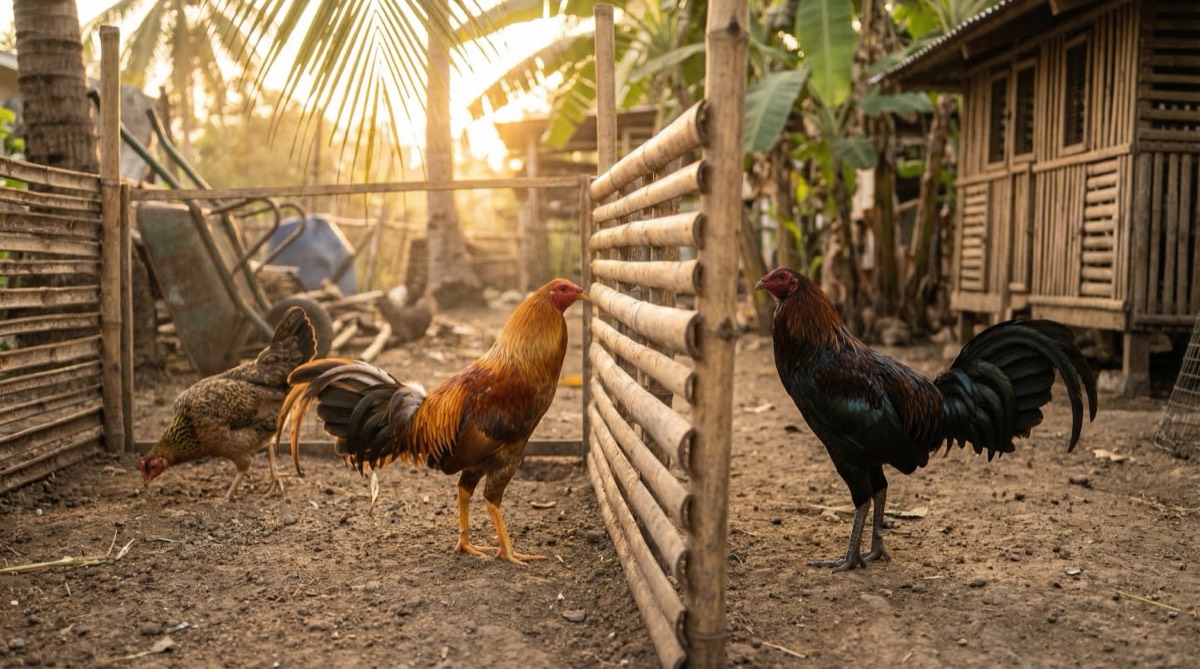
Common Cross Combinations and Expected Outcomes
Kelso x Sweater (or Sweater x Kelso)
Expected traits: High-station build with Kelso’s consistent conformation and reach. Notable for: Combining two of the most widely bred and well-documented lines in the Philippine market.
Kelso x Hatch
Expected traits: A more compact build than pure Kelso, carrying some of Hatch’s frame. Notable for: Being one of the most common crosses among breeders who keep both lines.
Sweater x Hatch
Expected traits: Height combined with a more compact frame. The challenge is inconsistency — the range of offspring conformation is wider. Notable for: Breeders looking to diversify station and build across generations.
Roundhead x Hatch
Expected traits: The Roundhead’s head shape combined with the Hatch’s compact frame. Notable for: A common cross among breeders keeping both lines.
Sweater x Roundhead
Expected traits: High-station build paired with the Roundhead’s distinctive head shape. Notable for: Combining two structurally distinct lines.
Claret x Sweater
Expected traits: The Claret’s distinctive plumage with the Sweater’s height. Growing in popularity in recent years. Notable for: Pairing a less-saturated line with a mainstream one.
Common Crossbreeding Mistakes
Mistake 1: Random Crossing Without Purpose
“Just mix them” — crossing without a clear goal produces unpredictable and often mediocre offspring. Always have a specific purpose for every cross.
Mistake 2: Crossing Low-Quality Stock
Crossbreeding isn’t a magic fix for poor quality gamefowl. “Garbage in, garbage out” — if the parents are mediocre, the offspring are unlikely to be exceptional regardless of bloodline combination.
Mistake 3: Ignoring the Dam
Many breeders focus only on the sire and neglect dam quality. The hen contributes 50% of the genes — dam quality is equally important to the outcome.
Mistake 4: Not Testing Before Scaling
Don’t mass-produce a cross without testing first. Produce a small batch, evaluate the offspring, and only scale up if the results are positive.
Mistake 5: Too Many Bloodlines in the Mix
Crossing 3 or more bloodlines simultaneously (triple cross, etc.) increases unpredictability exponentially. Stick to two-way crosses first — especially if you’re a beginner at crossbreeding.
Who shouldn’t cross breed: if you want predictable, uniform offspring every time, crossbreeding isn’t the right fit — F2 generations segregate unpredictably (see “The F1 Generation” above), and beginners are better off testing small two-way cross batches before scaling rather than chasing consistency from the start.
How to Evaluate Cross Results
After the cross produces offspring, here are the evaluation criteria:
Physical uniformity. How consistent are the offspring’s physical traits? Highly variable offspring suggests the cross isn’t “clicking” well.
Health and vigor. Are the offspring generally healthy and vigorous? Hybrid vigor should be visible — better growth rates, better appetite, stronger immune function compared to the pure parents.
Fertility and hardiness. Are hatch rates and chick survival consistent with, or better than, the pure parent lines?
Conformation consistency. Are the offspring converging on the build, comb type, and feather pattern you were aiming for, or is the cross producing a wide, unpredictable range?
Overall quality. Subjective assessment — overall, is the cross producing gamefowl that are healthier and better-conformed than either parent alone?
Conclusion
Crossbreeding is one of the most powerful tools in gamefowl breeding — but like any powerful tool, it takes knowledge and skill to use it right.
The keys: a clear purpose for every cross, quality parents on both sides, understanding of trait complementarity, and honest evaluation of results. Don’t cross just to cross — cross to improve.
For quality breeding stock from different bloodlines — for your next cross — see our guide on finding and vetting gamefowl breeders to connect with breeders for genetics you can trust.
Read also: Top Gamefowl Crosses in the Philippines | How to Line Breed | Breeding Calculator
Frequently Asked Questions
What is hybrid vigor in gamefowl crossbreeding?
Hybrid vigor (heterosis) is the tendency of crossbred offspring to be stronger, healthier, and more vigorous than either pure parent, thanks to broader genetic diversity.
What's the difference between F1 and F2 crosses?
F1 offspring (from two pure bloodlines) show the strongest hybrid vigor. F2 crosses (F1 x F1) are more variable, since traits segregate unpredictably.
Which cross is best for long knife (tari) fighting?
This guide doesn't rank crosses by fighting performance in any format. Sweater, Kelso, and Claret crosses come up most often in long-knife conversations mainly because those lines are common and well documented, not because any cross can promise a result in the pit.
Which cross is best for short knife fighting?
Same principle applies here: no cross is ranked by fighting performance on this site. Hatch crosses come up most often in short-knife conversations because Hatch stock is common and well documented in that segment of the market.
Does it matter which bloodline is the sire vs. the dam?
Yes, but subtly, and only for conformation — this guide doesn't extend it to fighting characteristics. The rule of thumb many breeders follow is that the sire side has a stronger influence on overall build, while the dam contributes secondary traits like body structure and feather pattern. It's a rule of thumb, not absolute science.
What is the Kelso x Hatch cross known for?
This guide makes no performance claim for the Kelso x Hatch cross or any cross. It's simply one of the most commonly documented Philippine crosses, combining Kelso's consistent conformation with Hatch's compact build.
Can you cross three or more bloodlines at once?
It's not recommended, especially for beginners. Triple crosses and beyond increase unpredictability exponentially — stick to two-way crosses first.
How do you know if a cross is working?
Evaluate physical uniformity among offspring, health and vigor, fertility, and whether the cross overall matches your breeding goals for conformation and temperament.