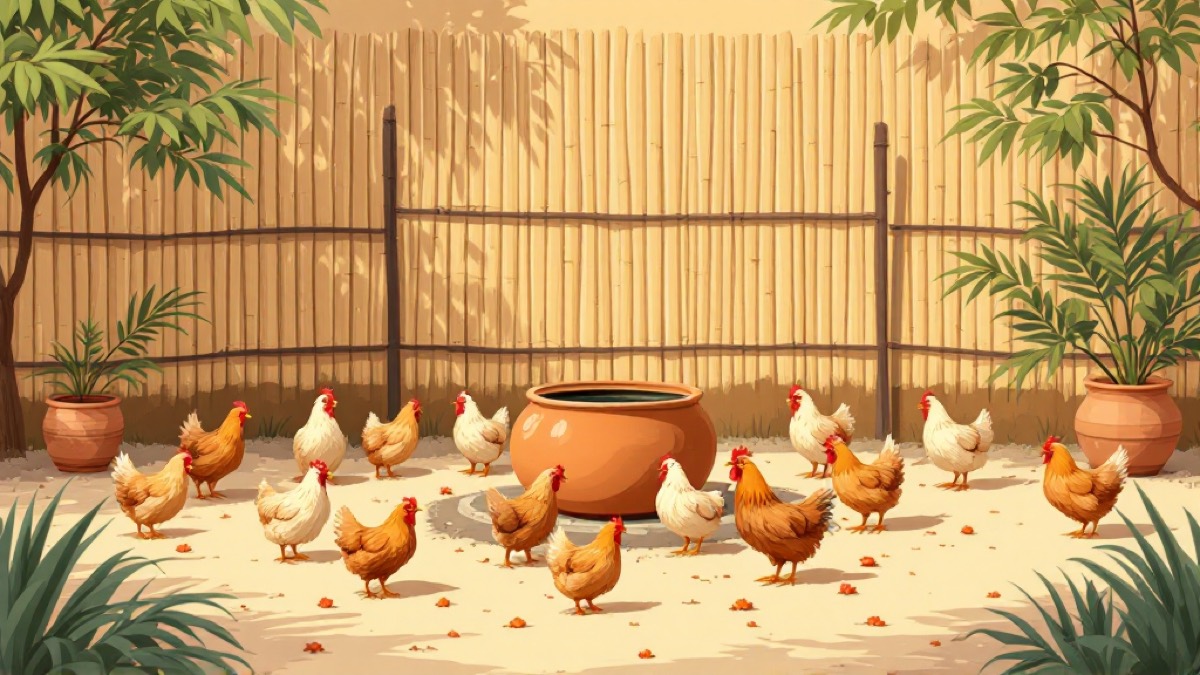
Dust Bathing: Why Chickens Need Dry Dirt
TL;DR: Dust bathing is parasite control, not play — dust works through the plumage to the skin where mites and lice live. Birds need dry, loose material to do it, and in the Philippines that means under cover, because a wet dust bath is just mud. It is a social behaviour, so one small patch will not serve a flock. It helps with parasites and does not cure an infestation — that needs the coop dealt with and proper advice.
The behaviour that looks alarming the first time you see it and matters more than it appears.
What Is Actually Happening
A bird scratches out a hollow, settles in, and works dry material through her feathers with her wings and body — then stands and shakes it all out.
The function is parasite control and feather maintenance. Dust penetrates the plumage down to the skin, which is exactly where red mites, northern fowl mites and lice live and feed. Working dust through and shaking it out disturbs them.
It is also social. Birds bathe together, and they will wait for a favoured spot, which is why a single small patch does not serve a whole flock.
And it is strongly motivated. A bird that cannot dust bathe properly will attempt it in whatever is available — bedding, a corner of the run, a flower bed. That is a bird telling you something is missing.
What They Need
Dry, loose material. Dry soil is the baseline requirement and it is enough.
Dry is the operative word, and in this climate it is the whole difficulty. A dust bath that fills with rain is mud, and mud does the opposite of what dust does.
- Put it under cover — under the coop, in a roofed section of the run, under an overhang. See chicken run design, where roofing part of the run is the highest-value change you can make anyway.
- Check it after heavy rain — see chickens in the rainy season.
- Loosen it if it packs down.
- Make it big enough, and provide more than one area for a larger flock.
A free-ranging flock generally finds its own. Confined birds cannot, and this is one of the small things that separates a well-run pen from a bare one — see coop space per bird and free-range chicken house design.
What This Guide Will Not Recommend
Various additives circulate for dust baths. This guide recommends none, and the reason is specific rather than squeamish.
Some of the materials most commonly suggested for this purpose are fine powders that carry respiratory risks — for the birds, whose airways are unusually exposed (see chicken anatomy on one-way airflow through the air sacs), and for the person handling them. A bird deliberately working a fine powder into the air around its own head is not a low-exposure situation.
If you want to add something, ask an agrivet or a veterinarian what is appropriate and how to handle it. That is a product question with a correct answer, and it is not one to take from an article or from a forum.
Dry soil requires no additive and carries no such risk.
It Is Not a Treatment
Important distinction, because keepers reach for it as one.
Dust bathing helps. It does not clear an infestation.
If you have mites or lice, the birds’ bathing habits are not the intervention. What is:
- Check the birds properly, at night, parting the feathers around the vent — see chicken mites treatment and chicken lice treatment.
- Deal with the coop. Red mite lives in the structure, not on the bird, so treating birds alone fails — see cleaning and disinfecting a chicken coop.
- Get advice from an agrivet on products and their withdrawal periods — see antibiotics for chickens for why withdrawal matters if you sell eggs.
- Check the legs too — see scaly leg mites.
A flock refusing to go into the coop at night is a classic mite sign — see how long do chickens sleep.
Where It Fits in a Pen
Dust bathing belongs with the other things a confined flock needs and often does not get:
| Need | Provision |
|---|---|
| Parasite management | Dry dust area |
| Something to do | Greens hung up — see chicken cannibalism |
| Somewhere to roost | Perches — see how long do chickens sleep |
| Somewhere private to lay | Nest boxes |
| Shade and airflow | Coop ventilation |
| Grit | See grit for chickens |
None of it is expensive. All of it is the difference between birds coping and birds doing well.
The Honest Limits Here
That dust bathing is natural chicken behaviour serving parasite control and feather maintenance, that it requires dry loose material, and that it reduces rather than eliminates external parasite burden, is established poultry behaviour. This guide recommends no dust bath additives and gives no quantities or dimensions — some materials commonly suggested for this purpose carry respiratory risks for birds and handlers, and product choice is a question for an agrivet or veterinarian. Dust bathing is not a treatment for an infestation; that requires the birds and the housing both being addressed with proper advice.
Related: chicken mites treatment, chicken lice treatment, chicken run design, cleaning and disinfecting a chicken coop.
Frequently Asked Questions
Why do chickens dust bathe?
It is natural behaviour that helps control external parasites and maintain feather condition. Dust works into the plumage and down to the skin where mites and lice live.
Do chickens need a dust bath?
They need somewhere dry and loose to do it. Confined birds with no access to bare dry ground cannot perform the behaviour, and it is one of the things they will try to do anyway in whatever is available.
What should I put in a dust bath?
Dry loose material — dry soil is the basic requirement. Keep it dry and keep it under cover, because a wet dust bath is not a dust bath.
Does dust bathing replace mite treatment?
No. It helps but it does not clear an infestation. A flock with mites needs the coop dealt with and advice from an agrivet or veterinarian.
Should I add anything to the dust bath?
Various additives are commonly recommended. This guide does not recommend any, because some materials commonly suggested carry respiratory risks for birds and people.
Where should a dust bath go?
Somewhere that stays dry — under cover, under the coop, or in a roofed part of the run. In the Philippine wet season the roof is what makes it work.
Do chickens dust bathe together?
Often, yes. It is a social behaviour and birds will queue for a good spot, which is why one small area is not enough for a larger flock.