A Low-Cost Poultry Farm Layout That Still Works
TL;DR: Cheap and badly built are different things. Save on: local materials, your own labour, second-hand framing, phased construction. Never save on: orientation, roof heat load, drainage, and fine mesh for rodents — each costs more to fix later than to build correctly now. The single biggest saving available is building one unit, running birds in it through a hot month and a wet month, and only then building the rest.
Most expensive poultry-housing mistakes are made in the first week of construction, before a single bird arrives.
Where the Money Genuinely Saves
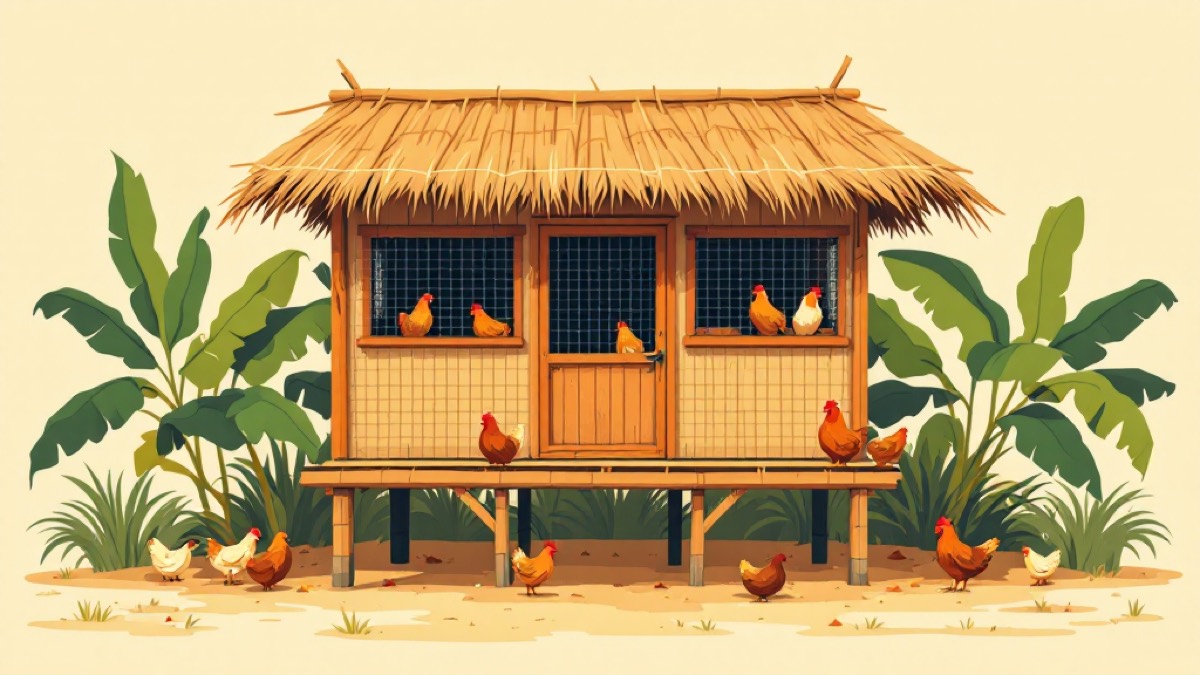
Local materials. Bamboo is widely used in Philippine poultry housing and works, provided it is properly treated and kept off wet ground. Untreated bamboo in soil contact has a short life and you will rebuild.
Your own labour, if you have the time and the skill.
Second-hand framing and roofing, if the material is sound. Be cautious with anything that has held chemicals, and clean and disinfect any second-hand equipment from another farm before it comes near your birds — see backyard flock biosecurity.
Phased construction. Build for the flock you have. Lay the site out for the flock you want, so expansion adds units rather than requiring a rebuild.
Simple designs. A well-oriented, well-drained, well-ventilated simple building beats a complicated one every time.
The Four Things Never Worth Economising On
1. Orientation
Free at the design stage. Impossible afterwards.
Set the long axis so the long walls avoid the full low afternoon sun and so prevailing wind crosses the building. Get this wrong and every hot month for the life of the structure costs you birds and production — see poultry housing design.
2. The roof
An uninsulated metal roof radiates heat onto the birds all afternoon and into the evening. Insulation, a reflective surface, adequate height and generous overhang all cost money once and pay every hot day.
The overhang does double duty: sun off the walls, rain out of an open-sided house.
3. Drainage
Water is the cheapest problem to design for and the most expensive to live with.
Site on the higher ground available, grade the surroundings so water runs away, dig drainage before you need it, and design for spillage around waterers. Wet litter means ammonia, and ammonia damages the birds’ airways — see cleaning and disinfecting a chicken coop and chicken anatomy on why airways matter so much.
4. Fine mesh
Ordinary large-opening wire keeps chickens in and rats out of nothing. Rats come for the feed and stay for eggs and chicks, and the price difference between adequate mesh and inadequate mesh is small compared with the losses.
Seal gaps at the base and roofline too — a gap you can put a finger through is a rat’s door.
Layout: Design Around the Route You Walk
The layout that saves labour saves money, because labour is the cost you pay every single day.
Plan around your actual daily route:
- Feed — where it is stored, how it gets to the feeders. Sealed containers, close to the point of use, off the floor.
- Water — the line or the carry. This is the heaviest daily job; make it short.
- Eggs — collection route, and somewhere clean to put them — see how to store chicken eggs.
- Manure — where it goes, and a route that does not cross the birds — see poultry manure as fertilizer.
- One controlled entry, with a foot dip. Biosecurity is a layout decision before it is a routine.
- An isolation pen, planned rather than improvised — see quarantining new birds.
For gamefowl the constraint is different: mature males need individual housing, which drives the whole site plan — see gamefowl farm design and layout.
Build One First
The largest saving available, and almost nobody takes it.
Build one unit. Put birds in it. Run it through a hot month and a wet month. Then build the rest.
You will discover things no plan predicts: where water pools, which corner gets hot, where the rats get in, whether you can actually reach the far nest box, whether the roof height works. Fixing those on one structure is cheap. Fixing them on ten is a rebuild.
Costing It Honestly
Before building, work out what the operation actually needs to carry:
- Feed is the dominant running cost, not the building — see how much feed does a chicken eat per day and chicken feed price.
- Stock, and replacements — see day-old chick prices.
- Losses, which are real and should be budgeted.
- Your labour, even if unpaid.
Our is poultry farming profitable guide covers the arithmetic. A cheap building attached to an operation that does not cover its feed bill is still a loss.
The Honest Limits Here
The design priorities here — orientation, roof heat load, drainage, rodent exclusion, and phasing construction — are standard tropical poultry housing practice. This guide gives no costs, no dimensions and no material specifications, because prices and availability vary by region and by season, and a budget figure printed here would be stale and misleading. Structural work, particularly anchoring and roofing, should follow local building practice; if you are unsure, have someone who builds locally check it before the birds go in.
Related: poultry housing design, chicken coop design, typhoon-proof chicken coop, poultry equipment in the Philippines.
Frequently Asked Questions
Can you build a poultry house cheaply and still do it properly?
Yes. Local materials, your own labour and a phased build all reduce cost without compromising the things that matter. What cannot be economised on are orientation, roof heat, drainage and predator exclusion.
Is bamboo suitable for poultry housing?
Bamboo is widely used in Philippine poultry housing and works well when it is properly treated and kept off wet ground. Untreated bamboo in contact with damp soil has a short life.
What is the biggest false economy in building a poultry house?
Building everything at once before you have tested one unit through a hot month and a wet month. The second is skimping on drainage, which turns into permanent litter and health problems.
Where should I spend my money?
Roof, drainage, fine mesh for rodent exclusion, and structural anchoring. Those four are the ones that cost more to fix later than to build now.
Can I use second-hand materials?
Often yes for framing and roofing, provided the material is sound. Be careful with anything that has held chemicals, and clean and disinfect second-hand equipment from other farms before use.
How do I plan the layout of a small farm?
Design around the daily route you will actually walk — feed, water, egg collection, manure removal — and around one controlled entry point for biosecurity.
Should I build for the flock I have or the flock I want?
Build for the flock you have, on a site laid out for the flock you want. Expansion should be a matter of adding units rather than rebuilding.