Darag Native Chicken: Origin, Traits, and Care
TL;DR: The Darag is Panay Island’s documented native chicken breed, developed into a purified line by West Visayas State University with DOST-PCAARRD support starting in the 1980s. Hens show golden-yellow plumage with gray shanks; the name means “yellow” in Kinaray-a. Production figures exist for the research-managed line, not for ordinary backyard Darag stock.
Of all the named Philippine native chicken breeds, the Darag has the most research behind it — enough that this article can state specifics with real citations rather than the general claims a typical “native chicken” piece has to fall back on. That also means it’s worth being precise about which claims come from the documented breeding program and which are just common description.
What Is the Darag Chicken?
The Darag is the native chicken of Panay Island and Guimaras in Western Visayas, developed from local jungle-fowl-descended stock into a more uniform breed through a decades-long university research program.
West Visayas State University (WVSU) began Darag research in the 1980s, led by Dr. Bernabe Cocjin and reportedly inspired by Japan’s conservation of its own Hinai-dori native breed. With institutional backing from DOST-PCAARRD, the program worked through multiple generations of selective breeding to fix a more predictable set of traits than typical mixed backyard native stock carries — a distinction worth keeping in mind, since much of what gets called “Darag” in casual conversation is actually Darag-descended or Darag-cross stock rather than the purified research line.
What Does a Name Meaning “Yellow” Tell You About the Bird?
Darag means “yellow” in Kinaray-a, the language of Panay, and the name describes the hen’s plumage rather than the rooster’s.
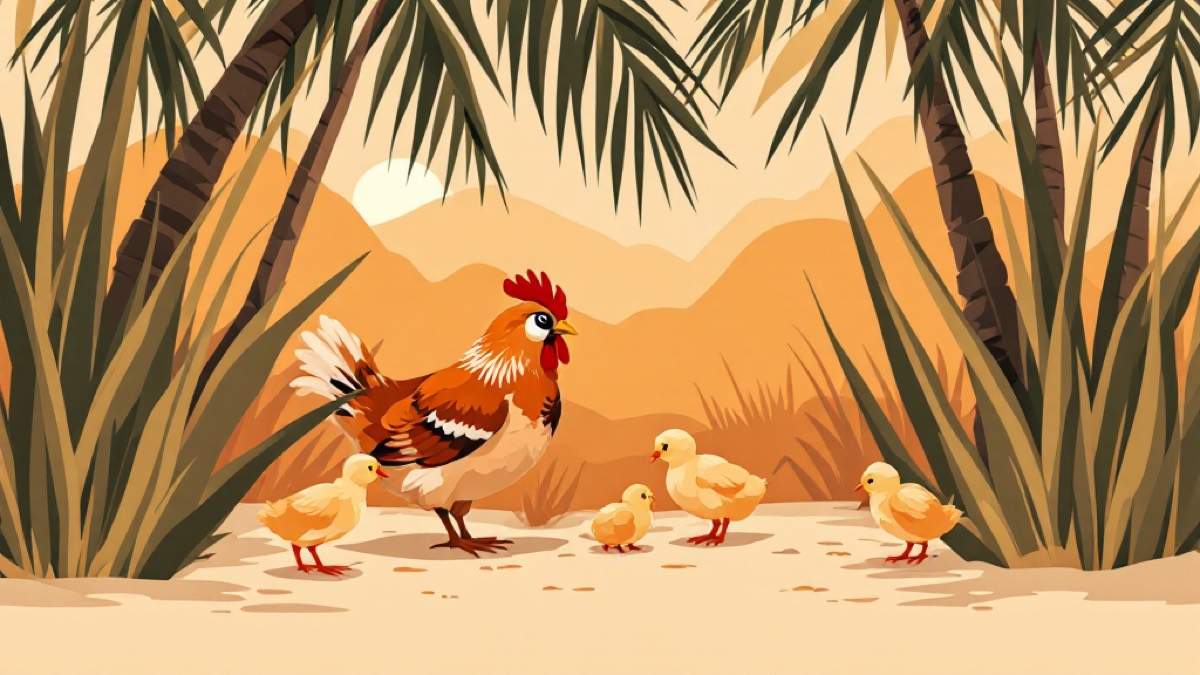
Hens carry a yellowish-brown coat that blends dark brown and golden yellow, with a distinguishable yellow line running down the center of each feather — the trait the name is built around. Roosters look different: predominantly red and black rather than yellow, which is typical of the sexual plumage dimorphism seen across many native and jungle-fowl-descended chicken breeds. Both sexes typically show gray shanks and a single comb.
What Do the Production Numbers Actually Say?
DOST-PCAARRD’s Poultry ABS Information System, which profiles a small set of officially documented native breeds, lists the Darag at roughly 110 eggs per hen per year, an average egg weight around 41.36 grams, and a fertility rate in the 81-83% range — the strongest production figures among the breeds on that database.
That is a real, sourced number, and it’s worth stating plainly: “A DOST-PCAARRD-documented Darag line produces around 110 eggs per hen annually, the highest egg output among the native breeds profiled in that database.” But it describes the research-managed, selectively bred population, not necessarily what a backyard raiser gets from Darag or Darag-cross stock under ordinary free-range conditions with no controlled feeding or record-keeping. Growth rate to market weight and feed conversion for the Darag specifically are not numbers this guide can source with the same confidence, so they’re left out rather than estimated.
What Is Darag Meat Known For?
Darag is raised as much for meat quality as for its research profile — it’s the breed most often named specifically (rather than just “native chicken” generically) in Western Visayas cooking, including the traditional dish tinu-om.
Raisers and breed advocates describe the meat as firmer and more flavorful than commercial chicken, which tracks with what’s generally true of native chicken meat compared to fast-grown broiler meat — slower growth generally means denser muscle structure. Beyond that general pattern, this guide does not have a sourced, breed-specific nutritional comparison (fat content, protein percentage) to cite for Darag specifically, so none is given here.
How Does the Darag Compare to Other Documented Native Breeds?
| Breed | Region | Distinguishing look | Documented production note |
|---|---|---|---|
| Darag | Panay Island, Western Visayas | Golden-yellow hen plumage, gray shanks | ~110 eggs/hen/year (PCAARRD-improved line) |
| Camarines | Bicol region | Yellow-orange barred rooster plumage | ~62 eggs/hen/year (PCAARRD database) |
| Boholano | Bohol | Red rooster plumage, mostly white shanks | ~62 eggs/hen/year (PCAARRD database) |
See the full Philippine native chicken breeds guide for the complete documented list, including breeds without production data on the same database.
What Made the Darag Different From Ordinary Backyard Native Chicken?
Selective breeding for uniformity over multiple generations, run as a deliberate research program rather than the informal, uncontrolled crossing that shapes most backyard native flocks.
Ordinary backyard native chicken in the Philippines — including what’s colloquially called manok na Bisaya in the Visayas — is typically a mixed descendant of generations of local crossing with no breeding records and no selection criteria beyond what a given household happened to keep. The WVSU program took the opposite approach with the Darag: starting from Panay’s local jungle-fowl-descended stock, researchers worked through repeated generations of selective breeding to fix a more consistent set of traits — appearance, and eventually the production figures cited above — rather than letting the population drift genetically the way an unmanaged flock does. That’s the real difference a “documented breed” represents: not that the bird is inherently superior, but that its traits are known and repeatable in a way an average backyard bird’s aren’t.
Is the Darag at Risk of Disappearing?
Groups tied to the breed’s development, including the Panay Darag Breeders Association, treat conservation as an active concern rather than a settled success — disease exposure, thin market demand relative to commercial chicken, and shrinking space for free-range production are the pressures most consistently cited.
That framing matters for a raiser deciding whether to keep pure Darag stock rather than crossing it: sourcing genuine Darag breeding stock from WVSU, Capiz State University, or the Panay Darag Breeders Association supports a documented conservation effort in a way that buying generic “native chicken” at a wet market does not.
What Should a Darag Raiser Actually Expect?
Solid documentation on origin, appearance, and the research program itself; real but narrowly scoped production data from the managed breeding line; and a genuine gap once you move past that into growth rate, feed conversion, or disease-specific mortality for ordinary backyard Darag stock. Basic care follows the same rules as any native chicken raising setup — secure housing (see the coop design guide), a biosecurity routine, and either free-range or supplemental feeding depending on your setup — the Darag doesn’t need different housing or feeding fundamentals than any other native chicken, just more careful sourcing if pure lineage matters to you.
For pricing, our native chicken price guide covers what drives value for named breeds like the Darag versus generic native stock, without pretending to quote a number that’s already out of date by publication.
Is the Darag a Good Choice for a First-Time Native Chicken Raiser?
It’s a reasonable choice, but not because it’s easier to raise than generic native stock — day-to-day care is the same regardless of breed. The reason to specifically seek out Darag is if breed identity itself matters to you: supporting a documented conservation effort, wanting predictable traits for future breeding, or simply wanting to know exactly what you’re raising rather than an unclassified local mix.
If none of that matters to you and you just want hardy, low-input backyard birds for eggs and meat, generic native stock from a local source will do the job just as well and is usually easier to find. Where the Darag genuinely earns its reputation is in exactly the two things this guide can source with confidence: a well-documented origin story and, for the PCAARRD-improved line specifically, real production numbers that most other native chicken options simply don’t have published anywhere.
This guide leans on DOST-PCAARRD’s published native chicken data and university coverage of the WVSU breeding program. If you raise Darag and have field experience that fills a gap here — growth rate under ordinary backyard conditions, in particular — we’d rather hear it than guess at it.
Frequently Asked Questions
What is a Darag chicken?
The Darag is a native chicken breed of Panay Island and Guimaras in Western Visayas, developed into a purified line through a West Visayas State University research program supported by DOST-PCAARRD.
Where does the name "Darag" come from?
Darag means "yellow" in Kinaray-a, the language of Panay Island, referring to the golden-yellow tone in the hen's plumage.
What does a Darag chicken look like?
Hens have yellowish-brown plumage combining dark brown and golden yellow with a yellow line down each feather; roosters are predominantly red and black. Both typically have gray shanks and a single comb.
How many eggs does a Darag hen lay?
DOST-PCAARRD's native chicken database reports the PCAARRD-improved Darag line at roughly 110 eggs per hen per year, the highest among the breeds profiled on that database — but this figure describes the research-managed line, not necessarily an ordinary backyard Darag or Darag-cross.
Is the Darag the same as any native chicken from the Visayas?
No. Darag is a specific, documented breed tied to Panay Island. The broader colloquial term for Visayan native chicken generally is manok na Bisaya, which is not a single breed.
Is the Darag endangered?
Conservation groups tied to the breed, including the Panay Darag Breeders Association, treat it as at risk — disease exposure, limited market demand, and shrinking free-range space are the pressures most often cited.
Where can you get real Darag breeding stock?
West Visayas State University, Capiz State University, and the Panay Darag Breeders Association are the sources most consistently named in coverage of the breed's development program.