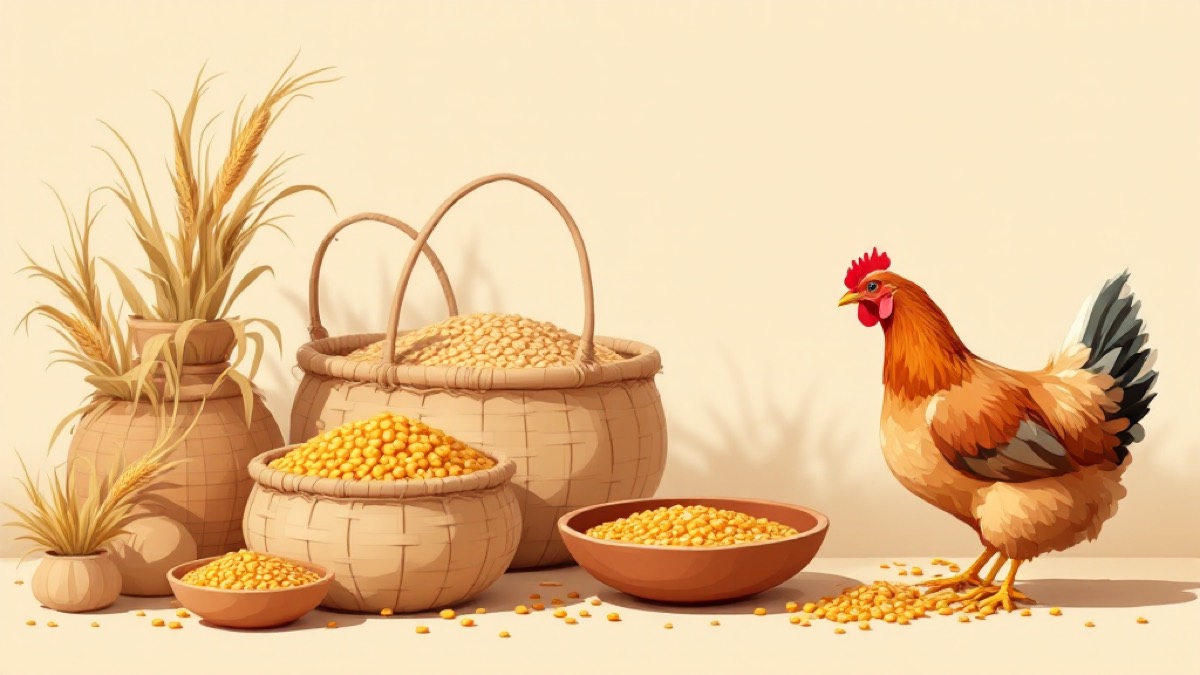
Darak (Rice Bran) as Chicken Feed: Uses and Limits
TL;DR: Darak is rice bran — cheap, local, and a filler rather than a ration. It supplies energy and fibre and is short of what a laying hen or a growing bird needs, so a flock fed mainly on darak underperforms. It also contains oil, which goes rancid fast in heat and humidity: buy small, use fresh, never feed rancid or mouldy bran. Grades differ, so ask what you are buying. Cheap per kilo is not the same as cheap per unit of nutrition.
Almost every Philippine backyard has a sack of this. It has a place; the mistake is treating that place as the whole diet.
What Darak Is
Rice bran — the layer removed from the grain during milling. It is abundant, cheap and available almost everywhere rice is milled, which is why it has been a backyard livestock feed here for generations.
Grades matter. Rice bran is sold at different qualities depending on how much hull and other milling by-product is mixed in. The finer grades are more digestible; the cheaper, coarser ones carry more indigestible fibre and are worth less to a chicken than the price difference suggests. Ask the miller or the seller what grade it is.
What It Does and Does Not Supply
Supplies: energy, fibre, bulk, and it is palatable — birds eat it readily.
Short of: the protein level a laying hen or a growing bird requires, and the balanced mineral and vitamin profile of a formulated ration.
That is the whole story, and it explains the pattern seen in a lot of Philippine backyard flocks: birds fed largely on darak and rice look fed, and lay poorly, grow slowly and produce thin shells. The feed is not poisonous — it is diluting. Same mechanism as in kitchen scraps for chickens.
Our what to feed chickens at every life stage guide covers what a bird actually needs at each stage.
The Rancidity Problem
This is the practical hazard people underestimate.
Rice bran contains oil, and oil goes rancid — faster in heat, faster in humidity, faster in an opened sack in a Philippine backyard. Rancid bran smells off, and it is not something to feed.
Mould is the other risk. Bran that has taken up moisture moulds, and mouldy feed must be discarded, never fed — see what not to feed chickens.
Practical handling:
- Buy small quantities, frequently, rather than a large sack that sits for weeks.
- Store sealed, off the floor, cool and dry — see the storage section of DIY chicken feeder.
- Smell it before feeding. Fresh bran smells like fresh bran. Anything sour, musty or paint-like is rancid.
- Discard anything doubtful. Cheap feed is not cheap if it makes birds ill.
- Use the oldest first, and do not top up an old sack with new bran.
Using It Sensibly
As a supplement, not a base.
- Feed a complete ration as the foundation for the stage of bird — see types of chicken feed.
- Use darak as an addition, in amounts that do not stop birds eating that ration.
- Watch the birds, not the sack. If lay rate falls, growth slows or shells thin, darak has taken over more of the diet than it should — see soft-shelled eggs and why chickens stop laying eggs.
- Offer grit free-choice, since bran is unground material — see grit for chickens.
- Where it fits best: free-range and native flocks in a low-input system, where the birds also forage — see free-range native chicken farming and native chicken feeding.
- Where it fits worst: chicks, growing pullets, hens in heavy lay, broilers on a programme, and gamefowl in conditioning. All of those depend on a controlled, balanced intake.
If You Are Home-Mixing
Darak is a common component of homemade rations here, and it can be — as one part of a balanced mix, not as the mix.
Balancing a ration properly means matching protein, energy, minerals and vitamins to the bird’s stage. That is real work, and getting it wrong is invisible until production tells you. Our homemade chicken feed guide is honest about what home-mixing can and cannot achieve, and if you are going to do it, take a formulation from an agrivet, a feed technician or your agriculture office rather than a recipe from a forum.
Is It Actually Cheap?
Cheap per kilo. That is not the same as cheap per unit of nutrition.
The comparison that matters is what the birds get out of it, not what the sack costs. A cheaper feed that produces fewer eggs and slower growth can easily cost more per egg and per kilo of meat than a formulated ration. Our chicken feed price in the Philippines guide covers comparing rations honestly rather than by sack price, and how much feed does a chicken eat per day covers measuring your own consumption so the arithmetic is real.
The Honest Limits Here
That rice bran is an energy and fibre source rather than a balanced ration, that it is sold in grades of differing quality, and that its oil content makes it prone to rancidity in heat and humidity, are established and well known in Philippine livestock feeding. This guide gives no inclusion percentages, no nutrient values and no prices, because bran composition varies substantially by grade and by mill, and a percentage quoted here could not be true of the sack in front of you. If you are formulating a mixed ration, get the formulation from an agrivet, feed technician or your local agriculture office.
Related: homemade chicken feed, types of chicken feed, what to feed chickens at every life stage, chicken feed price.
Frequently Asked Questions
What is darak?
Rice bran — the layer removed from rice during milling. It is widely available and cheap in the Philippines and is commonly fed to backyard poultry and other livestock.
Can chickens live on darak alone?
No. Darak is not a balanced ration. Birds fed mainly on it are short of protein and other nutrients, which shows as poor growth, poor lay and thin shells.
Why does darak go bad quickly?
It contains oil, and oil goes rancid, especially in heat and humidity. Rancid or mouldy bran should never be fed. Buy small quantities and use them fresh.
Is there a difference between first-class and second-class darak?
Yes. Rice bran is sold at different grades depending on how much hull and other material it contains, and the cheaper grades carry more indigestible fibre. Ask what grade you are buying.
How much darak can I feed?
As a supplement rather than a base. The more of the diet it occupies, the more it dilutes the balanced ration, and there is no single safe percentage for a home-mixed feed.
Do birds fed darak need grit?
Any bird eating unground material benefits from grit. Offer it free-choice.
Is darak good value?
It is cheap per kilo, which is not the same as cheap per unit of nutrition. Compare on what the birds actually get from it, not on the sack price.