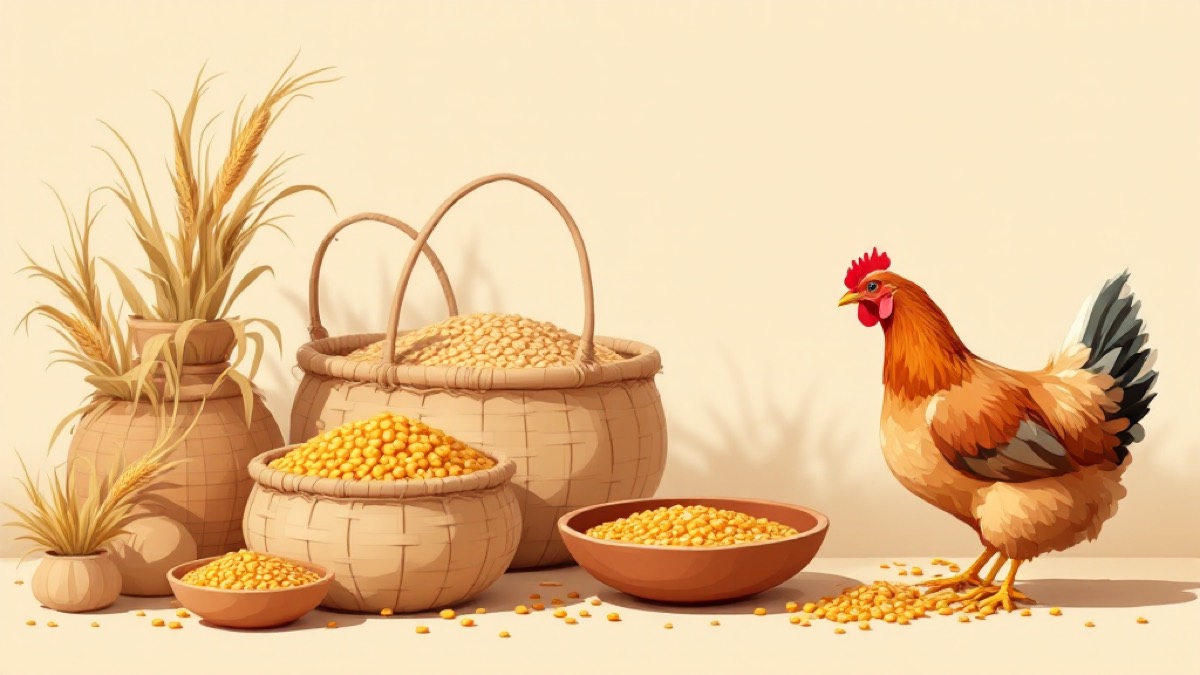
Best Gamefowl Feed in the Philippines: Popular Brand Comparison and Which Ones Are Worth It
TL;DR: B-Meg is the most widely available and consistent gamefowl feed brand in the Philippines, with Vitarich as the budget-friendly alternative and Thunderbird favored for conditioning-phase pellets. Commercial gamefowl feed runs roughly ₱150-₱500 per bird per month depending on brand and approach — DIY mixed feed is cheapest at ₱150-₱250, premium/specialty feeds run ₱300-₱500. DIY feed mixing can cut costs but requires real nutrition knowledge to avoid vitamin-mineral imbalances. There’s no single “best” feed — the right choice depends on your budget, availability, and whether you’re in a conditioning phase.
Feed is the biggest recurring expense in gamefowl farming — and feed quality has the most direct impact on your gamefowl’s health, growth, and performance. That’s why it’s important to know which feed to use.
In the Philippines, several major brands dominate the gamefowl feed market. In this article, we’ll compare the popular options — what each one’s strengths are, who they’re best suited for, and how to choose the right feed for your specific needs.
What to Look for in Gamefowl Feed
Before getting into brand comparisons, understand the key factors first:
Crude Protein Content
The protein percentage is the most important number on the feed label. It determines how effective the feed is at muscle building and overall development.
For chick starter: 21-24% crude protein. For grower: 18-20%. For maintenance: 15-17%. For conditioning: 20-22%.
Energy Content (Metabolizable Energy)
Measured in kilocalories per kilogram (kcal/kg). Higher energy content means more fuel available for activity and growth. Typical gamefowl feeds run 2,800-3,200 kcal/kg.
Fat Content
Moderate fat content (3-6%) is standard. Higher fat is useful for conditioning feeds, but excessive fat in regular feeds causes obesity.
Fiber Content
Fiber is important for digestive health, but shouldn’t be too high. The optimal range is 3-5% crude fiber for gamefowl.
Ingredients Quality
The main ingredients of quality gamefowl feed are corn (primary energy source), soybean meal (primary protein source), fish meal (animal protein), rice bran (fiber and energy), and a vitamins and minerals premix.
Popular Gamefowl Feed Brands in the Philippines
B-Meg (San Miguel Corporation)
B-Meg is arguably the most popular gamefowl feed brand in the Philippines. Owned by San Miguel Corporation — the largest food and beverage company in the country.
Product line for gamefowl:
B-Meg Chick Booster is for day-old up to 4 weeks. A high-protein starter that’s widely available. One of the most trusted chick starters on the market.
B-Meg Game Fowl Grower is specifically formulated for growing gamefowl (4 weeks to maturity). Balanced protein and energy for optimal development.
B-Meg Game Fowl Conditioning is a pre-fight conditioning feed with elevated protein and energy. Designed for the 14-21 day conditioning phase.
Strengths: Widely available — nearly every feed store in the Philippines carries B-Meg. Consistent quality backed by big-company quality control. Gamefowl-specific formulations. Competitive pricing.
Considerations: Not the cheapest option, but the quality-to-price ratio is generally good. Availability is sometimes affected by supply chain issues — but rarely.
Best for: Most Filipino breeders — a solid all-around choice with no major weaknesses.
Vitarich
Vitarich is another major Philippine feed manufacturer with an established gamefowl product line.
Product line: Vitarich has starter, grower, and layer feeds suitable for gamefowl. Not all products are gamefowl-specific, but the poultry formulations are applicable.
Strengths: Good quality, competitive pricing, and available in most areas. Vitarich feeds generally have good palatability — gamefowl eat them willingly.
Considerations: The gamefowl-specific products are less extensive compared to B-Meg. Availability may vary by region.
Best for: Budget-conscious breeders who want quality feed without premium pricing.
Thunderbird
Thunderbird is well-known specifically in the gamefowl community — particularly for their conditioning products.
Strength: Thunderbird conditioning pellets are popular during the conditioning phase. The brand has a dedicated gamefowl focus.
Considerations: More limited distribution compared to B-Meg or Vitarich. Higher price point for specialty products.
Best for: Breeders looking for specialized conditioning feed.
Other Available Brands
Bounty Fresh/Agri — has poultry feeds usable for gamefowl. Budget-friendly options.
Purina — international brand with products available in some Philippine markets. Premium pricing but high quality.
Local/Regional feeds — many local feed mills produce gamefowl feeds. Variable quality — some excellent, some inconsistent. The advantage is usually lower cost.
DIY Feed Mixing: Is It Worth It?
Many experienced Filipino breeders mix their own feed formulations — combining raw ingredients to customize nutrition for specific needs.
Common DIY Ingredients
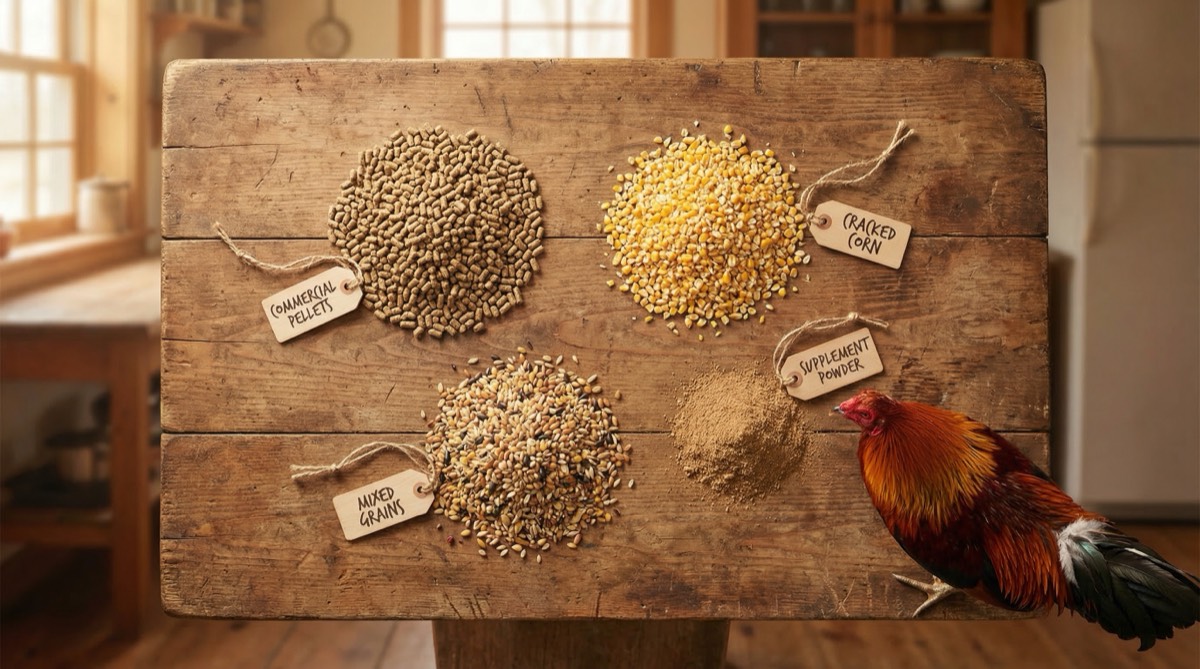
Corn (cracked or ground) — primary energy source, typically 40-50% of the mix. Soybean meal — primary protein source, 20-30%. Fish meal — animal protein, 5-10%. Rice bran — fiber and additional energy, 10-15%. Copra meal — cheaper protein source, 5-10%. Vitamin-mineral premix — essential addition, as directed by manufacturer.
Advantages of DIY
Cost savings. Raw ingredients are often cheaper per kilo compared to commercial feeds — especially when purchased in bulk.
Customization. You can adjust protein and energy levels for specific life stages or conditioning needs.
Quality control. You know exactly what ingredients are in the feed.
Disadvantages of DIY
Requires knowledge. Improper formulation can cause nutritional deficiencies or imbalances. This isn’t trial-and-error — it requires understanding of nutrition.
Inconsistency risk. Manual mixing carries the risk of uneven distribution — some portions may have more protein, others more carbs.
Time and labor. Daily or weekly feed mixing is additional labor that not everyone has time for.
Vitamin-mineral balance. The hardest part of DIY is ensuring adequate vitamin and mineral content. Missing just one essential mineral can cause significant health problems over time.
Recommendation
If you’re a beginner, stick with commercial feeds — specifically gamefowl-formulated products. Commercial feeds are already balanced and consistent. Consider DIY mixing only if you’re experienced in gamefowl nutrition and understand the nutritional requirements per life stage.
Feeding Cost Comparison (Per Gamefowl, Per Month)
Here are approximate monthly feed costs across different approaches (for adult gamefowl on maintenance):
B-Meg Game Fowl Grower: ~₱200-350 per gamefowl per month (based on ~3-4 kg feed consumption per month at current retail prices).
Vitarich Poultry Grower: ~₱180-300 per gamefowl per month.
DIY Mixed Feed: ~₱150-250 per gamefowl per month (with bulk purchase of raw ingredients).
Premium/Specialty Feeds: ~₱300-500 per gamefowl per month.
These prices are approximate and vary by region and current raw material prices. Feeds are getting more expensive over time due to inflation and raw material costs — an ongoing challenge for gamefowl farmers.
Tips for Feeding Management
Storage
Proper storage is critical. Improperly stored feed develops mold, loses nutritional value, and can become toxic.
Store feeds in a dry, cool, well-ventilated area. Use sealed containers or sacks elevated from the floor. Don’t stock too much feed — only buy what you can use within 2-4 weeks.
Freshness
Feed degrades over time — vitamins slowly break down. Freshly manufactured feed is always better than feed that’s been sitting for a long time.
Check the manufacturing date and expiration date on the packaging. Only buy recently manufactured feed.
Transition
When switching feed brands or formulations, don’t make the change abruptly. Gradual transition over 5-7 days — mix old and new feeds in an increasing ratio of new feed.
Day 1-2: 75% old + 25% new. Day 3-4: 50% old + 50% new. Day 5-7: 25% old + 75% new. Day 8+: 100% new feed.
This prevents digestive upset and allows the gamefowl to adjust to the new feed.
Conclusion: Which Feed Is Best?
The honest answer: there’s no single “best” feed — the best feed depends on your specific situation:
If you want a reliable, widely available, gamefowl-specific feed — the B-Meg Game Fowl line is a solid choice.
If budget is the primary concern — Vitarich or local feed mill products can offer good value.
If you’re in the conditioning phase — consider Thunderbird conditioning pellets or specialized products.
If you’re experienced and have the time — DIY mixing can save costs and provide customized nutrition.
What matters most: consistency. Gamefowl consistently fed decent-quality feed are always better off than gamefowl intermittently fed “premium” feed.
For a more detailed feeding guide by life stage, read our Complete Gamefowl Feeding Guide.
Looking for gamefowl from breeders with proper nutrition programs? See our guide on finding and vetting gamefowl breeders.
Frequently Asked Questions
What is the most popular gamefowl feed brand in the Philippines?
B-Meg, made by San Miguel Corporation, is the most popular — it's widely available nationwide with consistent, gamefowl-specific formulations.
How much does gamefowl feed cost per bird per month?
Roughly ₱150-₱500 per gamefowl per month, depending on the brand and approach — DIY mixed feed runs cheapest, premium/specialty feeds cost the most.
What crude protein percentage should gamefowl feed have?
21-24% for chick starter, 18-20% for grower, 15-17% for maintenance, and 20-22% for conditioning feed.
Is DIY feed mixing worth it for gamefowl?
It can save money and allow customization, but it requires real nutrition knowledge — improper formulation risks vitamin-mineral imbalances. It's best left to experienced breeders.
Which gamefowl feed brand is best for the conditioning phase?
Thunderbird conditioning pellets are a popular choice specifically for the conditioning phase.
How do you switch a gamefowl to a new feed brand?
Transition gradually over 5-7 days, mixing an increasing ratio of new feed with the old — abrupt switching can cause digestive upset.
What ingredients are in quality gamefowl feed?
Corn, soybean meal, fish meal, rice bran, and a vitamins and minerals premix.
Which gamefowl feed brand is the most budget-friendly?
Vitarich or local feed mill products generally offer the best value for budget-conscious breeders.