How to Start Gamefowl Farming in the Philippines
TL;DR: Starting a small backyard gamefowl farm in the Philippines needs a 50–100 sq meter space, a broodcock, 3–5 broodhens, and a minimum starting budget of roughly ₱15,000–₱50,000 for housing, feed, and supplies. Ongoing monthly costs for a small operation (10–20 birds) run about ₱3,300–₱8,500. Beginners should start with forgiving bloodlines like Sweater or Kelso, vaccinate against Newcastle Disease and fowl pox, and expect the first year to be a learning year rather than a profitable one.
Many Filipinos want to get into gamefowl farming — but don’t know where to start. The most common mistake beginners make is buying expensive birds without preparing their farm, feeds, and basic knowledge first.
This guide walks you through everything — from Day 1 planning to your first batch of stags. You don’t need a big farm or big capital. Many successful breeders started in their own backyard.
Step 1: Decide Your Goals
Before you buy a single bird, ask yourself:
Are You Breeding or Just Fighting?
- Breeding means you’ll raise broodcocks and broodhens, produce chicks, and develop your own line. This requires more space, time, and patience — but it’s more rewarding long-term.
- Just fighting means you’ll buy ready-to-fight cocks and enter them in derbies. Less work but more expensive per bird, and you’re dependent on your source.
Most backyard setups start with breeding, even on a small scale.
What’s Your Budget?
Be honest about this. Here’s a rough breakdown of starting costs:
| Item | Estimated Cost (₱) |
|---|---|
| 1 broodcock (proven bloodline) | ₱3,000 – ₱15,000 |
| 3–5 broodhens | ₱1,500 – ₱5,000 each |
| Basic housing/coop materials | ₱3,000 – ₱10,000 |
| Tie cords, feeders, waterers | ₱1,000 – ₱3,000 |
| Feeds (first 3 months) | ₱3,000 – ₱5,000 |
| Vitamins and supplements | ₱1,000 – ₱2,000 |
| Incubator (optional) | ₱2,000 – ₱8,000 |
| TOTAL (Minimum Start) | ₱15,000 – ₱50,000 |
You can start for less if you know a breeder willing to share breeding stock. Many experienced breeders are willing to help beginners — especially if they can see you’re serious about it.
Step 2: Set Up Your Space
Hindi kailangan ng malaking farm. A 50–100 square meter backyard is enough to start a small breeding operation.
Basic Space Requirements
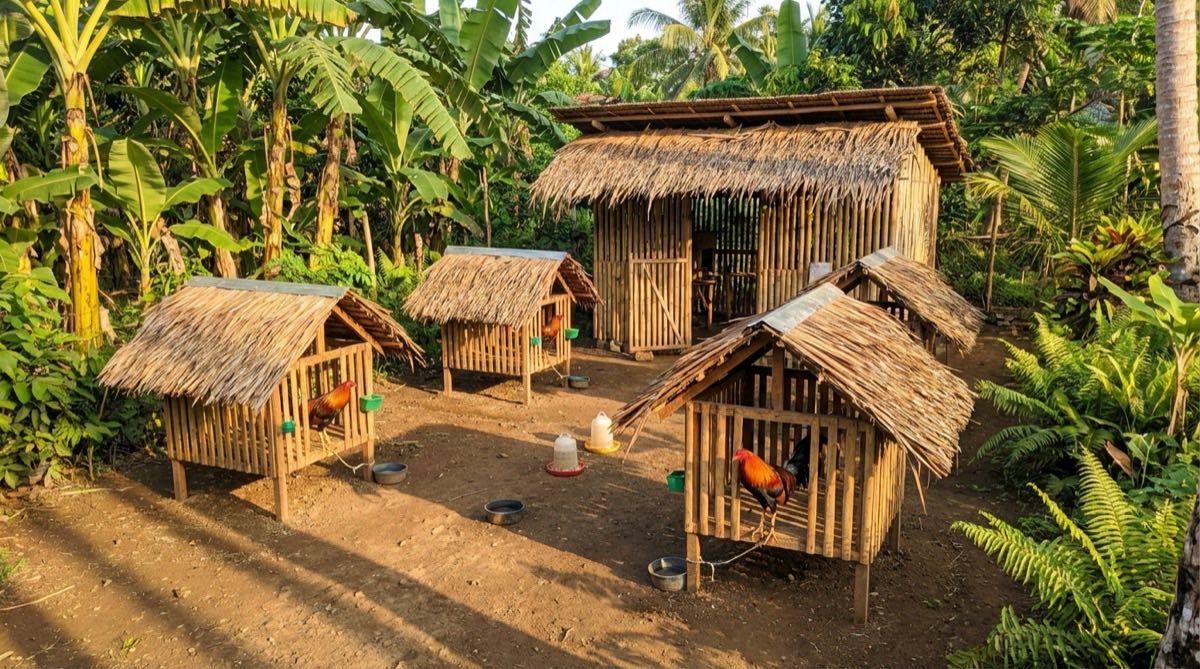
- Broodpen — enclosed area where the broodcock and broodhens will mate. At least 2x3 meters per pen. Should have shade and clean bedding.
- Cording area — where stags and cocks are tied to individual cord stakes. Each bird needs about 6 feet of cord radius. Space them so they can’t reach each other.
- Chick brooding area — warm, dry, protected area for day-old chicks up to 2 months. Can be as simple as a covered box with a heat lamp.
- Range area (if possible) — open area where birds can walk, fly, and exercise. The bigger, the better. Even a small ranging area makes a big difference in bird health.
Housing Tips for Philippine Climate
- Ventilation is critical. The Philippines is hot and humid — chickens kept in confined, poorly ventilated spaces are prone to respiratory disease.
- Elevated housing — raise coops at least 1–2 feet off the ground to avoid flooding and parasites.
- Shade. Always have shade available, especially from 10 AM to 3 PM.
- Clean water source nearby. Birds drink a lot in tropical heat.
- Good drainage. Standing water breeds bacteria and mosquitoes.
Biosecurity Basics
Even with a backyard setup, biosecurity is still important:
- Limit visitors to your breeding area
- Clean and disinfect feeders and waterers regularly
- Quarantine new birds for at least 2 weeks before mixing with your flock
- Keep feed storage sealed from rats and pests
- Dispose of dead birds properly — don’t leave them near the farm
Step 3: Choose Your First Bloodline
This is the most exciting part — but don’t rush it. Your first broodcock and broodhens will determine the quality of everything that follows.
For Beginners, Consider:
- Sweater — Forgiving to breed, widely available in the Philippines. This guide makes no fighting-style claims for the line; see the linked profile for what’s actually documented about it.
- Kelso — Good for learning breeding because traits are relatively predictable, not because of any performance claim about the bloodline
- Hatch — Hardy birds, good foundation stock, valued in crosses for size and structure rather than any claimed fighting ability
See our full bloodlines guide for a breakdown of every major bloodline before you decide.
Where to Buy
- Known breeders — The best option. Ask around at your local cockpit or gamefowl community.
- Gamefowl expos — the World Gamefowl Expo (Manila) and regional shows are great places to see and buy quality stock.
- Facebook groups — Usable but be careful. There are many scammers. Always verify the seller, ask for video proof, and if possible, visit the farm.
- Breeder guides — Our guide to finding and vetting gamefowl breeders explains how to check a seller you found through any of the channels above.
Red Flags When Buying
- Seller can’t provide bloodline details or pedigree
- Price is too good to be true
- No photos or videos of actual birds
- Seller refuses to let you visit the farm
- No phone verification or real identity
Step 4: Breeding Basics
Once you have your broodstock, here’s how the breeding process works:
Pairing
- 1 broodcock can service 3–5 broodhens
- Place the cock with hens in the broodpen for 2–3 weeks
- Collect eggs daily and store in a cool, dry place (egg rotation is important)
Incubation
- Natural (hen brooding): Let a broody hen sit on 8–12 eggs. Takes 21 days to hatch. Simple but you can’t control the schedule.
- Incubator: More control, higher hatch rates if managed properly. Set temperature at 37.5°C (99.5°F) with 55–60% humidity. Turn eggs 3x daily (or use auto-turner).
Chick Care (0–8 Weeks)
- Provide heat source for the first 2 weeks (heat lamp or brooder)
- Ad libitum feeding — unlimited food and water. Use commercial chick starter feed (20–27% protein)
- Mark chicks according to bloodline (toe punch or wing band)
- Separate males from females as soon as you can identify them (usually by 6–8 weeks)
- Vaccinate against Newcastle Disease and fowl pox
Growing Phase (2–6 Months)
- Transition to grower feed (18–20% protein)
- Stags start showing aggression around 4–5 months — separate them
- Begin tying to individual cords once they start fighting each other
- Regular sparring starts around 6 months to check conditioning, gait, and temperament rather than to score fighting ability
Step 5: Feeding Your Gamefowl
Nutrition is the foundation of healthy, strong gamefowl. You can’t just use cheap feed — it needs to be balanced. See our full gamefowl feeding guide for a deeper breakdown.
Daily Feed Components
- Commercial gamefowl feed (GMP, Thunderbird, B-Meg) — the base. Look for 18–22% crude protein.
- Grains mix — whole corn (energy), red wheat (protein), oats (fiber), green peas (protein)
- Animal protein — hard-boiled egg, dried fish meal, or cooked liver. Give 2–3x per week.
- Greens — kangkong, malunggay, or alugbati. Natural source of vitamins and minerals.
Feeding Schedule
- Morning (6–7 AM): Main feed — grains mix + commercial feed
- Afternoon (4–5 PM): Lighter feed — mostly grains or just commercial feed
- Water: Available 24/7. Change daily. Add electrolytes during hot weather.
Supplements
- Multivitamins — 2–3x per week
- B-complex — for energy metabolism and nerve function
- Calcium — important for hens (egg production) and for bone strength
- Probiotics — 2x per week for gut health
- Deworming — every 2–3 months using a veterinary-grade dewormer
Step 6: Health Management
The most common problem for backyard gamefowl farmers is disease. Prevention is always better (and cheaper) than cure.
Common Chicken Diseases in the Philippines
- Newcastle Disease (NCD) — Highly contagious. Causes respiratory distress, nervous signs, and death. Vaccinate!
- Fowl Pox — Causes wart-like lesions on comb and face. Vaccinate at 6–8 weeks.
- Chronic Respiratory Disease (CRD) — Caused by Mycoplasma. Sneezing, nasal discharge. Treat with antibiotics.
- Coccidiosis — Intestinal parasite causing bloody droppings. Treat with anticoccidial drugs. Keep housing clean and dry.
- External parasites — Lice, mites, ticks. Regular delousing every 2–4 weeks.
Vaccination Schedule (Minimum)
See our gamefowl vaccination program guide for a more detailed schedule.
| Age | Vaccine |
|---|---|
| Day 1–7 | NCD (B1 strain) — eye drop |
| Week 3–4 | Fowl Pox — wing web |
| Week 6–8 | NCD booster (LaSota) — drinking water |
| Every 3–4 months | NCD booster for adults |
Consult a local veterinarian for a schedule specific to your area — disease patterns vary by region.
Step 7: Record-Keeping
This is what beginners often skip — but it’s the secret weapon of successful breeders.
What to Record
- Breeding records: Which cock was paired with which hen, dates, number of eggs, hatch rate
- Chick records: Mark each chick with bloodline ID, date of birth, any health issues
- Fight records: Win-loss record of each bird, weapon used, and temperament notes rather than style ratings
- Expenses: Monthly feed costs, medication, equipment — so you know if your operation is sustainable
Even a simple notebook will do. What matters is that you’re consistent with recording. Over time, this data will help you make better breeding decisions.
Step 8: Budgeting for Ongoing Costs
Gamefowl farming is not a get-rich-quick venture. Here’s what to expect monthly for a small backyard operation (10–20 birds):
| Monthly Expense | Estimated Cost (₱) |
|---|---|
| Feeds | ₱2,000 – ₱5,000 |
| Vitamins/Supplements | ₱500 – ₱1,500 |
| Medications (as needed) | ₱300 – ₱1,000 |
| Utilities (water, electricity for incubator) | ₱300 – ₱500 |
| Miscellaneous (cord replacement, repairs) | ₱200 – ₱500 |
| TOTAL | ₱3,300 – ₱8,500/month |
Revenue comes from selling excess stags, pullets, broodstock, and day-old chicks. Realistically, don’t expect consistent income until your second year — the first year is about building your foundation and learning.
Common Beginner Mistakes
- Buying expensive birds without knowing how to care for them. Start with affordable, good-quality stock and learn the basics first.
- Overcrowding. Too many birds in a small space = stress, disease, and poor performance.
- Skipping vaccination. One NCD outbreak can wipe out your entire flock in days.
- Not quarantining new birds. Always isolate new arrivals for 2 weeks minimum.
- Breeding without a plan. Random crosses rarely produce consistent results. Have a goal and breed toward it.
- Neglecting record-keeping. Without records, you’re guessing. With records, you’re improving.
Find Your First Gamefowl
Whether you’re looking for your first broodcock or searching for quality broodhens, our guide on finding and vetting gamefowl breeders walks through how the market is organized and how to check a breeder’s claims before you buy.
👉 Learn More About Gamefowl Bloodlines
Frequently Asked Questions
How much money do I need to start gamefowl farming in the Philippines?
Budget roughly ₱15,000–₱50,000 for a minimum backyard start, covering a broodcock, 3–5 broodhens, basic housing, feeders, and your first three months of feed.
How much space do I need for a backyard gamefowl farm?
A 50–100 square meter backyard is enough to start a small breeding operation, as long as you have a broodpen, a cording area, and a chick brooding area.
What's the best gamefowl bloodline for beginners?
Sweater, Kelso, and Hatch are commonly recommended starting bloodlines — they're forgiving to breed, widely available, and their traits are relatively predictable.
What vaccines does gamefowl need?
At minimum, vaccinate against Newcastle Disease (day 1–7, with a booster at week 6–8) and fowl pox (week 3–4), then give adult NCD boosters every 3–4 months.
Is gamefowl farming profitable in the first year?
Not usually. Expect your first year to be a learning year with more expenses than income — revenue from selling stags, pullets, and broodstock typically builds up over time.
What are the biggest mistakes beginners make?
Buying expensive birds without knowing how to care for them, overcrowding, skipping vaccination, not quarantining new birds, and breeding without a plan are the most common beginner mistakes.
How much does it cost to maintain gamefowl every month?
For a small operation of 10–20 birds, expect ₱3,300–₱8,500 per month for feed, vitamins, medications, utilities, and minor repairs.