
Gamefowl Price Guide Philippines: How Much to Pay?
TL;DR: Gamefowl prices in the Philippines range from ₱50–₱2,000+ for day-old chicks up to ₱200,000+ for top-tier broodcocks and trios. Stags typically run ₱500–₱15,000 depending on whether they’re untested or derby-proven, and battle-ready cocks range ₱1,000–₱100,000+. Bloodline, fight record, breeder reputation, and location are the biggest price drivers — always treat listed ranges as estimates, not fixed prices.
One of the most common questions from people looking to buy gamefowl: “How much should I pay?” The answer is — it depends. Many factors affect gamefowl pricing, and if you don’t know what’s reasonable, you might overpay — or worse, fall for a scam.
This guide gives you realistic price ranges based on what’s actually being sold in the Philippine market in 2026.
Important disclaimer: Prices vary significantly by region, seller reputation, bloodline quality, and market conditions. The ranges below are estimates based on market observation — treat them as guidelines, not fixed prices.
Price by Gamefowl Type
Day-Old Chicks (DOC)
| Bloodline Quality | Price Range (₱) |
|---|---|
| Common/Local bloodlines | ₱50 – ₱150 per chick |
| Named bloodlines (Sweater, Kelso, Hatch) | ₱150 – ₱500 per chick |
| Premium/Imported lines | ₱500 – ₱2,000+ per chick |
Notes:
- DOC is the cheapest entry point but comes with risk — you won’t know the quality until they mature
- Hatch rate and survival rate are major factors. Expect 10–20% mortality in the first month even with good care.
- Buying DOC is good for beginners who want to learn from scratch, but buyer beware — it’s hard to verify a chick’s bloodline
Pullets (Young Hens, 3–6 Months)
| Quality | Price Range (₱) |
|---|---|
| Common | ₱300 – ₱800 |
| Good bloodline | ₱800 – ₱2,000 |
| Premium/Proven mother line | ₱2,000 – ₱5,000 |
Notes:
- Pullets are essential for breeding programs
- Look for birds from hens that have produced winners — a pullet’s value is in the mother’s genetics
- Price goes up significantly if the mother has a proven track record
Stags (Young Males, 6–12 Months)
| Quality | Price Range (₱) |
|---|---|
| Untested, common bloodline | ₱500 – ₱1,500 |
| Good bloodline, untested | ₱1,500 – ₱5,000 |
| Sparred/shown potential | ₱3,000 – ₱8,000 |
| Derby-entered with record | ₱5,000 – ₱15,000+ |
Notes:
- Stags are the most commonly traded gamefowl type
- “Untested” means the bird has not been fought or sparred competitively — it’s all potential
- Price jumps significantly once a stag has shown good fighting ability in sparring
Battle Cocks (Mature Males, 1.5+ Years, Fight-Ready)
| Quality | Price Range (₱) |
|---|---|
| Local, basic conditioning | ₱1,000 – ₱3,000 |
| Good bloodline, conditioned | ₱3,000 – ₱8,000 |
| Derby-quality, proven breeder stock | ₱8,000 – ₱20,000 |
| Champion/imported lines | ₱20,000 – ₱100,000+ |
Notes:
- Prices at this level vary wildly based on the seller’s reputation and the bird’s pedigree
- “Champion lines” doesn’t automatically mean the bird itself is a champion — marketing language is common
- The average farmgate price for gamefowl in the Philippines has been trending upward, reportedly exceeding ₱6,000 per bird on average in recent years
Broodcocks (Proven Breeding Males)
| Quality | Price Range (₱) |
|---|---|
| Retired fighter, decent record | ₱3,000 – ₱10,000 |
| Proven producer (offspring have won) | ₱10,000 – ₱30,000 |
| Top-tier producer / imported | ₱30,000 – ₱200,000+ |
Notes:
- The broodcock is the most valuable gamefowl on any farm
- “Proven producer” means his offspring have actual fight records — not just good looks
- Top-tier broodcocks from famous farms can fetch six figures
Broodhens
| Quality | Price Range (₱) |
|---|---|
| Good bloodline | ₱1,500 – ₱5,000 |
| Proven producer | ₱5,000 – ₱15,000 |
| Premium/daughter of champion | ₱10,000 – ₱50,000+ |
Trios (1 Cock + 2 Hens)
| Quality | Price Range (₱) |
|---|---|
| Good bloodline | ₱5,000 – ₱15,000 |
| Premium bloodline | ₱15,000 – ₱50,000 |
| Imported/Elite | ₱50,000 – ₱300,000+ |
Price by Bloodline
Some bloodlines command higher prices than others. Here’s a general comparison:
| Bloodline | Relative Price Level | Why |
|---|---|---|
| Sweater | Medium-High | Most popular, high demand, widely available |
| Kelso | Medium-High | Classic bloodline, always in demand |
| Hatch (Yellow Leg) | Medium-High | Power bloodline, multiple variants |
| Roundhead | Medium | Good demand, especially Lacy Roundhead |
| Claret | Medium | Consistent demand, less supply |
| Grey | Medium-Low | More common, good mixer bloodline |
| Peruvian | High-Very High | Trending, limited supply, exotic appeal |
| Albany | Medium | Niche demand |
| Whitehackle | Medium | Traditional bloodline, steady demand |
| Asil | Medium-High | Specialty bloodline, rising interest |
Note: Price isn’t based on bloodline alone — seller reputation, fight record, and pedigree documentation have an even bigger impact. For details on each bloodline’s traits, see our guides to the Sweater, Kelso, Hatch, Roundhead, and Claret, or browse the full bloodlines guide.
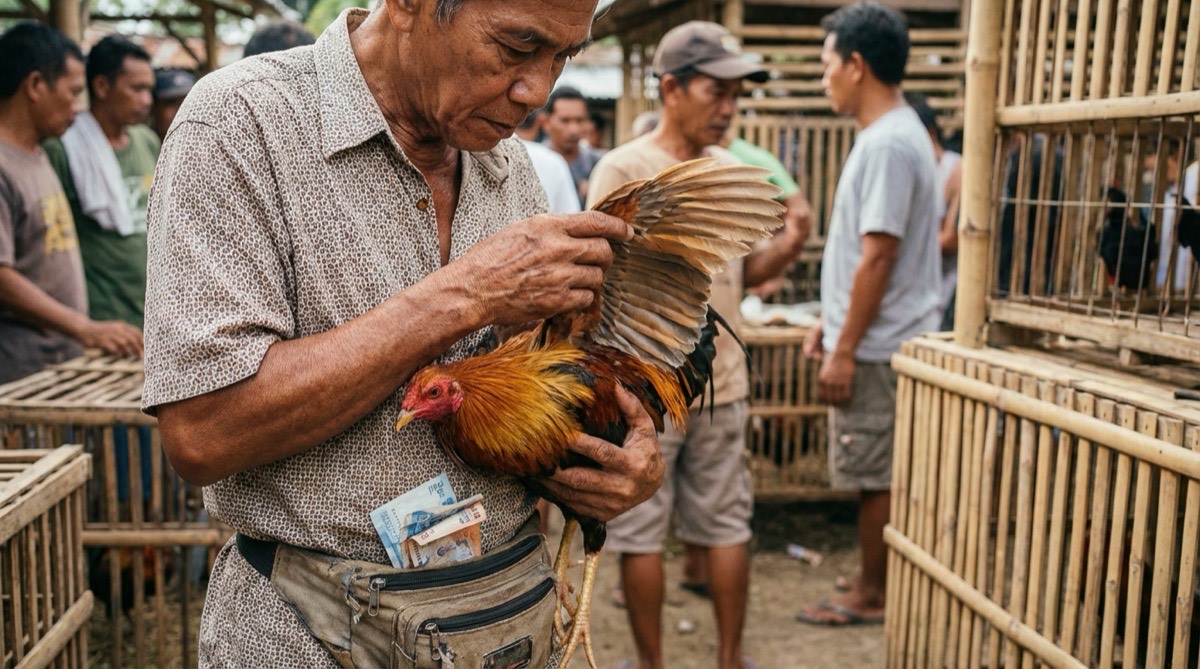
Factors That Affect Gamefowl Price
1. Bloodline/Pedigree
The single biggest price driver. A bird with documented pedigree from a known farm is worth significantly more than one with unverified claims.
2. Fight Record
A bird (or its parents) with a proven win record commands a premium. Documented derby wins — especially in major competitions like the World Slasher Cup — can multiply the price 5–10x.
3. Breeder Reputation
Buying from a well-known, respected breeder costs more — but you’re also paying for reliability and trust. The risk of being scammed is much lower.
4. Age and Condition
- Younger birds (DOC, pullets) are cheaper but riskier
- Conditioned, fight-ready cocks are more expensive
- Birds in molting or poor condition sell for less
5. Location
- Metro Manila, Pampanga, Bulacan — Higher prices due to proximity to major cockpits and derbies
- Bacolod, Negros Occidental — Premium market due to concentration of top breeders
- Cebu, Visayas — Growing market, competitive prices
- Provincial areas — Generally lower prices but harder to verify quality
6. Season/Timing
- Prices tend to increase before major derbies (World Slasher Cup season, fiesta season)
- Off-season and post-derby periods may offer better deals
- After the World Gamefowl Expo, new bloodlines hit the market and prices shift
7. Supply and Demand
- Trending bloodlines (like Peruvian right now) are priced at a premium
- Oversupplied bloodlines may be more affordable
- Natural disasters or disease outbreaks (like avian flu scares) can temporarily crash or spike prices
How to Avoid Getting Scammed
The gamefowl market — especially online — has its share of scammers. Here’s how to protect yourself:
Red Flags
- Too cheap. If the price is half the market rate, there’s a reason why.
- No real photos or videos. Stock photos or stolen images from other farms.
- Refuses farm visit. Legit breeders are proud of their farm and happy to show it.
- Pressure to pay immediately. “Last stock” or “another buyer is interested” tactics.
- No references. Can’t provide other buyers who can vouch for them.
- Unverified social media. New Facebook account, no history, no community engagement.
Safe Buying Practices
- Visit the farm whenever possible — nothing beats seeing the birds in person
- Ask for video of the specific bird (not stock footage)
- Get references from other buyers
- Ask for documentation — vaccination records, pedigree, or band numbers — instead of relying on a seller’s word alone
- Start small — buy one or two birds first before making a big purchase
- Document everything — keep receipts, chat screenshots, and agreements
- If shipping, use trusted logistics — Cebu Pacific and Philippine Airlines offer animal cargo. Avoid bus shipping for expensive birds.
Where to Buy Gamefowl in the Philippines
Direct from Breeders
The best option — you see the farm, the parents, and the conditions. Build relationships with local breeders.
Cockpit Contacts
Many transactions happen at cockpits. Talk to other sabongeros, ask who breeds what, and get referrals.
Gamefowl Expos and Events
- World Gamefowl Expo (Manila) — Largest gamefowl event in the Philippines. Over 300 exhibitors.
- Regional gamefowl shows — Check local associations for schedules.
Online
- Breeder guides and community groups — Our breeder guide explains how to vet a seller before you commit to a price
- Facebook groups — Large audience but buyer beware. No verification system.
Is Gamefowl Farming Profitable?
Honest answer: it can be, but it’s not guaranteed and it takes time.
Potential income sources:
- Selling stags and pullets: ₱1,500 – ₱10,000 per bird
- Selling day-old chicks: ₱150 – ₱500 per chick
- Selling broodstock: ₱5,000 – ₱50,000+ per bird
- Derby winnings (variable and unpredictable)
Reality check:
- Expect your first year to be a learning year with more expenses than income
- Feed costs are ongoing regardless of whether you sell anything
- Disease outbreaks can wipe out months of investment
- The market is competitive — you need to build a reputation over time
Successful gamefowl farmers are long-term thinkers — not those looking for quick money.
Use This Guide Before You Negotiate
Tired of guessing prices on Facebook? Use the ranges above as your baseline, then check our guide on finding and vetting gamefowl breeders before you commit to a price with anyone claiming a documented bloodline.
Prices listed in this guide are estimates based on market observation as of early 2026. Actual prices may vary. Always do your own research before making a purchase.
Frequently Asked Questions
How much does a gamefowl stag cost in the Philippines?
Untested stags of a common bloodline run ₱500–₱1,500, while a good bloodline with shown sparring potential can go for ₱3,000–₱8,000, and derby-entered stags with a record can reach ₱15,000+.
How much does a day-old gamefowl chick cost?
Common bloodlines run ₱50–₱150 per chick, named bloodlines like Sweater, Kelso, or Hatch run ₱150–₱500, and premium or imported lines can exceed ₱2,000.
What's a fair price for a proven broodcock?
A retired fighter with a decent record runs ₱3,000–₱10,000, a proven producer whose offspring have won runs ₱10,000–₱30,000, and top-tier producers from famous farms can reach six figures.
What's the biggest factor that affects gamefowl price?
Bloodline and pedigree documentation are the single biggest price driver — a bird with a documented pedigree from a known farm is worth significantly more than one with unverified claims.
How do I avoid getting scammed when buying gamefowl?
Visit the farm in person, ask for video of the specific bird (not stock footage), get references from other buyers, and ask for documentation like vaccination records or a pedigree instead of taking bloodline claims at face value.
Is gamefowl farming profitable?
It can be, but not guaranteed and not quick — expect your first year to be a learning year with more expenses than income, since feed costs are ongoing regardless of sales.
Why do gamefowl prices go up before derby season?
Prices tend to increase before major derbies like World Slasher Cup season and fiesta season, then ease off in the off-season and right after the derby period.